
Companion Plants
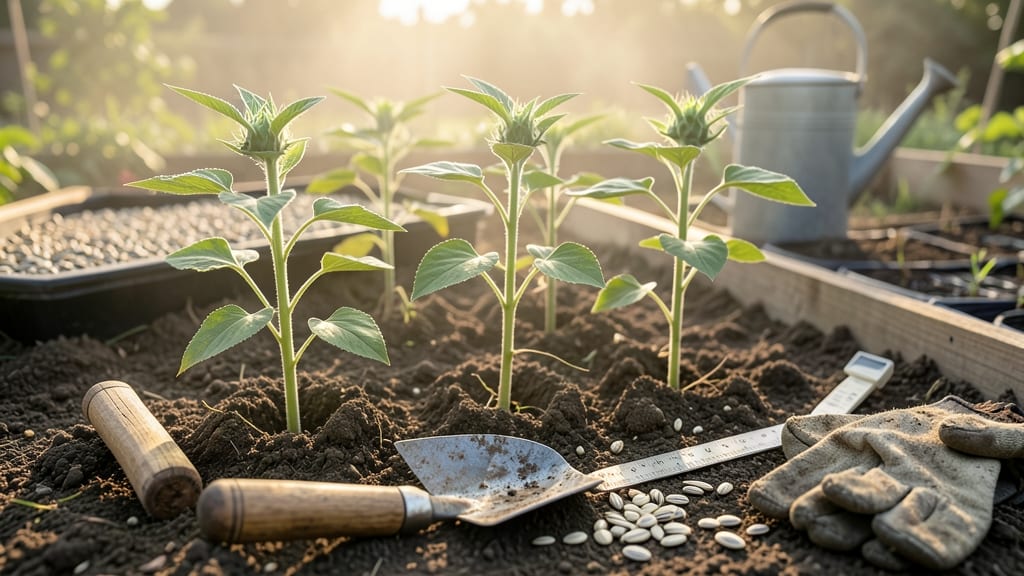
Timing your 🌻 sunflower seeds just right in Pennsylvania means the difference between towering, golden blooms and stunted plants that never reach their potential.
With USDA Zones 5b-7a offering a 160-200 day growing window, you’ve got a narrow but critical period to get those seeds in the ground—typically between mid-April and early June.
Most gardeners in Pennsylvania make the mistake of planting too early, only to watch their sunflowers wilt when late frosts roll in.
The key is waiting until the soil warms to at least 50°F and all danger of frost has passed—usually around late April or early May, depending on your exact location.
If you’re eager to start indoors, you can give sunflowers a head start in March, but they’ll need to be hardened off before transplanting.
For direct sowing, which is simpler and often more successful, stick to the mid-April to early June window to ensure your sunflowers have enough time to mature before the first frost hits in October.
Once you’ve nailed the timing, the rest is easy—just plant your seeds 1 inch deep and 6 inches apart, give them plenty of sun, and watch them grow into the stunning centerpieces of your garden. Let’s break down the exact steps to get it right.
Pennsylvania sunflower planting timeline by USDA Zone 6-7 (with frost date maps)
Timing your sunflower seeds in Pennsylvania requires precision—especially in USDA Zones 6-7, where frost dates can shift from year to year. The key is planting after your last frost date but before soil temperatures dip below 50°F, which stunts germination.
Most of Pennsylvania sees its average last frost between April 15 and May 1, but microclimates (like urban heat islands or sheltered valleys) can push these dates earlier or later by 1-2 weeks.
For direct sowing (the easiest method for sunflowers), aim to plant seeds 2-4 weeks after your last frost. This gives young plants time to establish roots before summer heat arrives.
In Philadelphia and Harrisburg, this typically means mid-April to early May, while Pittsburgh’s cooler climate may require waiting until late April or early May.
Indoor starts let you jumpstart growth, but they’re only worth the effort for late-maturing varieties (like 'Mammoth Russian') or if you’re in a high-altitude microclimate. Sow seeds indoors 6-8 weeks before your last frost—so around mid-February to early March—using biodegradable pots to avoid transplant shock.
Here’s a quick reference for Pennsylvania’s major cities, including how to adjust for microclimates like urban areas (warmer) or rural highlands (cooler). Use these as a starting point, then monitor your local soil temperature with a soil thermometer (sunflowers need 50°F+ to germinate).
| City | Avg. Last Frost | Direct Sow Window | Indoor Start Window | Microclimate Adjustment |
|---|---|---|---|---|
| Philadelphia | April 15 | April 22 – May 10 | Mid-Feb – Early March | Urban areas: plant 1 week earlier |
| Pittsburgh | May 1 | May 8 – May 25 | Late Feb – Early March | Highlands: delay by 1 week |
| Harrisburg | April 22 | April 29 – May 15 | Early March | Valleys: plant 3–5 days earlier |
| State College | May 5 | May 12 – June 1 | Late Feb – Early March | Mountainous: delay by 10 days |
Sunflowers are fast growers, with most varieties reaching maturity in 80-120 days. To maximize your harvest, choose early-maturing types (like 'Teddy Bear') for direct sowing in late May, or tall varieties (like 'Russian Giant') for early April starts.
Always check your sunflower’s maturity zone—it’s listed on seed packets—and add 14 days to the estimated days to maturity if planting in late May to account for shorter daylight.
If you’re planting in June or July, opt for dwarf varieties (like 'Sunspot') or short-day types, which can still produce blooms before the first frost. These late plantings work best in southern PA (near Reading or Allentown) where the growing season stretches into early October.
In northern PA, stick to May plantings for reliable results.
Pro tip: Use black plastic mulch to warm the soil 5-10°F faster in early spring, letting you plant 1-2 weeks earlier without risking frost damage. This is especially helpful in Zone 6b areas like Erie or Scranton, where late frosts are more common.
Pair this with row covers for extra protection if nighttime temps dip below 40°F.
Finally, don’t forget that sunflowers love heat—they’ll bolt (flower prematurely) if stressed by cool nights.
If your area has unusually chilly summers (like 2021’s late-season frost in June), consider staking tall varieties or planting near heat-reflective surfaces (like light-colored fences) to create a microclimate that mimics their native prairie habitat.
With these Pennsylvania-specific timelines and adjustments, you’ll avoid the 3 most common sunflower planting mistakes: planting too early (frost damage), planting too late (stunted growth), or ignoring soil temperature (slow germination). Now grab your seeds and mark those frost-free dates—your sunflowers are ready to shine! 🌻
5 Critical factors that determine your sunflower planting success in PA
Planting sunflowers in Pennsylvania requires more than just checking a frost date calendar. While last frost dates are important, your sunflowers' success hinges on five critical factors that align perfectly with our Zone 6-7 climate.
These factors—soil temperature thresholds, daylight hours, watering needs, sunflower variety selection, and frost risk management—will make or break your harvest.
First, Pennsylvania’s short growing season (just 160-200 frost-free days) demands precision. Planting too early risks frost damage, while planting too late may leave your sunflowers struggling to mature before winter. Let’s break down each factor so you can maximize your sunflowers' potential from seed to harvest.
🌱 Numbered Highlights: Your PA Sunflower Planting Checklist
- 1 Wait for soil temps of 50°F+—cold soil delays germination and stunts growth. Use a soil thermometer to check before planting.
- 2 Plant mid-April to early June for direct sowing, but adjust for your microclimate—valleys freeze later, while hills warm faster.
- 3 Choose early-maturing varieties like 'Autumn Beauty' (60-70 days) for PA’s short season—giant varieties need 100+ days and may not finish.
- 4 Water deeply 1-2 times per week—sunflowers need 1-2 inches of water but hate soggy soil. Use drip irrigation to avoid fungal diseases.
- 5 Protect late plantings with row covers if frost threatens after June 1—this extends your growing season by 2-3 weeks.
Pennsylvania’s variable daylight hours also play a crucial role. Sunflowers need 12+ hours of daylight to thrive, which we hit by early June. If you plant in late May or June, your sunflowers may grow taller but produce fewer blooms due to shorter days.
For a bountiful harvest, prioritize planting in May when daylight peaks.
Watering is another common pitfall. While sunflowers are drought-tolerant once established, their roots need consistent moisture during germination and flowering. In PA’s humid summers, overwatering can lead to root rot, so focus on deep watering (1-2 inches per week) rather than frequent shallow waterings.
Mulching around your plants helps retain moisture and keeps roots cool.
Not all sunflower varieties perform equally in Pennsylvania’s climate. Dwarf varieties like 'Teddy Bear' (3-4 feet tall) are ideal for containers or small gardens, while tall varieties like 'Mammoth Russian' (10-16 feet) need staking and may not finish in Zone 6.
For maximum success, opt for early-maturing hybrids like 'Autumn Beauty' or 'ProCut,' which bloom in 60-70 days—perfect for our short season.
Finally, Pennsylvania’s unpredictable late frosts can devastate sunflowers if they’re not prepared. If you plant in late May or June, have row covers ready to protect seedlings from unexpected cold snaps.
These lightweight fabrics trap heat and can extend your growing season by 2-3 weeks, giving your sunflowers more time to mature before winter.