
Container Gardens
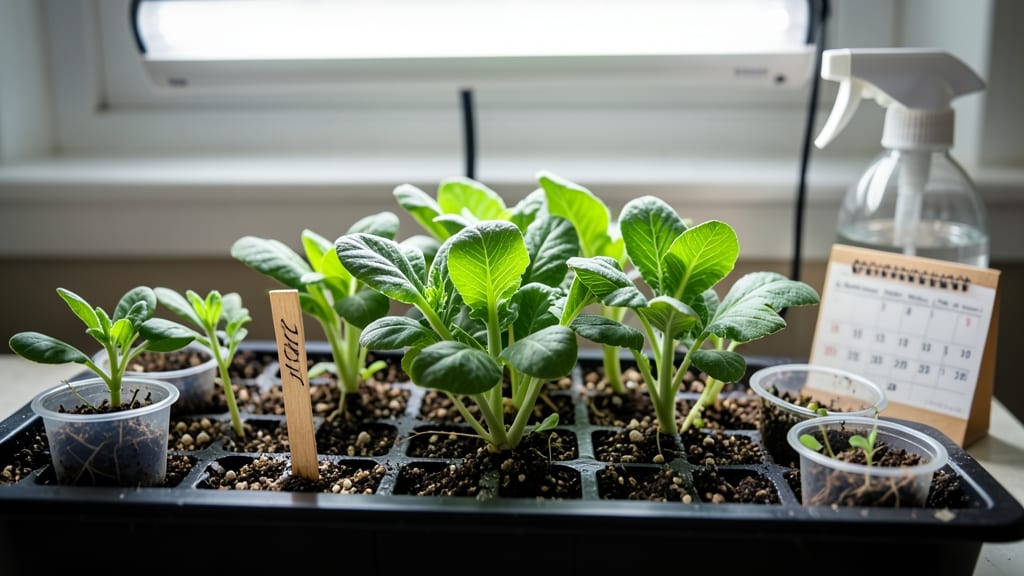
To grow healthy, productive cauliflower 🥬, timing your indoor seeds is the single most important step—get it wrong, and you’ll either waste weeks waiting for slow starts or risk frost-nipped plants before harvest.
The 8-week pre-frost rule isn’t just a guideline; it’s your ticket to sturdy seedlings that transplant like pros and deliver plump, flavorful heads by summer.
Let’s say you’re in Zone 6a (like many gardeners in the Midwest), where the last frost typically hits around April 15th. Counting backward 8 weeks lands you in early February—your sweet spot for starting seeds.
Too early, and you’ll deal with leggy, overcrowded seedlings; too late, and your plants won’t mature before the heat of summer or early fall frosts cut the season short.
But here’s the catch: not all cauliflower varieties play by the same rules. Early varieties might only need 60 days to harvest, while heirloom types can stretch to 120 days. That means your seed-start window could shift from late January to early March, depending on what you’re growing.
I’ll break down exactly how to adjust for your climate, variety, and even your indoor setup.
Ready to avoid the heartbreak of bolted seedlings or frost-loss? By the end of this guide, you’ll know exactly when to plant your seeds—and how to give them the perfect head start for a bountiful harvest. Let’s get those trays ready!
The exact 8-Week pre-frost timeline for cauliflower seed starting
Cauliflower thrives when you follow the 8-week pre-frost rule—this means starting seeds indoors 6–8 weeks before your last expected frost date. The exact timing varies by USDA zone, soil warmth, and your chosen cauliflower variety.
For example, in Zone 5, I start seeds in early March, while in Zone 9, late January works perfectly. The goal is to have sturdy seedlings ready for transplant when soil temperatures hit 45°F+ and all frost risk has passed.
Why 8 weeks? Cauliflower seedlings need slow, steady growth to develop strong stems and compact heads. Rushing the process risks bolting (premature flowering) or weak plants that struggle after transplant.
Slow-starting varieties, like Purple of Sicily, may need an extra week indoors, while faster growers like Snowball Y Improved can handle the shorter end of the window.
Your last frost date is the foundation of this timeline. Use the USDA Plant Hardiness Zone Map to find yours, then check local weather averages for a more precise date. For instance, in Zone 7, my last frost is typically May 10, so I start seeds March 15–25.
Adjust for early or late frosts in your microclimate—mountain valleys often frost later than surrounding areas, while urban heat islands may warm up faster.
Transplant shock is real, so account for 1–2 weeks of hardening off before moving seedlings outdoors. This means starting seeds 2 weeks earlier than your ideal transplant date. For example, if I plan to transplant on May 1, I’ll start seeds by February 28 in Zone 5.
Hardening off involves gradually exposing seedlings to outdoor conditions—3–5 days of increasing sunlight and wind exposure—to toughen their stems and leaves.
Soil temperature matters just as much as air temperature. Cauliflower seeds germinate best in 65–75°F soil. If your indoor setup runs cooler, like a basement seedling station, germination may take 10–14 days instead of the usual 7–10 days.
Use a seedling heat mat to speed things up in cold climates. In Zones 3–4, I often start seeds in January with a heat mat, while in Zones 8–10, I wait until February and rely on warmer indoor temperatures.
| USDA Zone | Last Frost Date | Start Seeds Indoors | Transplant Outdoors | Notes |
|---|---|---|---|---|
| Zones 3–4 | May 10–20 | January 15–February 15 | May 1–10 | Use heat mat; slow germination |
| Zones 5–6 | April 15–May 1 | February 20–March 15 | April 20–May 1 | Standard timing; harden off early |
| Zones 7–8 | March 15–April 1 | January 20–February 15 | March 15–April 1 | Can start earlier; watch for heat stress |
| Zones 9–10 | January 15–February 15 | December 15–January 10 | February 15–March 1 | Long growing season; succession plant |
Not all cauliflower varieties play by the same rules. Early maturing varieties like Snowball 60 can handle a 6-week indoor start, while late-season types such as Romanesco need 8–9 weeks.
Check the seed packet for days to maturity—this tells you how long the plant needs from seed to harvest.
For example, if a variety matures in 85 days and your frost-free date is May 15, you’ll need to start seeds by March 1 to ensure a harvest before fall frosts.
Light is another critical factor. Cauliflower seedlings bolt (flower prematurely) if they don’t get 12–16 hours of light daily. If your home lacks sufficient sunlight, supplement with grow lights from day one. I use LED grow lights on a 16-hour timer to prevent leggy, weak seedlings.
Without enough light, stems stretch toward the window, becoming spindly and prone to breaking during transplant. Place trays 2–3 inches below lights for optimal growth.
Adjust your timeline if you’re dealing with slow-starting seedlings or unpredictable weather. For instance, if your seedlings take 2 weeks longer to germinate due to cool indoor temps, push your start date back by 10–14 days.
Conversely, if you’re using a seedling heat mat and notice faster germination, you can start seeds 5–7 days later without risking bolting. Always err on the side of earlier starts—you can always move seedlings outdoors a few days early with protection (like row covers) if needed.
Finally, don’t forget to plan for transplant shock. Even with perfect timing, seedlings may struggle for 1–2 weeks after moving outdoors. To minimize stress, water deeply the day before transplanting and avoid fertilizing for the first week.
Mulch around the base with straw or shredded leaves to retain moisture and regulate soil temperature. With the right timing and care, your cauliflower will reward you with tight, flavorful heads all season long.
Key factors that change your cauliflower seed starting window
Your cauliflower seeds won’t sprout or grow at the same pace in every environment—soil temperature, variety type, and even your indoor setup can shift your ideal start date by 2-4 weeks.
For example, early varieties like 'Snowball Y Improved' can handle cooler starts, while heirloom types like 'Romanesco' need warmth to avoid slow germination. I’ve grown both in my Zone 7a garden, and the difference in timing is night-and-day.
Let’s break down the three biggest factors that change your seed-start window: soil temperature (which directly impacts germination speed), seedling growth rate (fast vs. slow varieties), and transplant shock risk (hardy vs. delicate starts).
Get these right, and you’ll avoid the heartbreak of leggy seedlings or frost-bitten plants. Get them wrong, and you’ll be scrambling to replant—or worse, watching your crop fail.
🌱 Pro Tip: Use a seedling heat mat ($15-$25) if your home stays below 65°F—it can cut germination time in half for cauliflower.
| Factor | Cold Start (Below 65°F) | Warm Start (Above 70°F) | Adjustment Needed |
|---|---|---|---|
| Soil Temperature | Germination: 10-14 days | Germination: 5-7 days | Start 2-3 weeks earlier in warm conditions |
| Variety Type | Early (60-75 days): 'Snowball' | Late (90-120 days): 'Romanesco' | Early: Start 1 week later; Late: Start 2 weeks earlier |
| Seedling Growth Rate | Slow: 2-3 weeks to transplant | Fast: 3-4 weeks to transplant | Warm starts: Delay transplant by 1 week to harden off |
| Transplant Shock Risk | High (delicate roots) | Moderate (sturdier) | Cold starts: Acclimate 10-14 days longer |
💡 Note: Adjust your start date backward for cold conditions and forward for warm.
If your seedlings are taking longer than expected to germinate, don’t panic—cauliflower seeds often need consistent moisture and warmth to break dormancy.
I’ve had batches take up to 21 days in cool basements, but a simple fix like moving trays to a sunny windowsill or using a seedling heat mat can cut that time in half. Always label your trays with the planting date and variety name to track progress.
Another game-changer? Light exposure after germination. Seedlings grown under grow lights (12-16 hours/day) will be ready to transplant 1-2 weeks faster than those relying on natural light alone.
In my last growing season, the early varieties under lights were transplanted in just 28 days, while the heirloom types needed the full 35 days. That’s a 1-week difference that could mean the difference between a harvest and a loss.
🌿 Troubleshooting Tip: If your seedlings look stretched or pale, they’re not getting enough light—supplement with a T5 LED grow light immediately.