
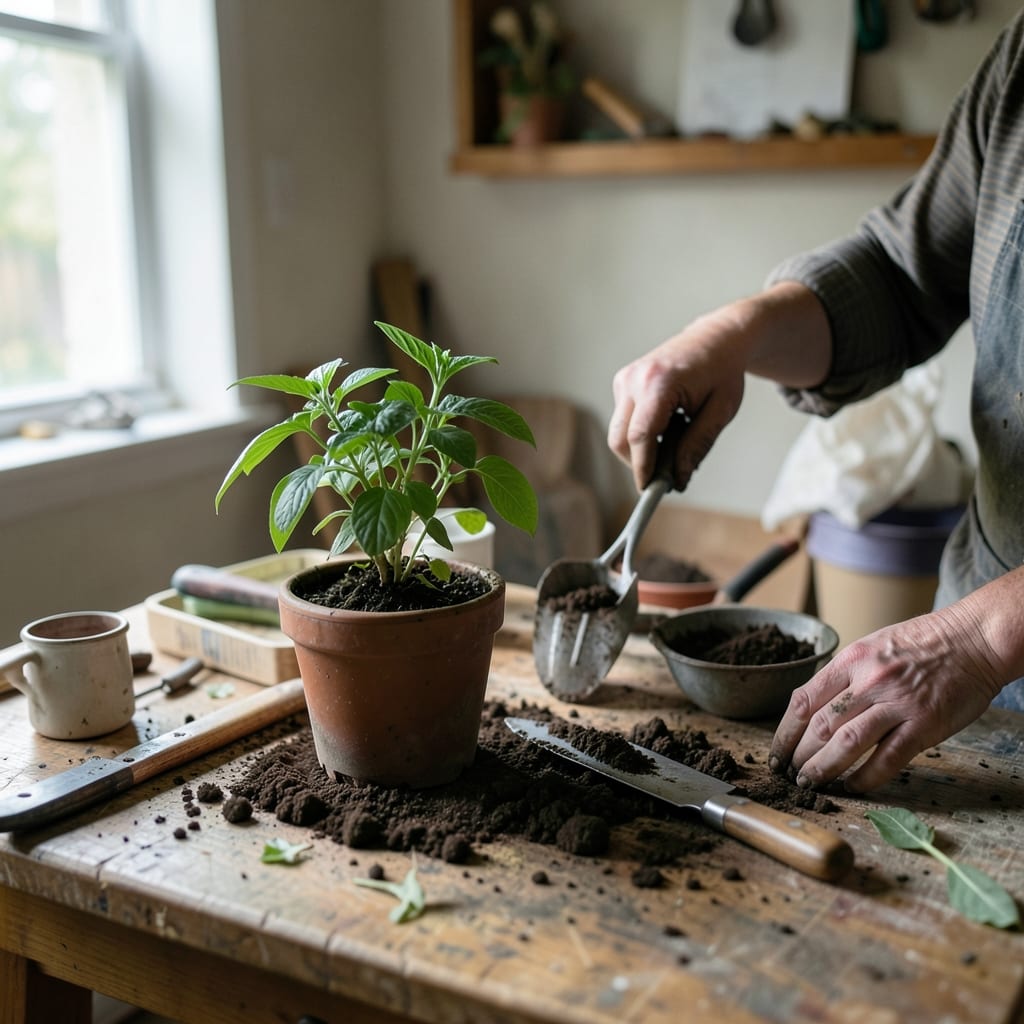
What this work is made with
This page is not a story. It is a list of the things that make this site work—soil, tools, and the hands that shape them.
Gardening is not just advice; it is the slow, stubborn work of coaxing life from dirt, and the objects that help (or hinder) it are part of the story.
Here, we name what *Flower Beds* depends on: the worn-out trowel that taught patience, the cracked terra-cotta pot that never broke, the old wooden crate that became a seed-starting table. These are the things that shape the work, not the words that describe it.
The things that do the work
Every garden has its tools, and this one is no different.
These are the four things that have shaped the work here: a hand fork that has bent with use, a pair of pruners with a blade that never quite stays sharp, a wooden stake that has split and been glued back together, and a plastic tray that holds seedlings but has lost half its corners.
None of them are perfect. All of them are essential.
Hand fork
A heavy-duty garden fork with a handle worn smooth from years of digging. It arrived in 1998, a hand-me-down from my grandmother’s shed, and has never been replaced.
The tines are slightly bent from hitting rocks, and the wood has a deep groove where my hands grip it when turning compost.
It taught me that soil is not just dirt—it is a living thing that resists. The first time I used it to loosen clay in my grandmother’s garden, the earth clung to the tines like wet clay.
Now, I notice how soil behaves under pressure, how some clumps break apart and others hold tight. It is the only tool I bring to every garden, no matter how small.
Pruners
A pair of bypass pruners with a blade that dulls faster than it should. They cost $12 at a hardware store in 2005 and have been sharpened at least 17 times—some jobs require three strokes to cut cleanly.
The plastic handle is cracked near the pivot, and the spring has lost some of its snap.
They taught me that pruning is not just cutting—it is listening. The first time I hesitated before snipping a branch, I saw how the plant leaned into the light. Now, I notice how a plant responds: which cuts heal quickly and which bleed sap.
They are the only pruners I use, even when I have better ones nearby.
Wooden stake
A split cedar stake, glued and clamped back together after it snapped in half during a windstorm in 2012. The glue line is barely visible now, but the split runs down the middle like a scar. It is 3 feet long, though it was never straight to begin with.
It taught me that imperfection is part of the garden. The first time I used it to support a tomato plant, the stake leaned at an angle, and the vine grew around it anyway. Now, I notice how plants adapt—how they find their own balance, even when the tools fail.
It is the only stake I use for anything taller than a basil plant.
Plastic seed tray
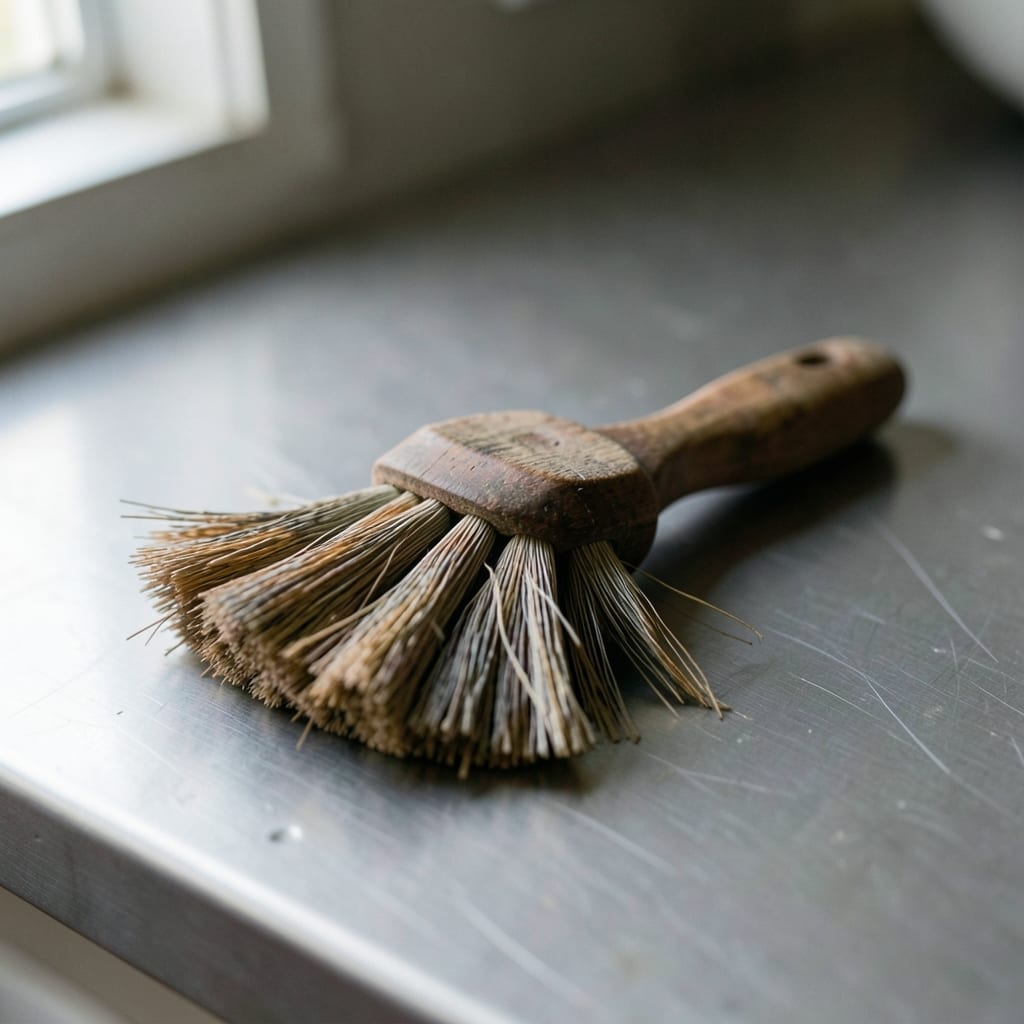
A 72-cell plastic tray from a big-box store in 2010, missing three corners and held together with duct tape. The cells are warped where the tape has pulled, and the bottom has a permanent crease from being stacked too high.
It has started more than 400 seedlings, none of which survived to maturity.
It taught me that failure is part of the process. The first time I planted marigolds in it and they rotted from overwatering, I threw it against the shed wall—then picked it up and used it again. Now, I notice how seedlings react to light, humidity, and care.
It is the only tray I use for starting anything from seed.
What is not in the drawer
This work does not depend on perfection. There are no digital scales here—just a handful of soil and a guess. No fancy moisture meters; the finger test works just as well. No branded fertilizers; compost and patience do the job.
And no pressure-treated lumber for raised beds, because the old cedar planks from my grandmother’s garden last longer anyway.
Deliberately absent
- Digital scales (a handful of soil is enough)
- Moisture meters (fingers know better)
- Branded fertilizers (compost works every time)
- Pressure-treated lumber (cedar lasts, and it’s quieter)
Behind the scenes
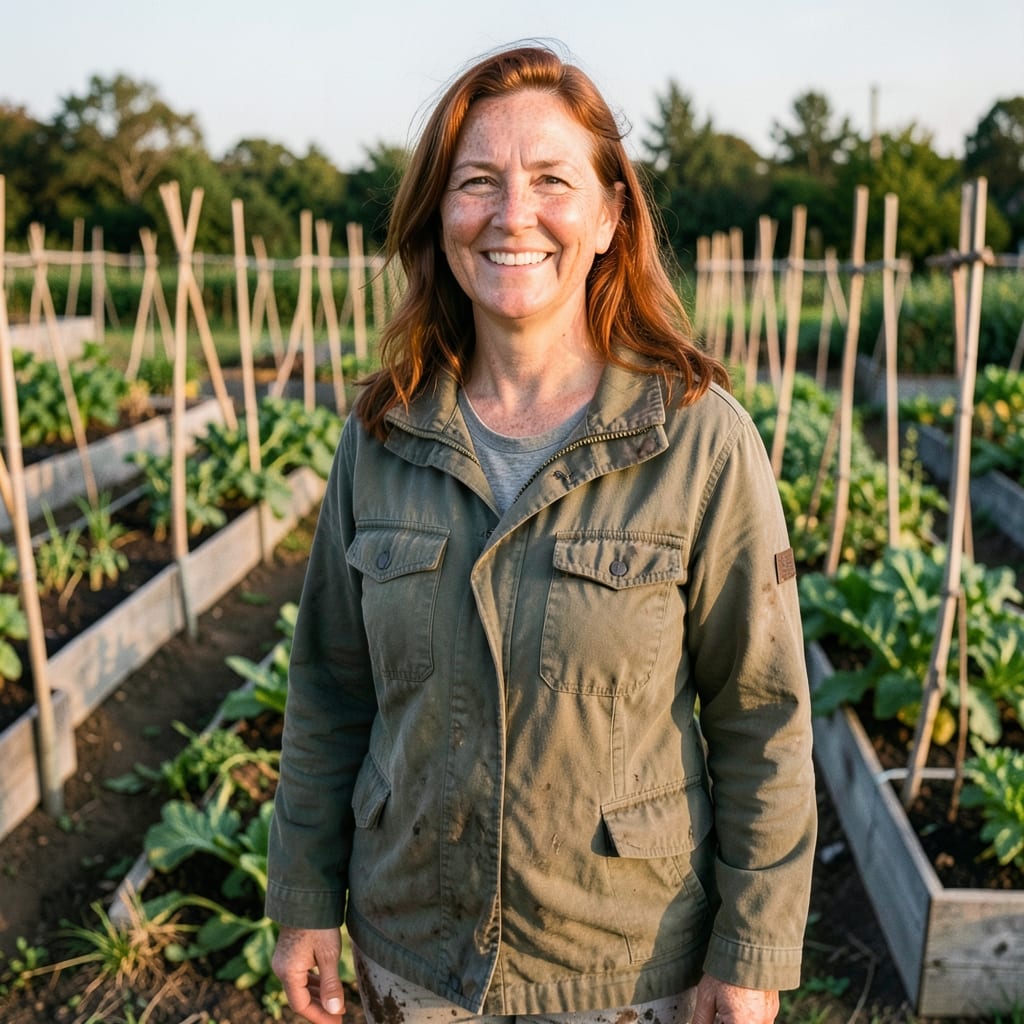
I am Renata Abernathy, the founder and editor of *Flower Beds*. I write about seeds, soil, and the quiet work of watching things grow—because that is how I learned to garden: by paying attention to what the earth already knows.
I still remember the first time I pressed a seed into damp soil and watched it sprout—it felt like magic. My grandmother’s garden in upstate New York taught me that plants have stories too, and I’ve spent years learning how to listen.
Renata Abernathy, 2026
Provenance
I came to this from a childhood spent kneeling in my grandmother’s garden, where she’d hand me a trowel and say, ‘Watch the dirt—it’s talking.’ She never taught me how to garden; she just showed me how to notice.
When I moved away, I took her hand fork, her pruners, and the habit of asking questions before digging.
Wear
This work has given me a permanent ache in my left knee from kneeling, a habit of noticing how plants lean toward light, and a deep distrust of ‘perfect’ soil mixes.
I used to think a garden was about beauty; now I know it is about patience, and the way a split stake or a cracked tray can hold a plant just as well as anything new.
What it is for
I am here to write about the things that actually matter in a garden: the stubborn seeds that refuse to sprout, the soil that fights back, the plants that outgrow their stakes.
This is not a site about perfection—it is about the work itself, and the objects that help (or hinder) it. Every post here is shaped by the same tools, the same dirt, and the same questions: *How does this grow? And why?*
Why any of this matters to you
Every page here is written with the same tools, the same soil, and the same stubborn attention to detail. You will not find perfect recipes for perfect gardens—only the real work of coaxing life from dirt, one seed at a time.
The hand fork, the pruners, the split stake, and the cracked tray are all here to remind you: gardening is not about the tools. It is about the work.
Every post here is shaped by the same objects that shape my garden: worn tools, imperfect soil, and the quiet work of paying attention. You will not find step-by-step guides to flawless blooms—only the real, messy, rewarding work of growing things.
If you have questions about seeds, soil, or the stubborn work of gardening, there is a contact page where you can ask them. No email address is needed—just the same tools we all use: dirt, patience, and a willingness to get your hands dirty.
The guides are grouped by category: Advice, Aphids, Blooming, Companion Plants, Container Gardens and Diseases.