
Blooming
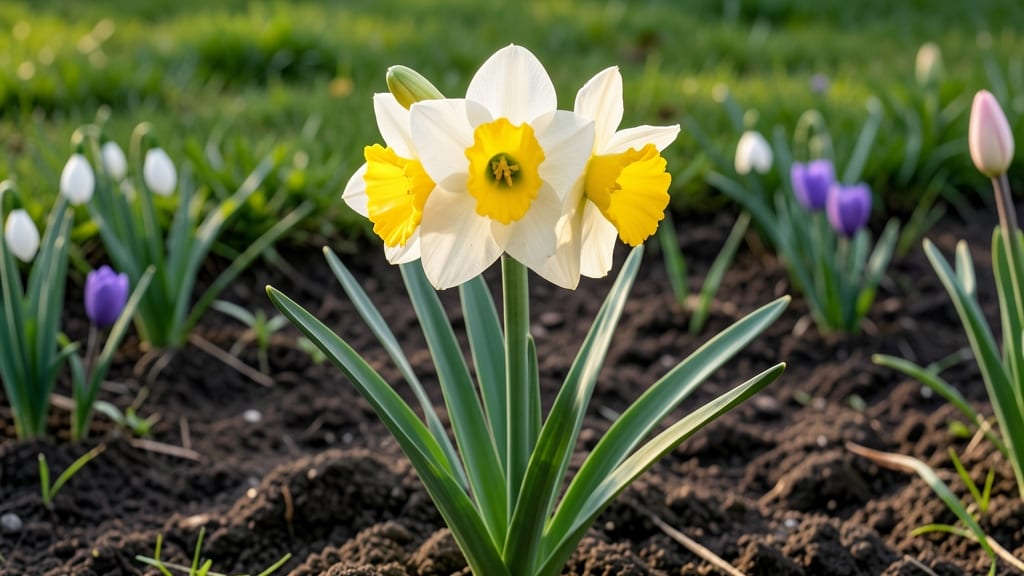
Understanding daffodil flowering time by variety and climate
Daffodils are nature's way of announcing spring's arrival, but not all varieties bloom at the same time. Knowing when your daffodil varieties will flower helps you create a garden that stays vibrant from early spring through late spring.
The timing can shift by weeks depending on whether you're in USDA Zone 3 or Zone 9, and even microclimates within your yard can make a difference.
For example, 'Tête-à-Tête' daffodils often bloom as early as late February in warm climates, while 'Thalia' varieties might not appear until May in cooler regions. Understanding these differences lets you mix varieties for a continuous bloom display.
Let’s break down the flowering windows for popular daffodil types and how climate impacts their timing.
🌼 Variety and Climate Impact Summary
| Variety | Bloom Time (USDA Zone 6a) | Bloom Time (USDA Zone 9) | Height (inches) | Color |
|---|---|---|---|---|
| 'Tête-à-Tête' | Late February - Early March | January - February | 6-8 | Yellow |
| 'Ice Follies' | Mid-March - Early April | February - March | 12-14 | White |
| 'Thalia' | Late April - Early May | March - April | 18-24 | Yellow |
| 'Minnow' | Early April - Mid-April | March | 8-10 | Yellow |
| 'Papillon' | Mid-April - Late April | March - Early April | 12-14 | White with yellow |
Early bloomers like 'Tête-à-Tête' and 'Minnow' are perfect for forcing indoors or planting near walkways where you want instant color. These varieties thrive in full sun and well-draining soil, making them ideal for rock gardens or containers. Their compact size also makes them great for small spaces or urban gardens.
Mid-season varieties such as 'Ice Follies' and 'Papillon' bridge the gap between early and late bloomers. They offer a stunning contrast with their pure white or bicolor flowers. In Zone 6a, these typically bloom in March, while in Zone 9, they may start as early as February.
Their slightly taller stature makes them perfect for borders or mixed perennial beds.
Late bloomers like 'Thalia' bring drama to your garden with their larger, bold flowers. These varieties often bloom in late April or May, extending your daffodil season well into spring.
If you're in a cooler microclimate, like a shaded area or higher elevation, you might see their blooms delayed by another week or two. Pair them with tulips or hyacinths for a layered effect.
Climate plays a huge role in bloom timing. In warmer zones (7-10), daffodils often bloom earlier and may even rebloom in fall if conditions are right. Meanwhile, in colder zones (3-5), they may not appear until late April or May.
Even within the same zone, a south-facing slope can warm up faster than a north-facing yard, shifting bloom times by weeks.
Microclimates also affect flowering. For instance, a protected microclimate, like a spot near a brick wall or under a deciduous tree, can create a warmer environment that encourages earlier blooms.
Conversely, a windy or exposed area might delay flowering until conditions stabilize. Observing these nuances helps you strategically place bulbs for optimal bloom timing.
To maximize your daffodil display, consider planting a mix of early, mid-season, and late bloomers. This ensures your garden stays colorful from late winter through early summer.
For example, start with 'Tête-à-Tête' in containers near your patio, then add 'Ice Follies' to borders, and finish with 'Thalia' in the back of your flower beds. This layered approach creates a seamless transition of color and height.
If you're in a warmer climate, you can even experiment with planting daffodils in fall and winter to extend their bloom season. Some varieties, like 'Carlton', are known for their reliability in Zone 9 and beyond.
Just be sure to choose varieties labeled as heat-tolerant or drought-resistant for these regions.
Understanding these patterns lets you plan your garden like a pro. Whether you're chasing early blooms or extending your spring display, selecting the right daffodil varieties and accounting for your local climate ensures your garden will be the envy of the neighborhood. Happy planting! 🌱
How to time your daffodil planting for peak early spring blooms
Timing your daffodil planting is the key to unlocking those bright yellow blooms just as winter loosens its grip. Most gardeners plant in fall (September-November), but winter planting can also work in milder climates.
The secret lies in understanding your local soil temperatures and daffodil chilling requirements—both trigger the blooming process.
Daffodils need 6-8 weeks of cold temperatures (below 60°F/15°C) to break dormancy. If you plant too early, bulbs may sprout prematurely and get fried by frost. Plant too late, and you risk late or weak blooms.
Let’s break down the perfect schedule for your region and how to force earlier blooms by up to 4 weeks.
- 1 Fall Planting (Zones 3-7): Aim for 6-8 weeks before ground freezes (typically September-October). Soil temps should be 50-60°F (10-15°C)—use a soil thermometer to check.
- 2 Winter Planting (Zones 8-10): Plant in December-January when soil cools below 60°F (15°C). Avoid planting if temps drop below 40°F (4°C)—bulbs may rot.
- 3 Chilling Requirement: Store bulbs in 35-45°F (2-7°C) for 8-12 weeks before planting (e.g., fridge crisper drawer). This mimics winter and speeds up blooming by 2-4 weeks.
- 4 Soil Prep: Amend soil with compost for drainage—waterlogged soil causes rot. Plant bulbs 6-8 inches deep and 4-6 inches apart in full sun (6+ hours daily).
- 5 Post-Planting: Water deeply after planting, then reduce watering until shoots appear. Apply a light fertilizer (5-10-10) in early spring when leaves emerge.
Forcing earlier blooms starts with chilling bulbs before planting. I like to store them in my fridge’s crisper drawer (set to 35-45°F/2-7°C) for 8-12 weeks.
This mimics winter’s cold snap and tricks daffodils into thinking they’ve already endured their required chill. Once planted, they’ll bloom 2-4 weeks earlier than unchilled bulbs.
Don’t overlook soil temperature—it’s your best indicator. Use a soil thermometer to confirm temps are below 60°F (15°C) before planting. In warmer zones (8-10), wait until December-January to avoid premature sprouting. If you’re in a cooler zone (3-6), plant by October to ensure bulbs establish roots before frost.
Pro tip: Plant early bloomers like 'Tête-à-Tête' first (they flower in late winter) and late bloomers like 'Thalia' later (they shine in early spring). This staggered approach ensures continuous color from February through April.
Just remember—patience pays off! The first year’s blooms may be modest, but each subsequent year, your daffodils will reward you with bigger, brighter displays.
With the right timing, your garden will burst into cheerful yellow just as winter’s last grip loosens. Happy planting—your early spring blooms are worth the wait! 🌼