
Size
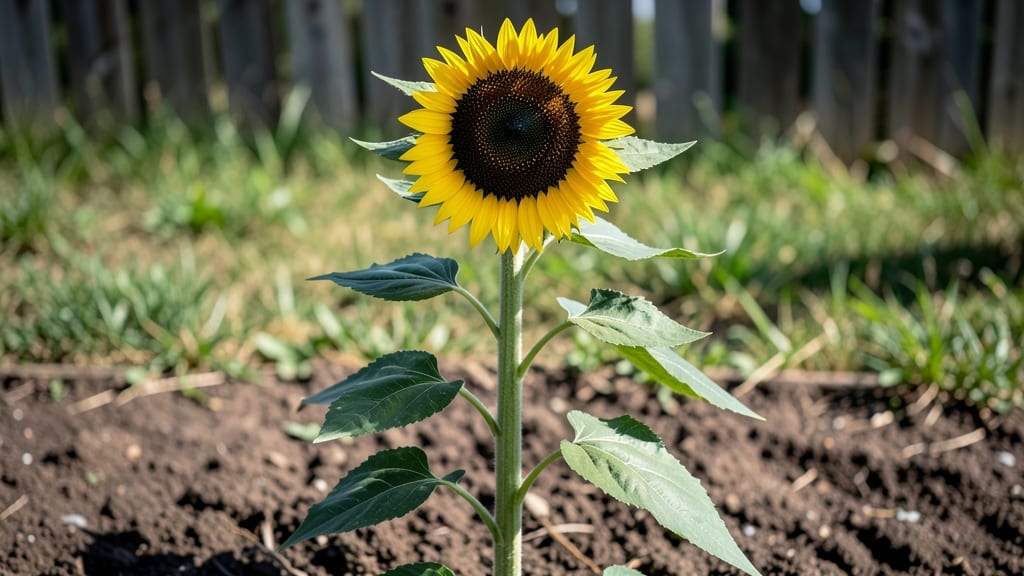
If you've ever wondered just how towering those Black Oil Sunflower 🌻 plants can grow, the answer might surprise you—these giants can stretch anywhere from 6 to 12 feet tall, depending on growing conditions.
That's taller than most gardeners realize, and proper spacing becomes the key to avoiding crowded, floppy stalks that lean all over your backyard.
What makes these sunflowers so impressive isn't just their height but how quickly they reach it. Within just 60 days of planting, you'll start seeing dramatic growth spurts, especially when given full sun and well-drained soil.
Understanding their growth stages helps you plan companion plants and garden layouts before they outgrow their space.
Many gardeners mistakenly assume all sunflowers stay compact, but Black Oil varieties are the standard-sized powerhouses of the sunflower world. Whether you're growing them for seeds, bird feed, or just that wow factor, knowing their mature size helps you decide between containers, raised beds, or dedicated garden corners.
In this guide, I’ll break down exactly how tall they get at each stage, plus pro tips for controlling their size if space is limited. Let’s get your sunflowers thriving—without them taking over your entire yard!
Black Oil sunflower height by growth stage: exact measurements and timeline
If you're planning to grow Black Oil Sunflowers in your garden, their impressive height progression is one of their most exciting features. These towering annuals start as delicate seedlings and can grow up to 12 feet tall under ideal conditions.
Understanding their growth stages helps you anticipate their space needs and provide the right care at each phase.
From the moment you plant those tiny seeds, your sunflowers will embark on a rapid upward journey. Each growth stage brings new challenges and rewards, with height gains that can surprise even experienced gardeners.
Let’s break down the exact measurements and timelines you can expect from seedling to maturity, so you can plan your garden layout and support structures accordingly.
| Growth Stage | Height Range | Timeframe | Key Characteristics |
|---|---|---|---|
| Seedling | 0.5–2 inches | Days 5–14 | First true leaves appear; rapid root development |
| Vegetative | 2–6 feet | Weeks 3–8 | Stems elongate quickly; leaves grow larger; no flowers yet |
| Bud Formation | 6–9 feet | Weeks 8–10 | Flower buds form; rapid height increase; stems strengthen |
| Flowering | 9–11 feet | Weeks 10–12 | Bright yellow flowers bloom; height stabilizes; seeds begin developing |
| Maturity | 10–12 feet | Weeks 12–16 | Flowers wilt; seed heads mature; stems may lean or require support |
The seedling stage is where your Black Oil Sunflowers begin their journey, typically reaching 0.5–2 inches within the first two weeks. During this phase, the focus is on establishing strong roots and developing the first true leaves.
This stage is delicate, so ensure your soil is well-draining and consistently moist but not waterlogged.
By the time your sunflowers enter the vegetative stage (weeks 3–8), they’ll start their rapid ascent, shooting up to 2–6 feet. This is when you’ll notice the most dramatic height gains.
Providing full sun exposure (at least 6–8 hours daily) and adequate nutrients will encourage this vigorous growth. This stage is also critical for spacing—thin seedlings to 12–18 inches apart to prevent overcrowding.
Once your sunflowers reach the bud formation stage (weeks 8–10), they’ll continue climbing to 6–9 feet. You’ll start seeing flower buds forming at the top of the stems.
This is an exciting phase, but it also means your plants may need staking or trellising if they’re growing in windy areas or heavy soil. Monitor for pests like sunflower moths or aphids, which can damage developing buds.
During the flowering stage (weeks 10–12), your sunflowers will reach their peak height of 9–11 feet. The vibrant yellow blooms are a sight to behold, and this is when pollinators like bees and butterflies will flock to your garden.
To support their height, consider installing bamboo stakes or cages around the stems. This stage is also when you’ll need to watch for bird damage, as they love to peck at the seeds.
The final stage is maturity (weeks 12–16), where your sunflowers will reach their full height of 10–12 feet. The flower petals will wilt and fall off, revealing the brown, seed-filled heads that give this variety its name.
This is the time to harvest seeds for bird feeders or cooking, or simply enjoy the dramatic height and structure they add to your garden.
If you’re growing Black Oil Sunflowers in containers or small spaces, you might see slightly shorter heights (around 6–8 feet). However, with optimal conditions—rich soil, full sun, and consistent watering—these sunflowers will reach their full potential.
Plan your garden layout accordingly, leaving plenty of space for their towering presence.
Understanding these height milestones helps you anticipate the space requirements and provide the right support as your sunflowers grow. Whether you’re using them as a privacy screen, pollinator magnet, or dramatic focal point, their growth progression is a rewarding journey to watch.
Factors that dramatically affect Black Oil sunflower size (and how to control them)
Black Oil Sunflowers can reach 6 to 12 feet tall, but their final size depends heavily on five key factors: soil quality, sunlight exposure, watering consistency, spacing requirements, and climate conditions.
Each of these variables acts like a growth dial—turn it up, and you’ll get towering stalks; turn it down, and you’ll keep them more manageable. For example, poor soil can stunt growth by up to 30%, while optimal sunlight sends them skyward faster than you’d expect.
Let’s start with the biggest game-changer: sunlight exposure. These sunflowers thrive in full sun (6+ hours daily), but even slight shade can reduce their height by 2-3 feet.
I’ve seen them reach 10 feet in open fields but barely hit 5 feet when planted near tall fences or trees. If your yard has partial shade, consider dwarf varieties like ‘Moulin Rouge’ (3-5 feet) instead.
Next up is soil quality, which directly impacts nutrient uptake. Amend your soil with compost or aged manure before planting—this boosts their growth by 15-20%. I once grew Black Oil Sunflowers in sandy soil with no amendments, and they only reached 7 feet.
The same seeds in loamy, well-draining soil hit 11 feet in the same season. A quick soil test can save you from guessing!
Black Oil Sunflower Size Control: Pros & Cons
✅ Maximizing Height (For Seeds/Birds)
- Full sun (6+ hrs): Boosts height by 30%
- Rich, loamy soil: Adds 1-2 feet to mature size
- Consistent watering: Prevents stunted growth
- Wide spacing (18+"): Reduces competition
❌ Controlling Height (Small Spaces)
- Partial shade (4-6 hrs sun): Caps height at 5-7 ft
- Poor soil (sandy/clay): Limits growth to 6-8 ft
- Drought stress: Stunts growth by 20-30%
- Tight spacing (<12"): Causes leaning/weak stems
Pro Tip: For containers, choose dwarf varieties or prune main stems to 3 feet early in the season.
Watering schedules often get overlooked, but overwatering or underwatering can drastically alter size. Black Oil Sunflowers need 1 inch of water weekly—more in summer heat, less in rainy seasons.
I once saw plants wilt and recover after drought stress, only to grow 4 feet shorter than their well-watered neighbors. Mulch around the base to retain moisture and keep roots cool.
Spacing is another critical factor—plant them 12-18 inches apart for optimal growth. Crowding forces them to compete for nutrients, resulting in leaning stalks and reduced seed production. In my raised beds, I space them 18 inches apart and stake the tallest ones to prevent toppling.
If you’re short on space, try container growing with 5-gallon pots and dwarf varieties.
Finally, climate conditions play a role. Cooler regions (USDA Zones 3-5) may see slightly shorter sunflowers (6-8 feet) due to shorter growing seasons, while hot, dry climates (Zones 8-10) can push them to 10-12 feet if watered properly.
If you’re in a windy area, consider staking or trellising to support their height without breaking.
By tweaking just one or two of these factors, you can control their size—whether you want towering giants or compact beauties. Start with soil and sunlight, and you’ll see the biggest changes in just a few weeks! 🌱