
Plants
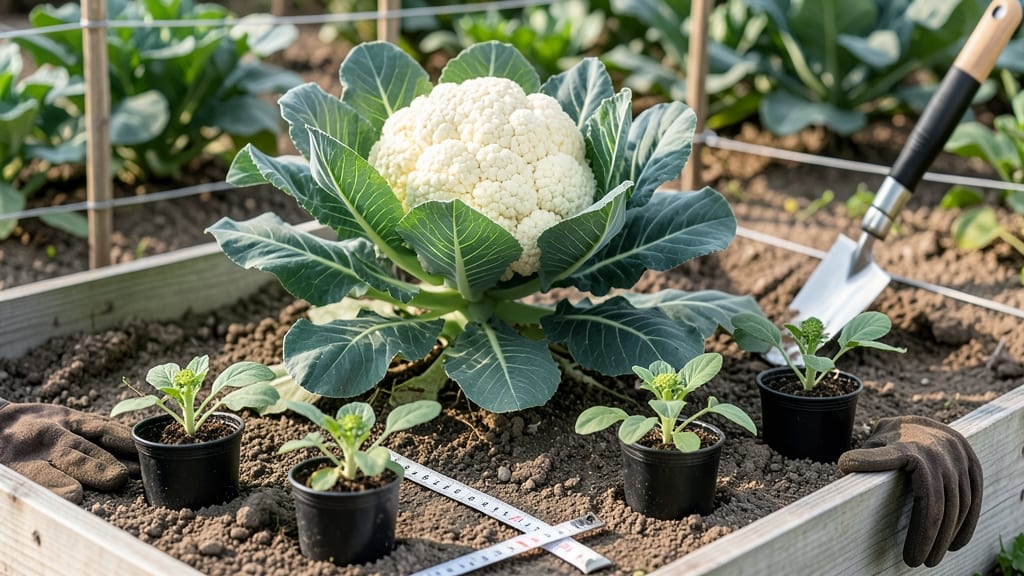
Ideal cauliflower plant spacing by variety and growth type
Cauliflower spacing isn’t one-size-fits-all—it depends on your variety type, growth habit, and whether you’re planting in-ground or in containers. Heading varieties (like 'Snowball Y Improved') need more room than broccoli-like types (such as 'Calabrese').
Even a few inches difference can mean the difference between healthy heads and stunted growth. Let’s break down the science-backed spacing rules tailored to your garden setup.
Why does spacing matter so much? Crowded cauliflower plants compete for nutrients, water, and sunlight, leading to smaller heads and increased disease risk. Proper spacing ensures airflow circulation, which prevents fungal issues like downy mildew.
For container gardens, spacing also affects root development and stability. Whether you’re a backyard gardener or a small-scale farmer, these guidelines will maximize your harvest potential.
| Variety Type | In-Ground Spacing (ft) | Container Spacing (inches) | Mature Height (ft) | Notes |
|---|---|---|---|---|
| Heading (e.g., 'Snowball Y Improved') | 18-24 inches apart | 12-15 inches | 1.5-2 ft | Needs most space for large heads |
| Broccoli-like (e.g., 'Calabrese') | 12-18 inches apart | 10-12 inches | 1-1.5 ft | Smaller heads tolerate closer spacing |
| Mini/Compact (e.g., 'Purple of Sicily') | 12 inches apart | 8-10 inches | 1-1.2 ft | Ideal for containers or high-density plots |
| Romanesco (e.g., 'Green Romanesco') | 18 inches apart | 12 inches | 1.5-2 ft | Fractal heads need airflow to develop |
📏 Use this as your quick-reference guide!
For in-ground planting, follow the spacing guidelines in the table above.
If you’re planting in rows, space rows 24-36 inches apart to allow for easy access and airflow. Dwarf varieties can handle tighter spacing, but avoid planting them closer than 12 inches apart—this can lead to overcrowding and disease pressure.
Pro tip: Use a measuring tape or spacing grid to ensure consistency, especially in larger plots.
Container gardening requires even more attention to spacing. Cauliflower plants in pots or raised beds need larger containers (at least 12-inch diameter) to accommodate their root systems.
If you’re growing multiple plants in containers, space them according to the table, but avoid overcrowding—each plant should have its own dedicated growing space. For example, a 5-gallon container can comfortably hold one dwarf variety, while a 10-gallon container might fit two mini varieties with proper spacing.
Adjusting for high-density planting is possible but requires careful planning. If you’re short on space, consider staggered planting or interplanting with fast-growing crops like lettuce or radishes. However, never reduce spacing below the minimum recommendations—this will sacrifice yield and health.
For example, planting 'Snowball Y Improved' at 12 inches apart instead of 18 inches will result in smaller heads and higher disease risk.
Another key factor is soil fertility. Rich, well-draining soil allows plants to compete less aggressively for resources, so you can sometimes tighten spacing slightly (by 2-3 inches) without negative effects.
Before planting, amend your soil with compost or aged manure to ensure optimal growing conditions. Well-fed plants are more resilient to crowding and produce larger, healthier heads.
Don’t forget about succession planting! By spacing your initial planting correctly and adding new plants every 2-3 weeks, you can extend your harvest season. This technique works especially well for broccoli-like varieties, which mature faster than traditional cauliflower.
For example, plant your first batch in early spring and follow up with late-summer varieties to enjoy a continuous supply of fresh cauliflower.
If you’re growing cauliflower in urban or small-space gardens, consider vertical gardening or trellising for companion plants. While cauliflower itself doesn’t climb, you can interplant it with pole beans or cucumbers to maximize space efficiency.
Just be sure to maintain the minimum spacing for each plant type to avoid competition. For instance, plant <
Common spacing mistakes that kill your cauliflower harvest (and how to fix them)
Even with the right cauliflower varieties and fertile soil, poor spacing can turn your garden into a disease breeding ground. I’ve seen crowded plants produce tiny, bitter heads or worse—completely rot before harvest.
The good news? Most spacing mistakes are easy to fix once you know what to watch for.
Let’s start with the biggest culprit: overcrowding. When plants compete for nutrients and sunlight, they stretch toward light and develop weak stems. This leads to small, loose heads that split open before maturity.
I’ve had gardens where cauliflower plants were spaced just 12 inches apart—a full 18 inches too close—and the results were disastrous.
⚠️ WARNING: SPACING MISTAKES YOU MIGHT BE MAKING ⚠️
⚠️ 5 Deadly Spacing Errors
- Crowding: Plants <18" apart → stunted growth, pests, disease (e.g., clubroot). Fix: Space 24-36" apart.
- Poor Soil Prep: Compacted or nutrient-poor soil → weak roots. Fix: Amend with compost and organic matter before planting.
- Over-Pruning: Removing too many lower leaves → reduced photosynthesis. Fix: Prune only yellow/damaged leaves.
- Ignoring Variety: Treating all cauliflower types the same → over/under-spacing. Fix: Check mature size (e.g., Romanesco needs 36"; dwarf varieties can be 18").
- Skipping Mulch: No mulch layer → soil-borne diseases (e.g., black rot). Fix: Apply 2-3" straw after planting.
💡 Pro Tip: Use a stakes-and-string layout tool to visualize spacing before planting. This saves time and prevents costly mistakes!
One mistake I see often is planting cauliflower too close to other vegetables. For example, pairing them with tomatoes or peppers can lead to shaded competition.
Cauliflower needs full sun exposure—if nearby plants block light, heads will turn small and yellow. Always leave at least 18 inches of clearance around taller plants.
Another hidden issue is skipping soil preparation. Cauliflower roots need loose, well-draining soil to expand. If your soil is compacted or clay-heavy, roots struggle to access water and nutrients, leading to poor head formation.
Before planting, mix in 2-3 inches of compost and consider adding sand or perlite for better drainage.
For existing gardens with already crowded cauliflower, don’t panic! Thin plants immediately to 24-36 inches apart, focusing on the healthiest, strongest seedlings. Remove weaker plants at the base to avoid disturbing roots.
If you’re dealing with disease signs (e.g., yellowing leaves or black spots), space remaining plants even wider (36-48 inches) to improve air circulation.
Finally, remember that spacing isn’t static. As cauliflower grows, its foliage canopy expands. Monitor plants weekly and adjust your harvest timing based on head size. If you notice leaves touching between plants, it’s time to thin or prune inner leaves to redirect energy to head development.
With these fixes, you’ll see bigger, firmer heads and fewer garden frustrations.