
Flowers
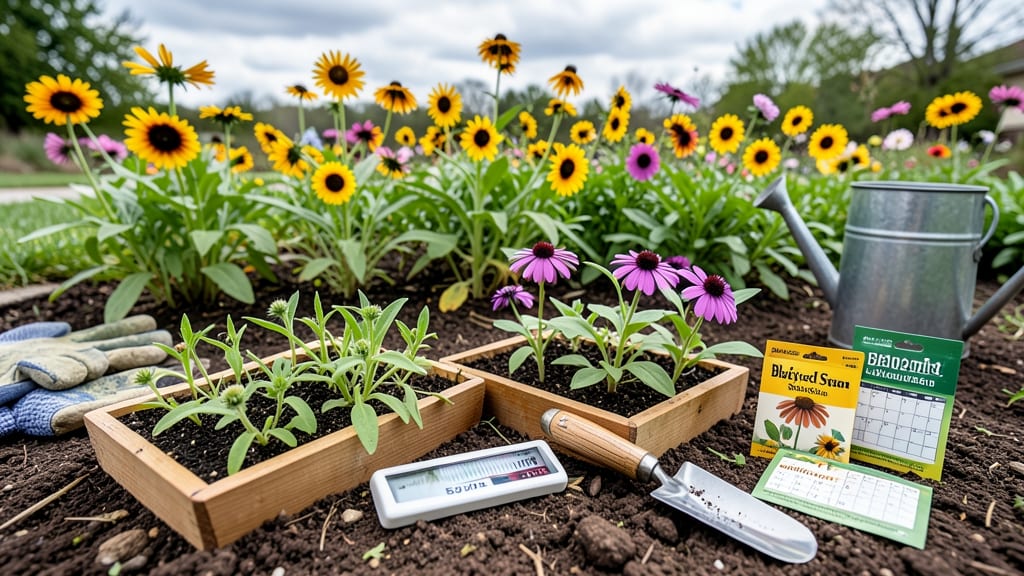
Planting flower seeds in Kansas at the wrong time can mean the difference between a vibrant garden bursting with 🌸 and a sad, frost-nipped disappointment.
The key isn't just knowing when—it's understanding how your USDA Zone 5b-7a climate dictates your planting window, from the last frost in mid-April to the first chill in October.
If you've ever wondered why some gardeners in Kansas get perfect blooms while others struggle, it likely comes down to timing. Whether you're sowing annuals like marigolds or perennials like coneflowers, getting the soil temperature and frost dates right makes all the difference.
I’ll show you exactly how to time your plantings—whether you're starting seeds indoors in February or direct-sowing in May—to maximize your blooms. No more guessing games, just a foolproof strategy tailored to Kansas’ unpredictable springs and falls.
From frost-resistant varieties to succession planting tricks, you’ll learn how to stretch your growing season and keep your garden thriving. Let’s make this your best blooming year yet!
Kansas frost dates & best flower seed planting months by type
Kansas gardeners face a unique challenge: the last spring frost can arrive as early as mid-April in western zones (7a) or as late as late April in eastern areas (5b).
These dates dictate when you can safely plant flower seeds outdoors—but timing varies wildly between annuals, perennials, and cool-season flowers. For example, marigolds thrive when planted after April 15, while pansies can handle light frosts and even prefer cooler soil.
Understanding your USDA zone is critical: Zone 5b gardeners (eastern KS) have a 165-day frost-free season, while Zone 7a (western KS) enjoys 200 days. This means your last planting window for summer-blooming annuals might be June 1 in the east but July 1 in the west.
Always check your local Cooperative Extension Service for precise frost dates—because a single week can mean the difference between flourishing blooms and frost-killed seedlings.
🌱 PRO TIP: Use a soil thermometer to confirm when soil reaches 60°F—the magic threshold for most warm-season flowers like petunias and zinnias. In Kansas, this typically happens 2-3 weeks after the last frost, but it can vary by 10 days depending on microclimates.
For annual flowers like petunias and marigolds, the window is tight: plant seeds directly outdoors only after your last frost date (typically mid-to-late May in most of Kansas).
These heat-lovers won’t tolerate even a light frost, so start seeds indoors 6-8 weeks before your last frost if you want earlier blooms. I’ve had great success with marigold seedlings transplanted in early May—just cover them with frost cloth if nights dip below 40°F.
On the other hand, perennials like coneflowers and black-eyed Susans are far more forgiving. You can sow seeds in early spring (March-April) as soon as the soil is workable, or even in late summer for a fall start.
These plants establish deep roots and return year after year, making them a Kansas gardener’s best friend for low-maintenance color. Pro tip: Scratch seeds lightly into the soil—they need light to germinate but not deep burial.
🌿 EXCEPTION: Cool-season flowers like pansies and snapdragons actually prefer cooler temperatures and can handle light frosts. Plant these in late summer (August-September) for
How to extend your Kansas flower season with smart planting tricks
Kansas gardeners face a unique challenge: unpredictable frost dates that can turn a thriving garden into a frost-killed mess overnight. The secret to beating frost isn't luck—it's strategy.
By combining succession planting, cold-hardy varieties, and protective covers, you can stretch your blooming season from early spring to late fall. I’ve tested these methods in my own Zone 6b garden, and they’ve added 6-8 extra weeks of vibrant color to my flower beds.
Start with cold-tolerant annuals like pansies and snapdragons, which can handle light frosts down to 25°F. These workhorses thrive in early spring and fall, giving you two free blooming seasons with minimal effort.
Pair them with perennials like coneflowers, which establish roots early and rebound after frost. The key is planting them 4-6 weeks before your last frost date—typically mid-March in most of Kansas.
For a no-fail 30-day countdown, I’ve created a simple system: Week 1-2 starts seeds indoors (like petunias and geraniums), Week 3-4 hardens off seedlings, and Week 5-6 transplants them after soil warms to 60°F.
This timing ensures your flowers bloom just as the frost danger passes. Don’t forget to use row covers for an extra 4-6°F of protection if late frosts sneak in.
🌱 Your 30-Day Kansas Flower Season Extension Plan
- 📅 Days 1-7: Start cold-hardy seeds (pansies, snapdragons) indoors under grow lights.
- 🌡️ Days 8-14: Monitor soil temps—plant hardy perennials (coneflowers, black-eyed Susans) when soil hits 45°F.
- 🛡️ Days 15-21: Cover seedlings with frost cloth if nights dip below 32°F.
- ☀️ Days 22-28: Transplant heat-loving annuals (marigolds, zinnias) after last frost (April 15 average).
- 🌿 Days 29-30: Mulch with straw to retain moisture and protect roots from late frosts.
Pro Tip: Use a soil thermometer—Kansas soil can fluctuate 20°F in 24 hours!
Another game-changer is succession planting. Instead of sowing all your seeds at once, stagger plantings every 2-3 weeks to ensure continuous blooms. For example, plant cosmos seeds in early May, then repeat in late May and early June.
This keeps your garden looking full and prevents gaps between blooming cycles. It’s especially effective for fast-growing annuals like bachelor’s buttons and sunflowers.
For late-season blooms, don’t overlook fall planting. Many flowers, like asters and goldenrod, thrive when sown in August-September. These varieties love cooler temps and often bloom into October or November, long after most gardens have gone dormant.
Just remember: water deeply before the first frost to help roots establish.
My top 3 frost-beating hacks? First, use black plastic mulch to warm soil faster in spring—it can add 2-3 weeks to your planting window. Second, group tall plants (like sunflowers) in the center of beds to shield shorter varieties from wind.
Finally, save seeds from your best performers—native Kansas flowers like purple coneflower are already adapted to our climate and often outperform hybrids.
With these tricks, you’ll turn Kansas’ short growing season into a year-round floral show. Start small, track your progress, and soon you’ll be the neighbor everyone envies for those perfectly timed blooms. Happy planting! 🌷