
Flowers
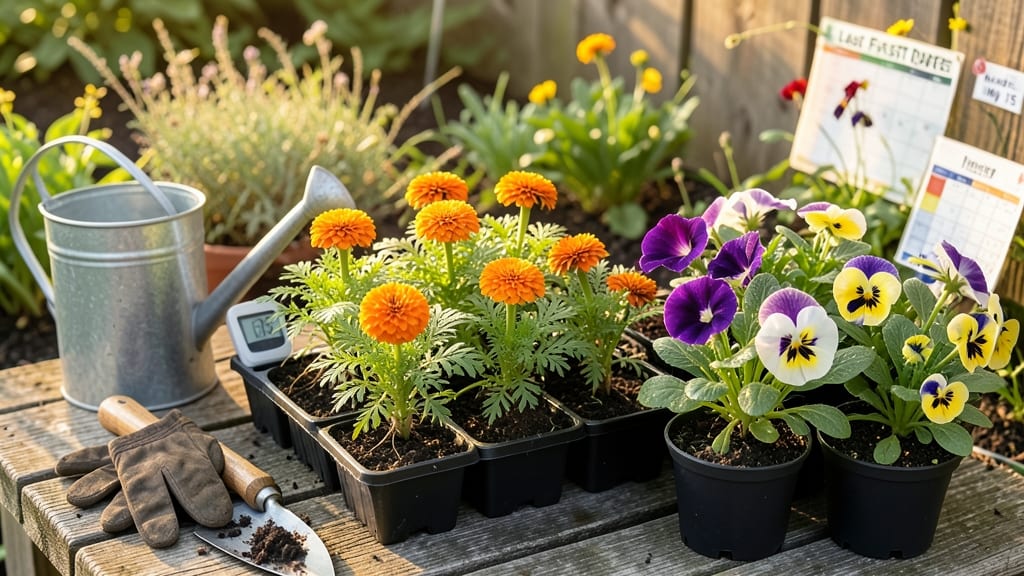
Understanding last frost dates and how they determine planting safety
Frost dates are the gardeners' secret weapon for avoiding frost damage and ensuring healthy blooms. The last frost date marks the final expected frost in spring, while the first frost date signals the end of the growing season.
These dates vary dramatically across the USDA hardiness zones, from Zone 3's late May average to Zone 10's early March timeline.
Understanding these dates helps you time planting perfectly. For example, tender flowers like impatiens or marigolds need soil temperatures above 60°F and no frost risk for 2-3 weeks.
Meanwhile, hardy perennials like coneflowers or black-eyed Susans can often survive light frosts and may even be planted earlier in cooler zones.
Local weather patterns add complexity. A late-season frost can devastate young seedlings, while early warm spells might trick you into planting too soon. That's why historical data from your local National Weather Service or agricultural extension office is invaluable—it accounts for your specific microclimate.
Here's the key rule: Wait until after your last frost date to plant tender annuals, but hardy perennials can often go in 4-6 weeks earlier when soil is workable. Always check soil temperature with a thermometer—60°F+ is ideal for most flowers.
| Flower Type | Frost Tolerance | Safe Planting Window | Zone Examples |
|---|---|---|---|
| Hardy Perennials | Survives 28°F+ | 4-6 weeks before last frost | Zones 3-7: Early April Zones 8-10: February-March |
| Tender Annuals | Dies below 32°F | After last frost date | Zones 3-5: Mid-May Zones 6-9: April Zones 10-11: January |
| Bulbs (Tulips, Daffodils) | Survives 20°F+ | Fall (6-8 weeks before first frost) | Zones 3-7: October Zones 8-10: November |
| Heat-Loving Flowers | Dies below 50°F | After soil reaches 65°F+ | Zones 6-9: Late May Zones 10-11: March-April |
| Cold-Hardy Annuals | Survives 25°F+ | 2-3 weeks before last frost | Zones 3-5: Early April Zones 6-9: March |
Your USDA zone is just the starting point. For example, Zone 6a might see its last frost around April 15, but a valley location could experience frost 2 weeks later than a hilltop garden.
That's why gardeners in Zone 6a often wait until mid-May to plant tender annuals like petunias or geraniums.
Pro tip: Use the 50% probability rule—plant when there's only a 10-20% chance of frost in the next 2 weeks. Check resources like the Old Farmer's Almanac or local cooperative extension services for 10-year averages that account for climate shifts.
Even after planting, monitor weather forecasts for unseasonable cold snaps. A light frost protection layer (like row covers or mulch) can save tender flowers from damage if temperatures dip unexpectedly. For heat-loving varieties, consider starting seeds indoors 6-8 weeks before your last frost date.
Remember: Frost dates are guidelines, not rules. In Zone 5, I've seen late May frosts delay planting until early June, while Zone 8 gardeners might plant tender annuals in March with no issues. Always observe your local patterns and adjust accordingly.
When in doubt, harden off seedlings for 7-10 days before planting and choose disease-resistant varieties that bounce back from light frost damage. With these strategies, you'll maximize bloom time while minimizing risk—because nothing beats seeing your first flowers of the season thrive! 🌸
Zone-by-Zone last frost date calculator: when to plant flowers in your area
Now that you understand last frost dates and their impact, let's get practical. This zone-by-zone calculator shows exactly when to plant annuals, perennials, and bulbs in your area. Simply find your USDA zone below and check the recommended planting windows for your favorite flowers.
For example, in Zone 5, I wait until mid-May for tender annuals like petunias, while hardy perennials like coneflowers can go in as early as late April. In warmer Zone 9, I plant heat-loving flowers like hibiscus in February when soil warms to 65°F+.
| USDA Zone | Last Frost Date | Hardy Perennials | Tender Annuals | Heat-Loving Flowers | Bulbs (Fall) |
|---|---|---|---|---|---|
| Zones 3-4 | Late May | Early April | Mid-May | June | October |
| Zones 5-6 | Early May | Late March | Mid-May | Late May | September-October |
| Zones 7-8 | Mid-April | February | April | March-April | November |
| Zones 9-10 | Early March | January | February | January-February | December |
| Zones 10-11 | None (tropical) | Year-round | Year-round | Year-round | Year-round |
*Adjust dates 1-2 weeks earlier for low elevations or later for high elevations
Use this table as your planting guide, but remember: microclimates matter. A south-facing slope in Zone 6 might warm up faster than a north-facing valley. For extra safety, use frost cloth or wait until soil temperatures reach 60°F+ for tender flowers.
Pro tip: Direct-sow cold-hardy flowers like calendula or snapdragons 2-3 weeks before your last frost date. These fast-growing annuals tolerate light frosts and give you early blooms. Meanwhile, slow-germinating seeds like lobelia should wait until after your last frost.
Don't forget about fall planting for bulbs and perennials. In Zone 5, I plant tulip bulbs in October—6-8 weeks before the first frost. This gives roots time to establish before winter dormancy. For Zone 9+, fall planting can happen as late as December.
When in doubt, check your local extension office for 10-year averages—they account for climate shifts better than generic charts. And always keep a garden journal to track your actual frost dates each year. Over time, you'll refine your planting schedule to match your unique microclimate.
With this zone-by-zone calculator, you'll never guess again about when to plant flowers outside. Happy gardening—and may your blooms be bold and beautiful this season! 🌸