
Shrubs
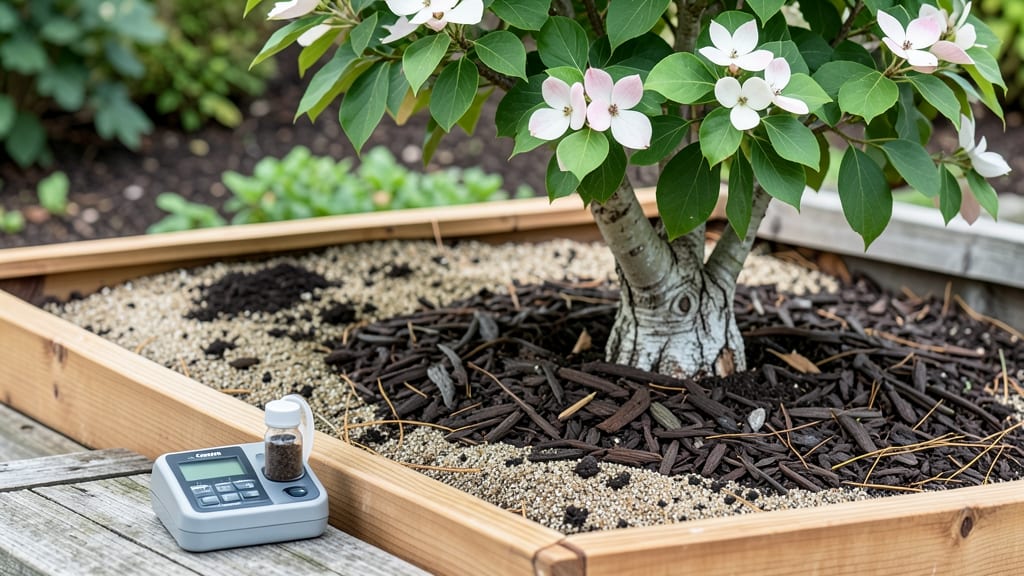
Optimal flowering dogwood soil pH & nutrient balance explained
Your flowering dogwood (Cornus florida) thrives when its soil mirrors its natural woodland habitat. The ideal pH range of 5.0–6.0 unlocks vibrant blooms and robust growth. This acidic-to-neutral balance ensures roots access essential nutrients while preventing toxic buildup that stunts development.
Most garden soils fall outside this range, which is why testing before planting is critical. A simple soil pH test kit (available for under $10) reveals whether your yard needs sulfur to lower pH or lime to raise it.
For dogwoods, never jump to lime—this can lock out vital micronutrients like iron and manganese.
| Soil Requirement | Specification | Dogwood Preference |
|---|---|---|
| pH Level | 5.0–6.0 | Acidic to slightly acidic |
| Primary Nutrient | Nitrogen (N) | Moderate (0.1–0.2%) |
| Secondary Nutrient | Phosphorus (P) | Low to moderate (0.05–0.1%) |
| Tertiary Nutrient | Potassium (K) | Moderate (0.1–0.2%) |
| Organic Matter | 3–5% | Leaf mold or compost |
| Drainage | Well-draining | Avoids waterlogging |
Beyond pH, nitrogen (N), phosphorus (P), and potassium (K) form the backbone of dogwood nutrition. Too much nitrogen (common in lawn fertilizers) fuels leafy growth at the expense of spring blooms.
Instead, opt for a balanced 10-10-10 fertilizer applied in early spring—just 1 cup per 10 sq ft—to support root development without overfeeding.
Phosphorus deficiencies show as purple stems or slow growth, while potassium shortages cause yellow leaf edges and weak stems. A soil test report reveals exact deficiencies, but a quick fix is mixing bone meal (for P) or greensand (for K) into the planting hole.
Always water thoroughly after amending to activate nutrients.
Micronutrients like iron, manganese, and zinc are equally vital. Dogwoods in alkaline soils (pH >7.0) often develop iron chlorosis (yellow leaves with green veins). If this occurs, apply chelated iron or sulfur-coated urea to restore balance. Test soil again in 6 months to monitor progress.
Mulching with 2–4 inches of pine bark or leaf mold mimics the dogwood’s woodland home while gradually improving soil structure. Avoid fresh wood chips—they rob nitrogen as they decompose. Instead, top-dress with composted leaves or well-rotted manure annually to maintain organic matter levels.
Signs of over-fertilization include burnt leaf tips or excessive new growth at the base. If you suspect overfeeding, flush the soil with water and reduce future applications. Dogwoods are light feeders—prioritize soil health over frequent fertilizing for the best blooms.
For container-grown dogwoods, use a peat-based potting mix with perlite to ensure drainage. Repot every 2–3 years with fresh mix, as containers deplete nutrients faster. Always include slow-release fertilizer pellets at planting time to sustain growth without risking root burn.
Remember: healthy soil equals healthy blooms. By maintaining the right pH, nutrient balance, and organic matter, your flowering dogwood will reward you with showstopping spring displays for decades. 🌸🌿🌳
Perfect drainage & organic mix: how to prepare soil for dogwood roots
Dogwood roots need well-aerated soil that prevents waterlogging while retaining moisture—think of their woodland home where leaves create a natural sponge-like layer. If your yard has heavy clay or sandy soil, amending it before planting is essential.
Clay soils hold too much water, suffocating roots, while sandy soils drain too quickly, starving them of nutrients.
Start by testing your soil's drainage rate with a simple percolation test: Dig a 12-inch hole, fill it with water, then time how long it takes to drain. If water lingers beyond 6 hours, you've got poor drainage. For sandy soils, water drains in under 1 hour—both extremes need correction.
Soil Amendments for Dogwood Roots
Clay Soil Fixes
- ✅ Pros: Retains moisture, rich in nutrients
- ✅ Pros: Improves with organic matter
- ❌ Cons: Compacts easily, poor aeration
- ❌ Cons: Roots suffocate if too dense
Solutions:
• Mix in 3 inches of compost or leaf mold
• Add coarse sand or perlite (20% of volume)
Sandy Soil Fixes
- ✅ Pros: Drains quickly, easy to work
- ✅ Pros: Warms up faster in spring
- ❌ Cons: Lacks nutrients, dries out fast
- ❌ Cons: Poor water retention
Solutions:
• Blend in 30% peat moss or coco coir
• Top-dress with 2 inches of pine bark fines
Universal Amendments
• Composted leaves (2–3 inches) – improves structure
• Well-rotted manure (10% of mix) – adds nitrogen
• Pine bark mulch (3–4 inches) – mimics woodland floor
For heavy clay, dig a 12-inch-deep planting hole twice as wide as the root ball. Amend the native soil with a mix of 50% native soil, 30% compost, and 20% perlite. This creates air pockets while retaining moisture. Water the amended soil thoroughly before planting to settle the mix.
Sandy soils benefit from a peat-based blend with 20% composted pine fines and 10% vermiculite. This combo holds moisture longer while preventing compaction. Always test your amended soil’s pH (aim for 5.0–6.0) and moisture retention after mixing—dogwood roots thrive in soil that feels like a damp sponge.
Mulch plays a critical role in maintaining ideal conditions. Apply 3–4 inches of pine bark mulch around the base, keeping it 3 inches away from the trunk. This mimics the dogwood’s natural habitat while suppressing weeds and conserving moisture. Replenish mulch annually to maintain its insulating properties.
Remember: dogwood roots are shallow—never till the soil around established trees. Instead, focus on top-dressing with compost every spring. This gradual approach builds soil health without disturbing sensitive roots, ensuring your dogwood stays vibrant and blooms abundantly year after year. 🌳💧🌿