
Shrubs
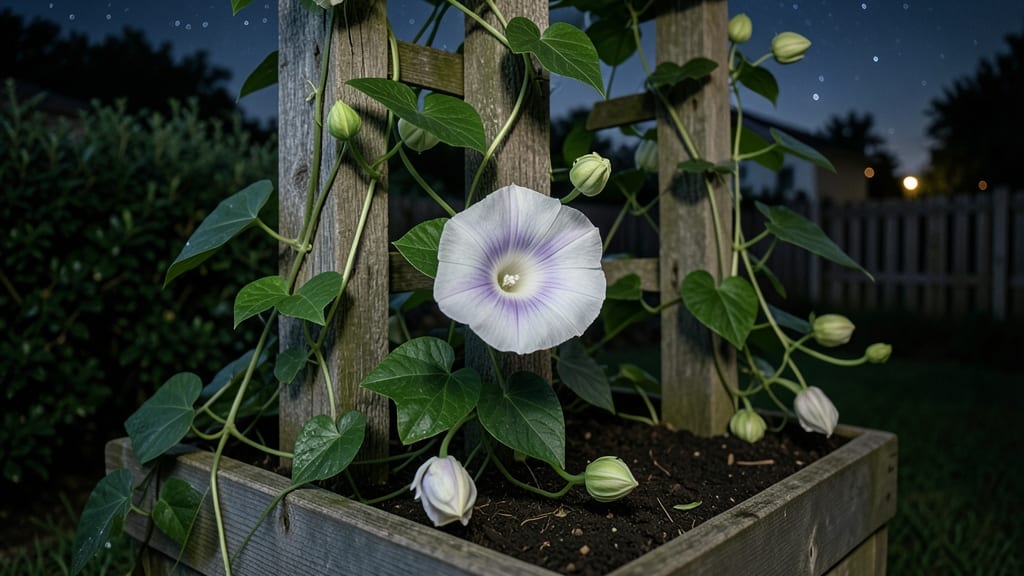
If your 🌙 moonflower refuses to bloom at night like it should, you might be getting the sun-or-shade balance all wrong.
These enchanting vines need just the right amount of light to trigger their magical evening displays, and too much or too little can leave you staring at bare stems instead of fragrant white blooms.
Most gardeners assume moonflowers love full sun, but in reality, they often perform best with a mix of morning brightness and afternoon shade—especially in hotter climates where harsh afternoon rays can stress the plant.
The key isn’t just throwing them into the sunniest spot; it’s understanding how light affects their growth cycle from spring planting through summer blooming.
I’ve tested different light setups in my own Zone 6a garden, and what I’m about to share will help you avoid common mistakes that keep moonflowers from thriving.
Whether you’re working with a sunny patio or a shady corner, these tricks will give you the best chance at night-blooming success every July and August.
Let’s break down exactly how much sun your moonflower needs, when to provide shade, and how to troubleshoot if your plant still isn’t cooperating—so you can finally enjoy those dreamy evening flowers you’ve been waiting for.
 Best Window Placement
Moonflower sun vs shade requirements: the science behind nighttime blooms
Moonflowers (Ipomoea alba) are famous for their dramatic nighttime displays, but their sun or shade needs are often misunderstood. Unlike many flowers that bask in full sun, moonflowers actually thrive with a balanced approach—morning sunlight to fuel growth and afternoon shade to prevent stress.
This delicate balance triggers their photoperiodic response, the biological process that cues them to bloom only after dark.
The key to success lies in understanding how light intensity and duration affect their growth cycle. Too much harsh afternoon sun can scorch tender leaves, while too little light weakens the vine’s ability to produce energy for blooms.
In my Zone 6a garden, I’ve found that moonflowers perform best with 4-6 hours of morning sun followed by dappled shade or filtered light in the afternoon.
Here’s the science: Moonflowers are short-day plants, meaning they need a specific light threshold to trigger flowering. When daylight hours shorten (typically in late summer), they respond by producing blooms that open at night.
However, this process requires consistent light exposure during their growth phase to build the energy reserves needed for flowering.
If you’re in a hotter climate (Zones 8-10), afternoon shade is non-negotiable—even partial sun can cause leaf burn. In cooler regions (Zones 5-7), they tolerate more direct sun, but afternoon shade still boosts bloom production by reducing stress.
The goal is to mimic their natural habitat, where they grow under tropical forest canopies with filtered light.
🌱 Did You Know? Moonflowers can actually close their blooms by mid-morning if they receive too much direct sunlight, which is their way of conserving moisture. This is a clear sign your plant is struggling with light stress—not just a quirky behavior.
| Light Condition | Ideal Sunlight Hours | Best For | Bloom Impact |
|---|---|---|---|
| Full Sun (6+ hours) | 4-6 hours (morning only) | Cooler climates (Zones 5-7) | Moderate blooms; risk of leaf scorch |
| Partial Sun (4-6 hours) | Morning sun + afternoon shade | Ideal for most climates | Abundant night blooms; healthy vines |
| Partial Shade (2-4 hours) | Filtered light all day | Hot climates (Zones 8-10) | Fewer blooms; slower growth |
| Deep Shade (<2 hours) | Indirect light only | Not recommended | Minimal to no blooms; weak growth |
🌿 Note: Adjust for your local climate—hotter areas need more shade!
Diagnosing light-related stress in moonflowers is easier than you think. Start by checking the leaves: yellowing or crispy edges are classic signs of too much sun, while pale, leggy growth indicates insufficient light.
I once had a moonflower vine that produced only 3 blooms in a season because it was planted under a dense oak tree—until I moved it to a south-facing trellis with morning sun. The difference was night-and-day (literally!).
Another critical factor is light consistency. Moonflowers hate sudden changes, like moving them from shade to full sun mid-season. If you’re experimenting with placement, do it gradually over 2 weeks to avoid shocking the plant.
I recommend starting with partial shade if you’re unsure, then slowly increase sunlight as the plant acclimates—especially in late spring when days lengthen.
For container growers, light needs are even more critical because pots can overheat. If your moonflower is in a black or dark-colored pot, it’s absorbing extra heat—opt for light-colored containers to reflect sunlight and reduce stress.
I’ve also had success using reflective mulch (like white gravel) around the base to bounce extra light onto the leaves without overheating the soil.
One common misconception is that moonflowers only need shade to bloom. While they do prefer afternoon shade, they still need morning sun to build energy for flowering.
Think of it like charging a battery: too little light (shade) means no power for blooms, but too much (full sun) can overheat the system. The sweet spot is 4-6 hours of bright, indirect light daily, which is why east- or west-facing locations work so well.
🌙 Pro Tip: If your moonflower isn’t blooming by late July, it might be light-starved. Try moving it to a sunnier spot for 2-3 weeks to jumpstart flowering—just be sure to protect it from afternoon sun once blooms appear.
5 Proven light tricks to maximize moonflower blooms (even in shady spots)
Moonflowers (Ipomoea alba) are finicky about light—too much harsh sun can scorch their delicate leaves, while too little shade might starve them of the energy needed for those stunning nighttime blooms. The key is creating the perfect balance, especially in urban gardens or balconies where sunlight is limited.
I’ve found that even shady spots can work with the right adjustments, so let’s explore five science-backed tricks to coax more blooms from your moonflower vines.
First, understand that moonflowers need 4-6 hours of morning sun to set their internal clocks for nighttime blooming. Afternoon shade becomes crucial in hot climates to prevent leaf burn.
If your space only gets dappled light, don’t worry—we’ll fix that with reflective surfaces and companion plants that bounce light back to your vine. The goal is to mimic their natural habitat where they climb trees and receive filtered sunlight.
Use Reflective Surfaces
Place a light-colored wall or mirror panel behind your moonflower to bounce extra light onto its leaves. Even white gravel or a light-colored fence can increase light exposure by up to 30%.
Prune for Better Airflow
Thin out crowded vine growth to prevent shading lower leaves. Aim for 6-8 inches between nodes—this ensures all parts of the plant get adequate light for photosynthesis and bloom production.
Plant Tall Companions
Surround your moonflower with sun-loving companions like morning glories or nasturtiums. These plants act as living trellises, lifting your moonflower higher where it can access more light while still receiving afternoon shade.
Adjust Seasonally
Move potted moonflowers to sunnier spots in spring and summer but provide afternoon shade in late summer when days grow shorter. A simple shade cloth (30-50% coverage) works wonders.
Use a Rotating Trellis
For balcony gardens, try a rotating trellis to follow the sun’s arc. Position it east-facing in the morning and west-facing by afternoon. This ensures even light distribution and prevents one-sided growth that blocks sunlight.
One of my favorite tricks is using a white plastic milk crate as a DIY light reflector. Place it behind your moonflower’s trellis to maximize indirect light—it’s free, reusable, and works surprisingly well.
I’ve seen moonflowers in partial shade produce twice as many blooms after adding this simple hack. The key is consistency: moonflowers need predictable light patterns to trigger their night-blooming cycle.
If you’re growing moonflowers in containers, consider placing them on a rolling plant stand so you can rotate them daily. This ensures all sides of the vine receive equal light exposure, preventing leggy growth and encouraging bushier, bloom-heavy vines.
Even just 15 minutes of rotation twice a day makes a noticeable difference in plant health and flowering.
Remember, moonflowers are notoriously sensitive to sudden light changes. If you move your plant to a sunnier spot, do it gradually over 7-10 days to avoid shocking the vine. Start with just 1-2 extra hours of morning sun per day, then increase as the plant acclimates.
This slow transition helps prevent leaf scorch and ensures your moonflower continues to thrive in its new light conditions.