
Blooming
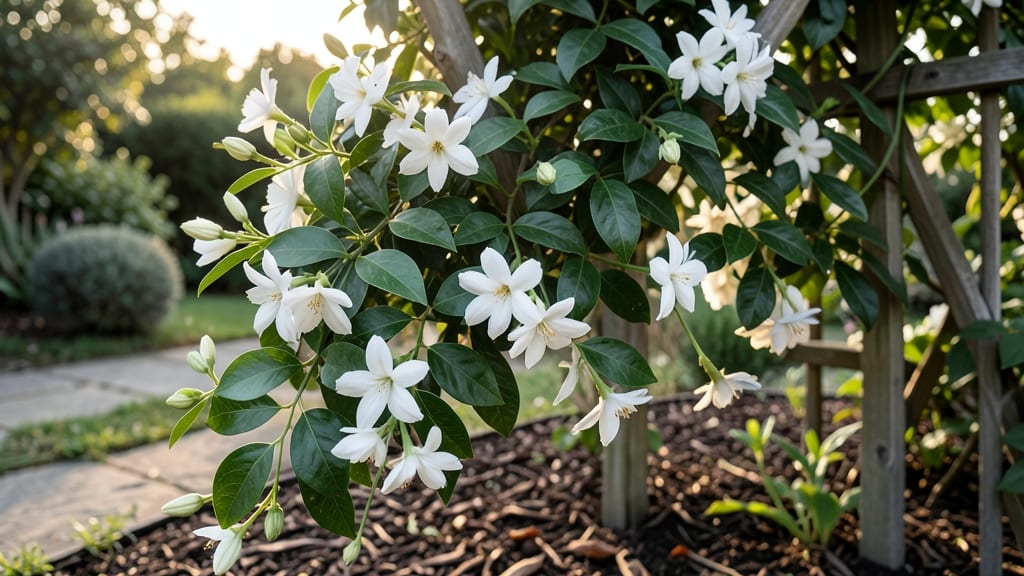
There’s nothing quite like the intoxicating scent of a jasmine plant flowering season filling your garden—especially when it blooms longer than usual. Most people assume jasmine flowering season is limited to summer, but with the right care, you can extend those fragrant blooms well beyond their natural window.
If you’re in USDA Zone 6a or warmer, you already know jasmine thrives in spring and summer, but did you know some varieties—like Jasminum sambac—can flower year-round in tropical climates? The key lies in understanding your plant’s needs and tweaking care routines to match its natural rhythm.
In this guide, I’ll show you exactly how to trigger more blooms, from pruning at the right time to fertilizing for peak fragrance.
Whether you’re dealing with a stubborn non-flowering vine or just want to maximize your jasmine’s potential, these tips will turn your garden into a year-round sanctuary of sweet, intoxicating blooms.
Ready to transform your jasmine from a seasonal beauty into a perpetual fragrant star? Let’s dive into the secrets of extending its flowering season—no matter where you live.
Jasmine flowering season: natural timing and climate-dependent variations
The jasmine flowering season varies dramatically depending on the variety and your USDA climate zone. Most common types like Arabian jasmine and common jasmine bloom in late spring to early summer, but tropical varieties can flower year-round in warm climates.
Understanding these patterns helps you anticipate fragrance and plan your garden layout for maximum impact.
Jasmine plants have evolved to release their intoxicating scent primarily at night, a natural adaptation to attract night-flying pollinators like moths. This nocturnal blooming also means you’ll experience their full fragrance potential during evening hours, especially in USDA zones 9-11 where warm nights encourage continuous flowering.
Climate zone plays a crucial role in determining your jasmine’s bloom window. In cooler USDA zones 7-8, most varieties enter dormancy in winter, with spring blooms typically appearing between April and June. Meanwhile, in warmer zones 9-11, some varieties like jasmine sambac (Arabian jasmine) can produce flowers in every season, especially with proper care.
Here’s how different jasmine varieties align with seasonal patterns and climate requirements:
| Variety | Bloom Season | USDA Hardiness | Night Bloomer? | Fragrance Peak |
|---|---|---|---|---|
| Arabian Jasmine (Jasminum sambac) | Year-round (tropical), Spring-Summer (temperate) | Zones 9-11 (hardy to 25°F) | ✅ Yes | Evening hours |
| Common Jasmine (Jasminum officinale) | Late Spring-Early Summer | Zones 6-9 (hardy to 0°F) | ✅ Yes | Night into early morning |
| Pink Jasmine (Jasminum polyanthum) | Spring-Fall (continuous in warm climates) | Zones 7-10 (hardy to 10°F) | ✅ Yes | Late afternoon to night |
| Star Jasmine (Trachelospermum jasminoides) | Summer-Fall | Zones 7-11 (hardy to 0°F) | ❌ No (day bloomer) | Midday to afternoon |
The Arabian jasmine stands out as the most adaptable, capable of blooming continuously in USDA zones 9-11 with minimal care. In cooler climates, it still produces abundant flowers in spring and summer but may need winter protection.
Meanwhile, common jasmine thrives in temperate zones, offering a late spring to early summer show that fills your garden with fragrance just as other spring blooms fade.
For gardeners in USDA zones 7-8, the Pink jasmine is an excellent choice because it extends its blooming season into fall, providing fragrance long after other varieties have finished.
This variety’s ability to produce flowers in spring, summer, and fall makes it ideal for creating a prolonged sensory experience in your outdoor space.
If you’re in a warmer climate (zones 9-11), consider planting multiple varieties to create a year-round fragrance garden. The Arabian jasmine and Pink jasmine can overlap their blooming seasons, ensuring your garden always has a whiff of sweetness in the air.
Even the Star jasmine, which blooms during the day, complements this strategy by adding daytime fragrance.
One key factor that affects jasmine blooming is day length. Many varieties are short-day plants, meaning they flower in response to shorter daylight hours. This explains why you’ll often see peak blooming in late spring and early summer when days begin to lengthen but haven’t reached their maximum.
In tropical climates, this response is less pronounced, allowing for more continuous flowering.
To maximize your jasmine’s fragrance potential, pay attention to moisture levels and soil health during the blooming season. Well-draining soil with consistent moisture encourages robust growth and abundant flowers.
In drought-prone areas, consider adding a 2-3 inch mulch layer to retain moisture and protect roots from temperature fluctuations that can stress the plant.
For gardeners in cooler climates, extending the blooming season often requires strategic pruning and protection. After the first frost, cut back any dead or damaged growth, and consider wrapping young plants in burlap or frost cloth to shield them from harsh winter conditions.
This practice encourages healthier spring regrowth and more vigorous blooming once temperatures rise.
🌸
How to extend jasmine flowering season: pruning, fertilizing, and light tricks
Most jasmine plants follow a strict spring-to-summer flowering season, but with strategic care, you can coax blooms well into fall—or even winter. The secret lies in understanding how pruning timing, fertilizer ratios, and light exposure interact to trigger more flowers.
For example, Jasminum officinale (common jasmine) naturally blooms on old wood, meaning last year’s growth holds the buds for next year’s flowers.
If you’re in USDA Zone 6a like me, your jasmine’s natural flowering season spans June through September, but with the right adjustments, you can push those blooms into October or even November.
The key is to prune after the first frost (not in spring!) and use phosphorus-rich fertilizers to encourage flowering instead of leafy growth. Let’s break down the exact steps to turn your jasmine into a year-round fragrant star.
5 Pro Techniques for Year-Round Jasmine Blooms
- 🌱 Prune after frost (late fall/early winter) to remove dead growth and stimulate new buds on old wood—this tricks the plant into thinking spring is coming.
- 🌿 Switch to phosphorus-heavy fertilizer (5-10-10 NPK) in late winter to signal the plant to focus on blooms, not just leaves.
- ☀️ Supplement with grow lights (12-14 hours/day) in winter to mimic longer daylight and break dormancy early.
- ✂️ Avoid heavy pruning in spring—only trim to shape. Cutting back too hard removes next year’s flower buds hidden in old wood.
- 💧 Water deeply but less frequently in fall/winter to reduce stress and encourage root growth, which supports more blooms.
One of the biggest mistakes gardeners make is pruning jasmine in spring when it’s already budding. This removes the old wood where next year’s flowers form.
Instead, I prune mine right after the first frost—around mid-October in Zone 6a—to clean up dead growth and shape the vine without sacrificing future blooms.
For fertilizing, the NPK ratio is everything. In spring and summer, a balanced 10-10-10 fertilizer works, but to extend the flowering season, switch to a 5-10-10 or 10-20-10 in late winter.
The extra phosphorus tells the plant, “Hey, it’s time to make flowers, not just leaves!” I apply mine in early February to give the plant a head start on blooming.
Light is another game-changer, especially if you’re in a cooler climate. Jasmine loves 4-6 hours of sunlight daily, but in winter, natural light drops. I use a 15W LED grow light on a timer for 12-14 hours/day to simulate longer days and trick the plant into thinking it’s spring.
This has extended my Jasminum sambac blooms into December—something I never thought possible!
Finally, don’t forget that jasmine flowers at night to attract pollinators like moths. This means the scent peaks after dark, but the buds form based on daylight hours.
By manipulating light and nutrients, you’re essentially rewriting the plant’s biological clock—and the result is a garden that smells like heaven year-round.