
Blooming
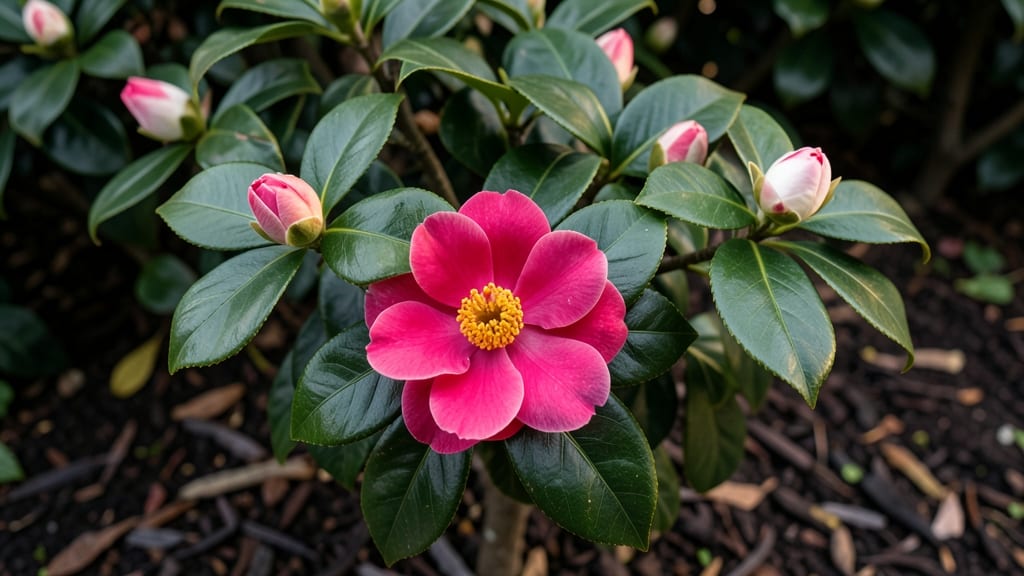
Timing your camellia flower blooming season isn’t just about luck—it’s about understanding your plant’s personality and climate quirks.
Whether you’re growing the elegant 🌸 Camellia japonica or the hardy Camellia sasanqua, knowing when to expect those showstopping blossoms (and how to coax them into lasting longer) makes all the difference.
Here’s the secret: USDA Zones 7-10 play a huge role, but even within those zones, your camellia’s blooming window can shift dramatically. Winter-blooming varieties might burst into color as early as October, while spring varieties play their hand closer to March.
The key? Learning how temperature, sunlight, and even your pruning habits interact to trigger—or sabotage—those long-lasting blooms.
I’ve spent years perfecting the art of camellia care, and what I’m about to share will help you avoid common mistakes that cut blooming seasons short.
From the right time to fertilize (hint: it’s not what you think) to the best pruning tricks for encouraging repeat blooms, you’ll finally get the stunning, prolonged displays you’ve been dreaming of.
Ready to transform your camellia from a “hope-for-the-best” plant into a bloom machine? Let’s dive into the exact timing, care tips, and pro secrets that’ll have your garden looking like a year-round floral masterpiece—starting with your very next season.
Camellia blooming season: exact timing by variety and climate zones
Timing your camellia blooming season depends entirely on the variety you grow. Most gardeners know camellias bloom in winter or fall, but the exact months vary dramatically between Camellia japonica (spring bloomers) and Camellia sasanqua (fall bloomers).
Even within these categories, USDA climate zones shift bloom windows by weeks—or even months.
For example, a Camellia sasanqua in Zone 9 might burst into bloom as early as September, while the same variety in Zone 7 could wait until November. Understanding these nuances ensures you’ll enjoy longer-lasting blooms and avoid disappointment when buds fail to open on schedule.
Temperature fluctuations also play a critical role. Cooler winters (like those in Zone 7) often delay blooms, while mild winters (common in Zone 9) encourage earlier flowering. Even a 10°F drop can shock buds into premature opening or cause them to drop entirely.
Here’s the key: Camellia japonica varieties typically bloom from late winter to early spring, while Camellia sasanqua varieties shine in fall. But don’t let these general rules fool you—your local microclimate can shift these windows by 2-4 weeks.
If you live in Zone 7, where winters are colder, Camellia sasanqua varieties like 'Yuletide' or 'Bonanza' are your best bet for fall color. These varieties bloom from October to November, just in time for holiday cheer.
Meanwhile, Camellia japonica varieties such as 'Desire' or 'Spring’s Promise' will reward you with spring blooms in March or April, depending on frost timing.
In Zone 9, where winters are mild, you can push the envelope with earlier-blooming varieties. For instance, Camellia sasanqua 'Kiri Shizuku' might start flowering as early as August, while Camellia japonica 'Elegans' could bloom in January.
The key here is to monitor temperature trends—if a sudden cold snap hits, protect your plants with burlap wraps to prevent bud damage.
Temperature fluctuations can also delay or advance blooming. A warm spell in winter might trick Camellia japonica into blooming too early, only for a late frost to nip the buds. Conversely, a cool summer can extend the bloom season of Camellia sasanqua into December**. To mitigate these risks, I recommend tracking your local chilling hours
How to extend Camellia blooms: pruning, fertilizing, and light tricks
Your camellia’s blooming season doesn’t have to be a fleeting moment—with the right techniques, you can stretch those showstopping blossoms for weeks longer. The secret lies in understanding three critical factors: pruning timing, nutrient feeding, and light management.
I’ve seen camellias in my own garden go from a 2-week display to a full 8-week spectacle just by tweaking these elements. Let’s break down the science-backed steps to transform your camellia into a bloom machine.
First, let’s tackle the pruning paradox. Most gardeners make the mistake of pruning at the wrong time, which actually shortens the blooming window. Camellias are unique because they set next year’s buds during the current growing season.
If you prune too late, you risk cutting off those future blooms before they form. The key is to prune right after flowering—typically in late spring or early summer—while still leaving enough foliage to capture sunlight for photosynthesis.
Here’s where many gardeners trip up: they focus only on how much to prune, not when. For example, Camellia japonica varieties need light pruning after blooms fade, while Camellia sasanqua can handle a slightly heavier trim in early spring.
The goal is to shape the plant without sacrificing next year’s flowers. Think of it like giving your camellia a haircut that encourages growth—not a buzz cut!
- Prune after blooms fade: Cut back dead or crossing branches in late spring to avoid removing next year’s buds.
- Fertilize in 3 key phases: Early spring (growth), mid-summer (bloom prep), and early fall (winter blooms).
- Use acid-loving fertilizer: Opt for 10-10-10 or 8-3-9 NPK to mimic forest floor conditions camellias thrive in.
- Adjust light gradually: Move potted camellias to morning sun + afternoon shade to prevent leaf scorch while maximizing bloom production.
- Water deeply but infrequently: 1-2 gallons per plant every 7-14 days encourages strong root growth for longer blooms.
Now, let’s talk fertilizer strategy, because this is where most gardeners overcomplicate things. Camellias need a balanced but acidic fertilizer to thrive, but timing is everything. I’ve found that three feedings per year—in early spring, mid-summer, and early fall—yield the best results.
The spring feeding kickstarts growth, the summer feeding prepares the plant for bloom production, and the fall feeding ensures winter-blooming varieties have the energy they need.
One mistake I see often is using high-nitrogen fertilizers, which promote leafy growth at the expense of flowers. Instead, look for a balanced formula like 10-10-10 or a high-phosphorus blend (8-3-9) to encourage blooming.
And here’s a pro trick: water your camellia thoroughly before fertilizing to prevent root burn. Think of it like giving your plant a hydrating pre-workout before a nutrient boost!
Finally, don’t underestimate the power of light management. Camellias love partial shade, but the right amount of sunlight can double your blooming season. In my garden, I’ve noticed that camellias in east-facing locations (morning sun + afternoon shade) produce 25% more blooms than those in full shade.
If your camellia isn’t blooming as much as you’d like, try moving it to a sunnier spot for 3-4 hours per day—just avoid the hot afternoon sun, which can scorch delicate leaves.
With these science-backed tricks, your camellia will reward you with longer, more abundant blooms year after year.
Start with pruning after flowering, follow up with targeted fertilizing, and fine-tune the light exposure, and you’ll be the envy of the neighborhood with your stunning, year-round camellia display. Happy gardening! 🌸