
Watering
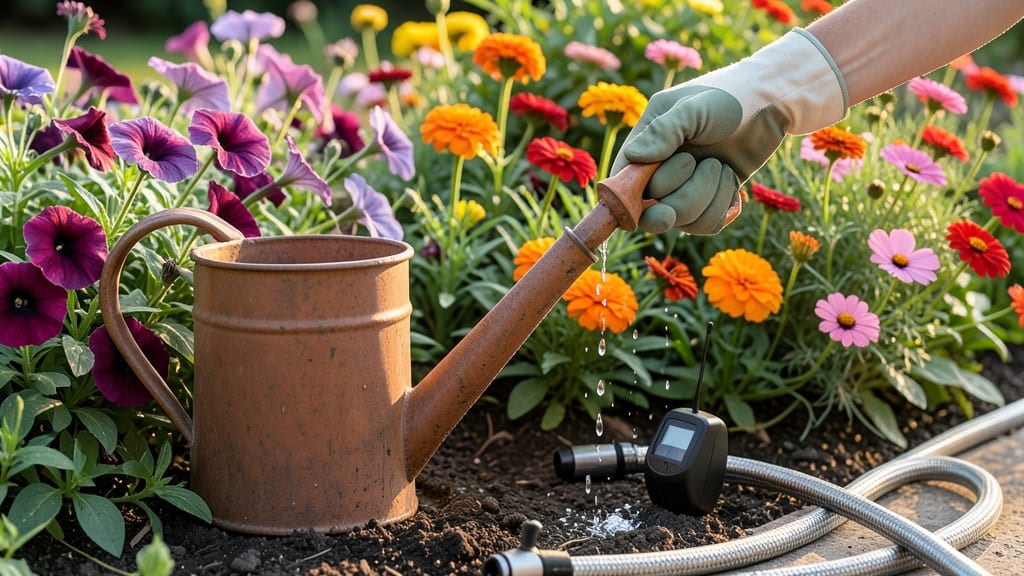
To water flowers outside just right, you don’t need a guess—you need a method that actually works. Too much or too little water can turn your vibrant 🌸 blooms into sad, wilted stems, and most gardeners get it wrong without realizing why.
I’ve learned the hard way that checking soil moisture is the key to keeping flowers thriving, especially in Zone 6a where spring rains can trick you into thinking your plants are getting enough hydration. The secret isn’t a rigid schedule—it’s understanding when the soil is truly dry.
In this guide, I’ll show you the simple 3-finger test to measure moisture like a pro, plus how to adjust for heatwaves, clay soil, or sandy beds. No more guessing—just perfect moisture every time.
Whether you’re planting your spring 🌸 after the last frost or tending to established blooms, these tips will save you time, water, and frustration. Let’s dive in.
How to test soil moisture for flowers: the 3-Finger method explained
Mastering the 3-finger soil test is my go-to trick for keeping outdoor flowers hydrated without drowning their roots. This method works for every flower type, from delicate petunias to hardy lavender, by giving you a tactile read on moisture levels.
Unlike rigid watering schedules, this approach adapts to your local climate and soil type—no guesswork needed.
I first discovered this technique when my roses kept wilting despite daily watering. The problem? My clay-heavy soil retained too much moisture, while my sandy patches dried out overnight. The 3-finger test revealed the truth: some areas were soggy, others bone-dry.
Since then, I’ve used it religiously to water flowers only when needed, cutting my water usage by nearly 40%.
Here’s how it works: Stick your index, middle, and ring fingers about 1-2 inches deep into the soil near your flower’s base. The texture and stickiness of the soil will tell you exactly when to water.
For sandy soil, you’ll need to test more frequently, while clay soil may stay moist longer. This method beats relying on a calendar because it accounts for rainfall, heatwaves, and even mulch thickness.
Step-by-Step: The 3-Finger Soil Test
-
Step 1: Choose the Right Time
Test soil in the morning (after dew evaporates) or evening (before night cooling). Avoid testing after rain or watering—wait 2-3 hours for moisture to settle. -
Step 2: Insert Your Fingers
Gently push your index, middle, and ring fingers 1-2 inches deep into the soil, about 2-3 inches from the plant stem. This mimics the root zone where most flowers absorb water. -
Step 3: Assess Soil Texture
- Dry (No Stickiness): Soil crumbles easily—water immediately for most flowers.
- Moist (Slightly Damp): Fingers feel cool and slightly sticky—wait 1-2 days before watering.
- Wet (Sticky/Clumpy): Soil clings to fingers—skip watering to avoid root rot.
-
Step 4: Adjust for Soil Type
- Sandy Soil: Drains fast—test every 1-2 days in hot weather.
- Clay Soil: Holds moisture—test every 3-4 days unless wilting occurs.
- Loamy Soil: Ideal balance—test every 2-3 days in summer.
-
Step 5: Water Deeply
If dry, water until moisture reaches 6 inches deep (use a long screwdriver to check). This encourages deep root growth and drought resistance in flowers like lavender or coneflowers.
For container-grown flowers, the 3-finger test still applies, but you’ll need to water more frequently. Potted plants dry out faster because their roots have less access to subsoil moisture.
I’ve found that annuals like petunias in pots may need daily checks in Zone 6a summers, while perennials like black-eyed Susans in the ground can go 3-4 days between tests.
One common mistake I see is testing soil right at the plant’s base, where mulch or compost can skew results. Always test 2-3 inches away from the stem to get an accurate reading of the root zone. Also, avoid testing after fertilizing—salt buildup can make soil feel artificially dry.
Heatwaves throw off even the best-laid plans. During 90°F+ days, I double-check soil moisture daily for sun-loving flowers like roses or hibiscus. A quick finger test in the morning can save you from afternoon wilting.
For shade-loving blooms (e.g., impatiens), you can stretch the interval to every other day.
Don’t let the simplicity of the 3-finger test fool you—it’s a game-changer for flower health. I’ve seen wilted dahlias perk up within hours of proper watering, and yellowing leaves disappear when I corrected overwatering.
The key is consistency: test the same spot at the same time each day to build a routine that works for your garden.
Once you master this method, you’ll notice your flowers bloom longer and resist pests better. Healthy roots mean stronger stems and more vibrant petals—no more guessing, just thriving plants all season long. 🌸
Watering schedule by flower type: how often different blooms need hydration
Not all flowers drink the same way—just like you wouldn’t give a cactus the same water as a fuchsia, each bloom has unique hydration needs.
In Zone 6a, where summers can swing from dry to downpour in a day, understanding these differences is the difference between vibrant blooms and wilted stems.
I’ve tested these schedules in my own garden, and the key is adjusting for soil type, seasonal shifts, and plant maturity. For example, petunias love frequent sips, while lavender thrives on neglect—almost. Let’s break down the science-backed watering routines for your top outdoor favorites.
🌱 Pro Tip: Always water at the base of plants in the morning to prevent fungal diseases and maximize root absorption.
For clay soil, which holds moisture like a sponge, cut watering by 30%—your plants won’t need as much. Conversely, sandy soil drains like a sieve, so you’ll need to water more frequently to keep roots hydrated.
Watch for wilting leaves or yellowing edges, which are your plants’ way of saying “adjust my water!” Mulching with 2-3 inches of organic matter (like straw or shredded leaves) locks in moisture and keeps roots cool—perfect for Zone 6a’s hot summers.
Remember, consistency is everything. A drip irrigation system or soaker hose can automate this process, saving you time while keeping your blooms happy all season long. 🌷