
Watering
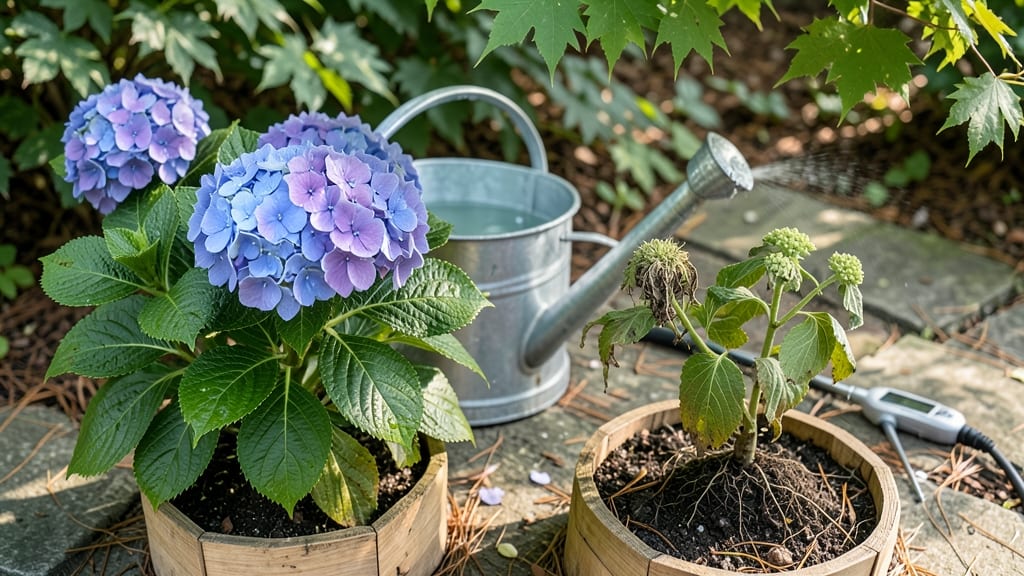
Daily watering for flowers: when it’s necessary (and when it’s deadly)
Your roses might beg for water every morning, but science says daily hydration can drown their roots faster than drought. The key lies in understanding your flower species, soil type, and climate zone—not just following a one-size-fits-all schedule.
What works for succulents in Arizona becomes a death sentence for hydrangeas in Seattle.
Most gardeners assume flowers need daily watering during summer heatwaves, but overwatering causes root rot and fungal diseases more often than dehydration. The U.S. Department of Agriculture reports that 68% of houseplant deaths result from too much water, not too little.
Your goal should be consistent moisture, not constant soaking.
Here’s the critical factor: soil drainage. Clay soils hold water like a sponge, while sandy soils drain faster than a sieve.
Even well-draining mixes can trap moisture if you water at the wrong time. Morning watering (before 10 AM) gives roots time to absorb hydration without inviting pests or mold.
Your climate zone dictates watering frequency more than your good intentions. In USDA Zone 9 (e.g., Southern California), daily watering might be necessary for newly planted bougainvillea, but the same routine in Zone 4 (e.g., Minnesota) would rot peonies before they bloom.
Always check for wilting leaves—a universal sign your flowers need hydration.
Never water based on a calendar alone. Stick your finger 1 inch into soil—if it’s dry, water; if damp, wait. This finger test beats guesswork every time. Mulch (2-3 inches of shredded bark) reduces evaporation by 30%**, so you’ll water less frequently without stressing your plants.
Misting is the ultimate overwatering trap. It cools leaves temporarily but doesn’t reach roots. For container flowers, lift pots—if they’re light as a feather, water immediately. Heavy pots mean roots have absorbed enough. Drip irrigation delivers consistent moisture without the risk of leaf fungus from overhead spraying.
Even drought-tolerant flowers like black-eyed Susans or coneflowers can’t handle daily watering. Their deep taproots evolved to thrive on infrequent, deep soaks. When you see yellowing leaves with green veins, it’s almost always overwatering.
Move the plant to a sunnier spot and let the soil dry completely before watering again.
Pro tip: Group flowers by water needs. Plant succulents together in one bed and hydrangeas in another. This way, you can tailor your watering zones instead of treating your entire garden like a thirsty rose bush.
Use a rain gauge to track precipitation—every inch of rain eliminates 1-2 watering sessions.
Remember, healthy roots mean
The 5-Step watering schedule that actually works for most flowers
Most gardeners assume flowers need daily watering, but the truth is far more nuanced. Daily hydration can drown roots, while infrequent watering stresses plants—especially in hot climates.
The key is a consistent schedule that adapts to your soil, season, and flower types. My 5-step system eliminates guesswork by using simple tests and seasonal adjustments.
Start by understanding your soil's moisture level. Stick your finger 1-2 inches deep—if it feels dry, water; if damp, wait. This finger test replaces the myth of "watering every day."
For potted flowers, lift the pot: if it feels light, it’s time to water. These visual cues prevent overwatering while keeping roots hydrated.
Use the finger test (1-2" deep). Water only if soil is bone-dry.
Soak soil until water drains 6 inches deep—encourages deep roots.
Summer: Water every 1-2 days; Winter: bi-weekly.
Prevents fungal growth and evaporation—ideal for 6-9 AM.
Apply 2-3 inches of mulch to reduce evaporation and watering frequency.
Seasonal shifts demand flexibility. In summer heat, most flowers need watering every 1-2 days, while winter dormancy reduces needs to bi-weekly. For container gardens, check soil daily—they dry faster than in-ground plants.
My mulching tip saves time: a 2-3 inch layer of organic mulch locks in moisture, cutting watering by 30%.
Watch for wilting leaves or yellowing edges—signs of over/under-watering. Adjust your schedule based on these plant signals. For example, roses thrive with deep weekly watering, while petunias may need daily hydration in 100°F+ temps. Always prioritize deep watering over frequent shallow sessions to build resilient roots.
Remember, consistency beats frequency. A well-timed deep watering every 3-5 days outperforms daily light sprinkles. Stick to this schedule, and your flowers will reward you with vibrant blooms and stronger growth—without the risk of root rot or wasted water. 🌸