
Light Requirements
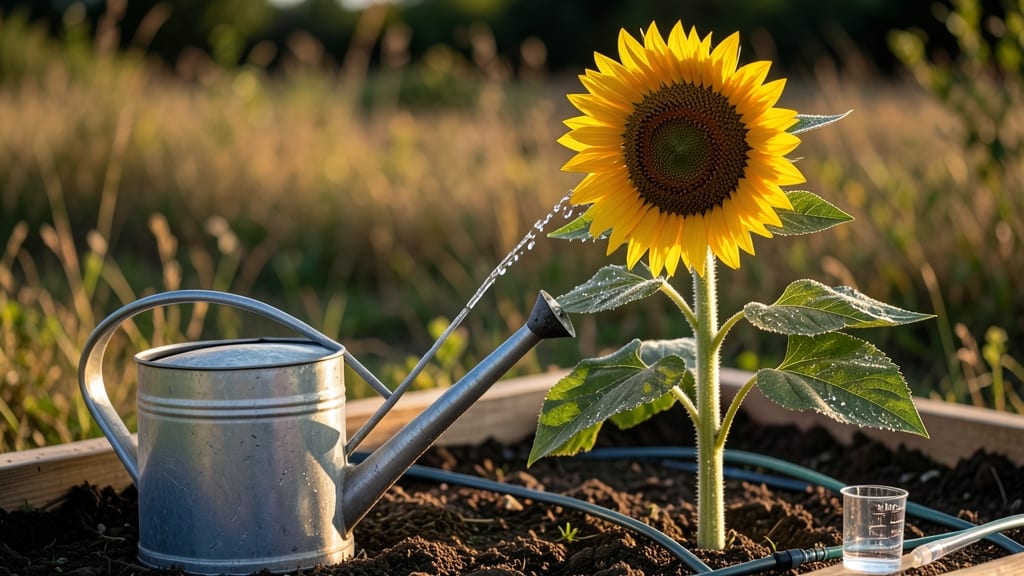
To water sunflowers properly, think deep and steady—not just a quick splash that barely touches the roots. These towering beauties 🌻 need 1-2 inches of water per week during their growing season, but the real trick is delivering it where it counts: straight to the soil, not the leaves.
Most gardeners make the mistake of watering too lightly or too frequently, which leads to weak stems and stunted growth. Instead, focus on deep watering sessions—about 1-2 times per week—to encourage strong root development.
The key is consistency, especially when your sunflowers are young and establishing themselves in April or May planting zones like 6a.
You’ll know you’re doing it right when the soil feels moist 2-3 inches down and the stems stay firm to the touch. Overwatering shows up as yellowing leaves or mushy stems, while underwatering causes wilting even with dry soil.
I’ll show you exactly how to strike that perfect balance so your sunflowers grow tall and proud without drama.
Whether you’re dealing with sandy soil that drains too fast or clay that holds moisture like a sponge, these watering tips will keep your sunflowers thriving from seedling to July harvest. Let’s dive into the exact schedule and techniques that work.
Sunflower watering schedule by growth stage: from seedling to bloom
Sunflowers are sun-loving giants that need consistent moisture to grow strong and tall. Unlike many drought-tolerant plants, sunflowers demand predictable hydration—especially during their early stages.
The key is understanding how their water needs shift as they transition from tiny seedlings to towering blooms. Overwatering can cause root rot, while underwatering stunts growth and weakens stems.
Let’s break down the perfect watering schedule for each phase, so your sunflowers reach their full potential without a wilt in sight.
Every sunflower’s journey starts with germination, a delicate phase where seeds need just the right amount of moisture. Too much water can suffocate them, while too little prevents sprouting. Vegetative growth is when your plants shoot upward, demanding steady hydration to support their rapid expansion.
Then comes flowering, where watering becomes even more critical to fuel those massive blooms. Finally, during seed development, the plant’s needs shift again—balancing moisture to ensure healthy seeds without overburdening the roots. Each stage requires a tailored approach, especially when factoring in your local climate zone.
Below is a stage-by-stage watering guide with soil moisture targets and frequency adjustments for USDA Zones 3-10. Whether you're in a hot desert climate or a cooler northern region, these guidelines will help you avoid common pitfalls like leaf yellowing or stem weakness.
Pro tip: Always water at the base of the plant in the morning to reduce evaporation and fungal risks.
| Growth Stage | Soil Moisture Goal | Watering Frequency | Climate Adjustments | Signs of Proper Hydration |
|---|---|---|---|---|
| Germination (Days 1-7) | Consistently moist, not soggy | Every 1-2 days, 1/4 inch water | Hot climates: Mist seeds daily; Cool climates: Water lightly every other day | Sprouts emerge in 5-10 days, soil stays damp |
| Seedling (Weeks 2-4) | 1-2 inches deep moisture | Every 2-3 days, 1/2 inch water | Desert areas: Water every 48 hours; Rainy zones: Reduce to every 4 days | Stems firm, leaves bright green, no wilting |
| Vegetative (Weeks 5-8) | 2-3 inches deep moisture | Every 3-5 days, 1 inch water | Hot/dry: Daily watering; Humid: Every 5-6 days | Rapid growth, upright stems, no yellow leaves |
| Flowering (Weeks 9-12) | 3-4 inches deep moisture | Every 4-6 days, 1.5 inches water | Extreme heat: Daily deep watering; Mild: Every 7 days | Bud opens fully, petals vibrant, no drooping |
| Seed Development (Weeks 13-16) | 2-3 inches deep moisture | Every 5-7 days, 1 inch water | Dry climates: Reduce to every 10 days; Rainy: Skip if soil is saturated | Seed heads dry, stems remain sturdy, no mold |
During the germination phase, your sunflower seeds need the gentlest touch of water—just enough to keep the soil damp without drowning the seeds.
I recommend using a spray bottle or a watering can with a fine rose attachment to avoid displacing seeds. Overwatering at this stage can lead to rot, while underwatering prevents sprouting. Aim for 1/4 inch of water every 1-2 days, adjusting based on your local humidity.
In hot climates, misting the soil daily can help maintain the right moisture level.
Once your seedlings emerge, they enter the vegetative growth stage, where they’ll start growing rapidly. This is when you’ll see those iconic cotyledon leaves unfurl, followed by the true leaves. Deep watering is critical here—aim for 1-2 inches of moisture in the top
Signs of overwatering vs. underwatering sunflowers (and how to fix them)
Sunflowers 🌻 send clear signals when their hydration is off—think of them as nature’s moisture meters. Overwatering often starts with yellowing leaves that feel soft, while underwatering causes crispy edges and drooping stems. The key is learning these visual cues so you can adjust before damage sets in.
I’ve seen firsthand how quickly a plant can go from thriving to struggling in just a few days if watering’s off.
For overwatered sunflowers, check the soil first—if it’s soggy 2-3 inches down, you’re likely drowning the roots. This creates the perfect environment for stem rot and fungal diseases like powdery mildew.
The leaves may also develop brown spots or a grayish mold, especially in humid climates. My rule of thumb? Let the top inch of soil dry out between waterings during peak summer months.
How Much to Water Sunflowers
DO:
- Water deeply 1-2x/week (1-2 inches total)
- Use morning watering to reduce evaporation
- Check soil 2-3 inches deep before watering
- Apply mulch to retain moisture
DON'T:
- Water lightly daily (encourages shallow roots)
- Let soil stay waterlogged for days
- Wet leaves/foliage (increases fungal risk)
- Ignore wilting signs until too late
💧 Pro Tip: Stick your finger in the soil—if it feels damp below 1 inch, wait 2-3 days.
On the flip side, underwatered sunflowers show stress differently. The leaves may curl at the edges or feel dry and papery to the touch. In extreme cases, the entire plant wilts by midday, even if the soil seems moist at first glance.
This often happens when gardeners rely on light sprinkles instead of deep watering. My quick fix? Give the plant a deep soak at the base until water runs out the bottom of the pot or drains 6 inches into the ground.
Both issues share one common solution: consistency. Sunflowers in USDA Zone 6a need 1-2 inches of water weekly during their growing season (April-September), but adjust for your soil type. Sandy soil drains fast, while clay holds moisture longer.
Always water at the base of the plant in the morning to prevent fungal growth—a lesson I learned after losing half my sunflowers to mildew one summer.
Prevent future problems by mulching with straw or wood chips to lock in moisture and monitor weather patterns. If rain is forecast, skip your scheduled watering. And remember: yellow leaves ≠ always overwatering—check for nutrient deficiencies or pests first.
With these signs and fixes, your sunflowers will grow tall and healthy, ready for that July harvest you’ve been dreaming of. 🌻