
Blooming
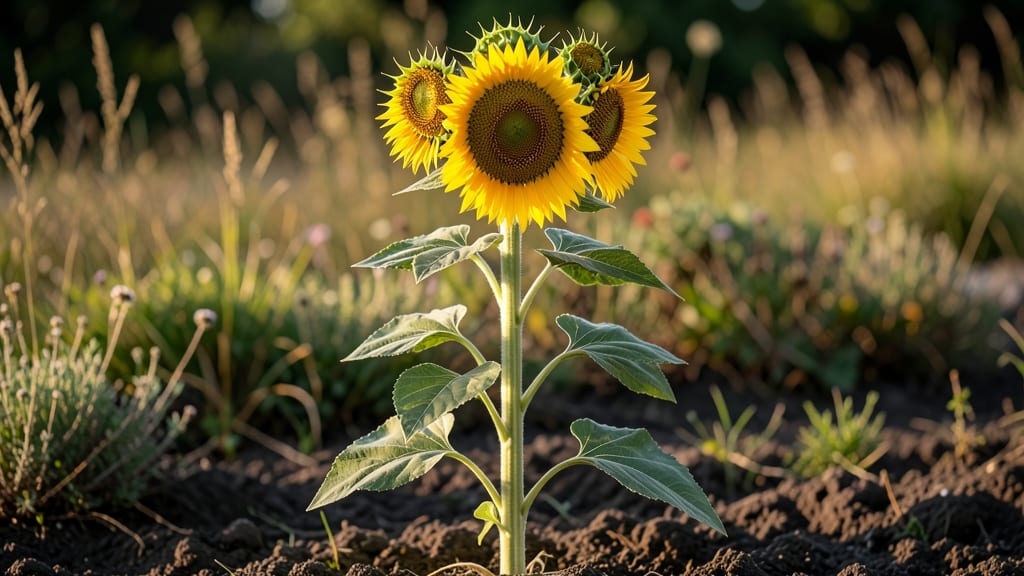
If you're dreaming of those bright, cheerful 🌻 sunflowers lighting up your garden, you might be wondering how many days it takes for sunflowers to bloom.
The answer isn't one-size-fits-all—it depends on the variety you choose and how you care for them, but most sunflowers bloom within 80 to 100 days after planting.
For gardeners eager to see quick results, some dwarf varieties can surprise you with blooms in as little as 50 days, while taller varieties might take closer to 120 days.
The good news? With the right conditions—like plenty of sunlight and consistent watering—you can help your sunflowers reach their full potential faster than you think.
I've learned that timing is everything when it comes to sunflower growth. Planting in the right season, like late spring after the last frost, sets the stage for a faster bloom cycle.
Plus, a little extra care—like proper spacing and balanced fertilization—can make all the difference in how quickly your sunflowers transform from tiny seeds into towering beauties.
Ready to turn your garden into a sunflower paradise? Let’s break down the exact timelines for different varieties and share my top tips for encouraging those blooms to arrive even sooner. You’ll be enjoying fresh-cut sunflowers in no time!
Sunflower bloom time by variety: fastest to slowest growing types
If you're dreaming of sunflowers reaching their full glory, timing is everything. The fastest-growing varieties can bloom in as little as 45 days, while the giants need up to 120 days. The key lies in choosing the right variety for your space and climate.
Dwarf types like Teddy Bear are perfect for containers, while towering Mammoth varieties dominate borders. Let's break down the bloom timelines so you can plan your garden like a pro.
Your sunflower's journey to bloom starts with the variety you select. Early bloomers like ProCut or Lemon Queen are ideal if you want quick color, while giant varieties like Russian Giant take patience. Each type has unique care needs to hit its bloom window.
For example, dwarf varieties often bloom faster because they focus energy on flowers rather than stem growth. Let's explore the full spectrum from fastest to slowest bloomers.
For fastest blooming, focus on dwarf varieties like Teddy Bear. These sunflowers reach their 45-55 day bloom time because they don't invest energy in excessive stem growth. Plant them in well-draining soil with full sun exposure to maximize their speed.
Their compact size also makes them perfect for containers or small gardens, where space is limited.
If you're growing standard varieties like Lemon Queen, expect a 55-65 day timeline to bloom. These sunflowers need fertile soil and consistent moisture to reach their full potential. The extra days compared to dwarfs come from their taller stature, which requires more structural support and energy.
Mulch around the base to retain moisture and reduce competition from weeds.
For the giant sunflowers like Mammoth and Russian Giant, patience is key. Their 80-120 day bloom time reflects their massive growth requirements. These varieties need deep, nutrient-rich soil and often benefit from staking to prevent toppling.
Plant them in open areas where they can reach their full height without obstruction.
Did you know? The fastest blooming sunflowers can reach maturity in under 2 months, while giants take nearly 4 months. This difference is why planting time matters. For example, if you plant Teddy Bear in early May, you'll see blooms by mid-June.
But if you're growing Russian Giants, start seeds indoors in late March for a July bloom.
To accelerate bloom times, ensure your sunflowers get at least 6-8 hours of sunlight daily. Without enough light, plants divert energy to leaf growth instead of flowering. Also, avoid overcrowding—space plants 12-24 inches apart
How to speed up sunflower blooming: proven tips for faster results
Want those sunflower blooms to appear faster than the standard 80-100 days? The secret lies in optimizing their growing conditions from day one. I've found that small adjustments—like soil enrichment and proper spacing—can shave weeks off the blooming timeline.
Even dwarf varieties can surprise you with blooms in just 50-60 days when given ideal care.
First, focus on soil preparation. Sunflowers thrive in well-draining, nutrient-rich soil with a pH between 6.0-7.5. Before planting, mix in compost or aged manure to provide essential nutrients. I always add a balanced fertilizer (5-10-10) at planting time to give them a growth boost right away.
Next, sunlight optimization is non-negotiable. Sunflowers are sun-worshippers and need 6-8+ hours of direct sunlight daily. If your garden gets less, consider using reflective mulch or a sunlight panel to maximize exposure. I’ve seen blooms arrive 2-3 weeks earlier in full-sun conditions compared to partial shade.
Your watering schedule also plays a crucial role. Deep watering 1-2 gallons per plant weekly encourages strong root development, which speeds up the blooming process. Water in the morning to reduce evaporation and fungal risks. Avoid wetting the foliage—focus on the base of the plant for the best results.
One common mistake that delays blooming is overcrowding. Plant seeds 1 inch deep and 6 inches apart, then thin to 12-24 inches apart as they grow. Crowded sunflowers compete for nutrients and sunlight, which can push back blooming by 10-15 days.
I always mark my rows with stakes to ensure proper spacing from the start.
Finally, avoid over-fertilizing with nitrogen. While it promotes leafy growth, too much nitrogen can delay flowering. Instead, use a balanced fertilizer (5-10-10) and apply it every 4-6 weeks during the growing season.
For even faster results, consider a phosphorus-rich fertilizer (like 10-20-10) once the plants reach 1-2 feet tall—this encourages blooming.
With these tips, you can help your sunflowers bloom 2-4 weeks faster than average. The key is consistency—give them the right conditions, and they’ll reward you with those stunning 🌻 blooms in record time! ☀️