
Light Requirements
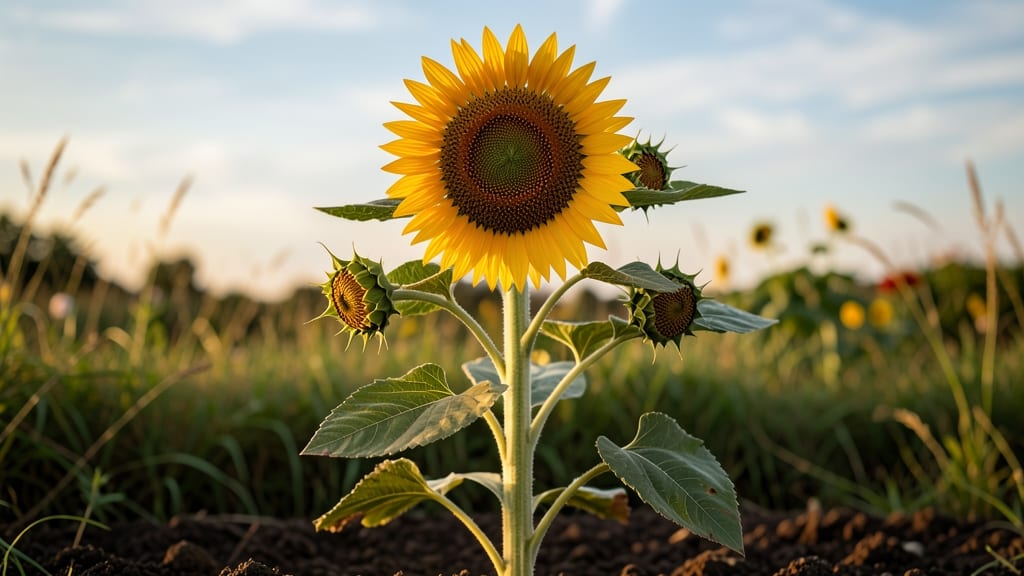
How many hours of sun do sunflowers need daily?
Sunflowers are sun-loving champions that thrive under bright, direct sunlight. To grow strong, sturdy stems and produce those iconic bright yellow blooms, they need at least 6-8 hours of sunlight daily.
This is their minimum requirement, but 8+ hours will yield the best results, especially for giant varieties that can reach towering heights of 10+ feet. Without enough light, you’ll notice leggy stems, smaller flowers, or even no blooms at all.
Think of sunflowers like sunbathers—they soak up every ray to fuel their rapid growth. In full-sun locations (like south-facing gardens), they’ll grow tall and robust.
But if you’re in a shadier climate or have obstructed sunlight (like tall trees or buildings), you’ll need to adjust your expectations or choose dwarf varieties that tolerate partial shade. Even then, they’ll still need at least 4-6 hours of sun to thrive.
Here’s the breakdown of sunflower sun requirements by variety and growth stage:
| Variety Type | Minimum Sunlight | Ideal Sunlight | Shade Tolerance | Signs of Insufficient Sun |
|---|---|---|---|---|
| Giant (Standard) | 8+ hours | 10+ hours | Poor (under 6 hrs) | Leggy stems, small blooms |
| Semi-Dwarf | 6-8 hours | 8-10 hours | Moderate (4-6 hrs) | Delayed flowering, weak stems |
| Dwarf | 4-6 hours | 6-8 hours | Good (2-4 hrs) | Slow growth, pale petals |
| All Varieties (Seed Production) | 8+ hours | 10+ hours | None (seeds won’t mature) | No seed development |
If you’re growing sunflowers for their edible seeds, the stakes are even higher. Seed production requires full sun exposure (8+ hours) to ensure plump, nutritious seeds. Without enough light, the plant may bolt prematurely (send up a flower stalk too early) or produce small, underdeveloped seeds.
This is especially critical for heirloom varieties, which often have longer growing seasons and larger seed heads.
Seasonal adjustments are key, too. In summer months, sunflowers can handle intense midday sun with ease, thanks to their deep roots. But in spring or fall, when sunlight is less intense, they may need extra care.
If you notice yellowing leaves or stunted growth, it could signal insufficient light or even overwatering (which worsens in low-light conditions). Always check the soil—it should be dry 1-2 inches down before watering again.
For gardeners in urban areas or shady backyards, don’t despair! Dwarf sunflowers like ‘Teddy Bear’ or ‘Moulin Rouge’ can thrive with 4-6 hours of sun. These varieties are perfect for containers, balconies, or partial-shade gardens.
Just be prepared for smaller blooms and shorter stems. You can also rotate pots throughout the day to maximize sunlight exposure or use reflective surfaces (like white walls or mirrors) to bounce extra light onto your plants.
One common mistake is assuming morning sun alone is enough. While morning sunlight is great, sunflowers need direct afternoon sun too. If your garden only gets morning sun (e.g., east-facing), consider planting in a raised bed or using grow lights to supplement.
Even 2-3 hours of afternoon sun can make a difference in stem strength and bloom size. Always face your sunflowers southward in the Northern Hemisphere to capture the most sunlight.
Watch for these red flags that your sunflowers aren’t getting enough light: leggy, weak stems, pale or yellowing leaves, delayed or no flowering, and small, underdeveloped blooms.
If you see these signs, try moving your plants to a sunnier spot or thinning nearby foliage to reduce shade. For container-grown sunflowers, <
Best sunflower varieties for low-light vs. full-sun gardens
Not all sunflowers need 8+ hours of blazing sun to shine. While most varieties thrive in full sun, some dwarf or hybrid sunflowers tolerate partial shade beautifully.
The key is matching your garden’s light conditions to the right sunflower variety, whether you’re growing in a shady balcony or a sun-drenched backyard. Let’s explore the best options for every light scenario.
For full-sun gardens, heirloom varieties like Russian Giant or Mammoth reach their towering potential—growing 10-16 feet tall with massive blooms. These giants need 6-8+ hours of direct sun daily to develop strong stems and vibrant flowers.
In contrast, partial-shade varieties like Teddy Bear or Autumn Beauty stay compact (1-3 feet) and bloom reliably even with 3-4 hours of filtered light.
Sunflower Varieties by Light Needs
Full-Sun Varieties
- Russian Giant – 12-16 ft, 8+ hrs sun, giant blooms
- Mammoth – 10-14 ft, heirloom seeds, bold petals
- Autumn Beauty – 5-6 ft, multi-colored blooms, long-lasting
✅ Best for: Backyard plots, cut flowers, seed production
Low-Light Varieties
- Teddy Bear – 1-3 ft, 3-4 hrs sun, fluffy petals
- Sunspot – 2-4 ft, dwarf hybrid, container-friendly
- Lemon Queen – 3-5 ft, bright yellow, partial shade
✅ Best for: Urban balconies, shaded patios, small gardens
If your garden gets morning sun but afternoon shade, opt for dwarf sunflowers like Sunspot or Lemon Queen. These stay manageable (2-5 feet) and produce cheerful blooms without sprawling.
For urban balconies, Teddy Bear sunflowers are ideal—they thrive in containers with 4-6 hours of light and add whimsical charm to small spaces.
For full-sun enthusiasts, Russian Giant and Mammoth varieties are showstoppers, but they need sturdy stakes to support their 10+ foot stems. These heirlooms also attract pollinators and birds, making them a garden ecosystem powerhouse.
Just ensure they’re planted where they won’t shade out other plants—sunflowers cast massive shadows!
One common mistake is assuming all sunflowers need full sun. While most do, partial-shade varieties prove that sunflowers can adapt. The trade-off? Smaller blooms and slower growth in low light, but the trade-up is versatility for tricky garden spots.
Test a few varieties in different light conditions to see what thrives best in your space.
Ready to pick your perfect sunflower? Start with 1-2 varieties that match your light conditions, then expand next season. Whether you’re growing giant sunflowers for a backyard focal point or dwarf varieties for a windowsill, there’s a sunflower that’ll brighten your garden—no matter the light. 🌻