
Propagation
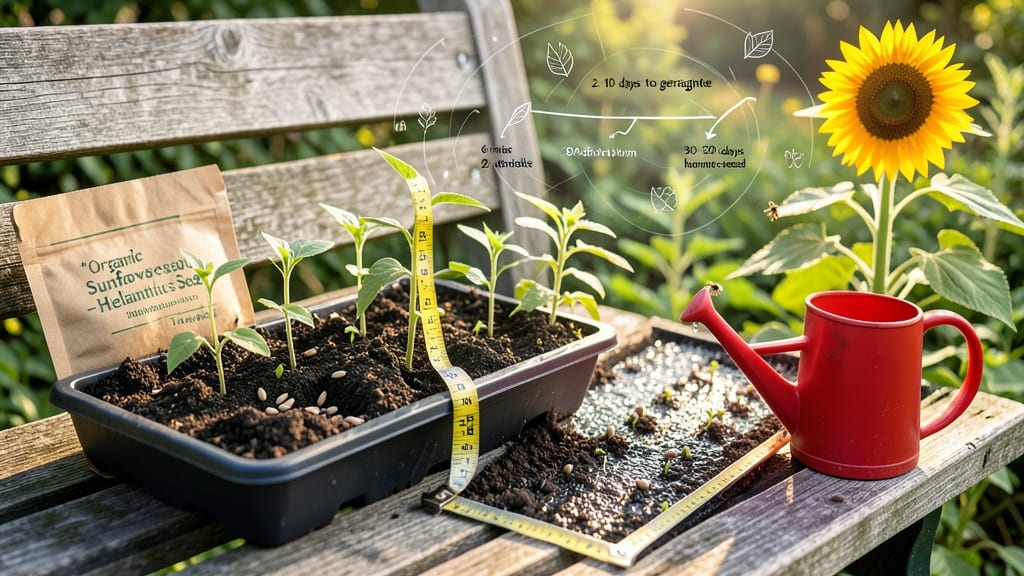
Growing sunflowers from seed feels like watching nature's version of a fast-forwarded movie—those towering 🌻 stalks can go from a tiny seed to a sunlit giant in just a few months. But if you're wondering exactly how long it takes to see those golden blooms, you're not alone.
The answer isn't just one number, because sunflower growth depends on factors like variety, climate, and even your soil quality.
Most sunflowers take between 8 to 12 weeks to reach full bloom after sprouting, but the full journey from seed to harvest can stretch to 100 days or more for giant varieties.
That means if you plant in late April, you could be harvesting seeds by early September—just in time for fall projects or bird feeders. The key is understanding each growth stage, from the first sprouts to those iconic blooms.
In this guide, I’ll walk you through the exact timeline—including germination, seedling growth, and flowering—so you know what to expect at every step. You’ll also discover how to speed up the process with simple tips, like choosing the right variety or giving your plants the perfect growing conditions.
Ready to turn your garden into a sunflower paradise?
Whether you're a beginner or a seasoned gardener, knowing these timelines will help you plan your planting schedule and troubleshoot any slow growth. Let’s get those seeds in the ground and watch the magic happen!


Sunflower growth timeline: seed to sprout to bloom stages
Sunflowers grow surprisingly fast—from tiny seeds to towering giants in just a few months. Understanding their growth stages helps you predict blooms and troubleshoot delays. Whether you're growing dwarf varieties or giant sunflowers, timing matters. Let’s explore the week-by-week journey from seed to those iconic golden faces.
Your sunflower’s journey begins with germination, which typically takes 5-14 days under ideal conditions. This stage depends heavily on soil temperature, moisture, and seed quality. Once sprouted, seedlings emerge with their first true leaves, marking the start of rapid growth.
Each stage builds on the last, so proper care at every step ensures healthy development.
Here’s a clear breakdown of the sunflower growth timeline, including key milestones and care tips for each phase:
| Stage | Timeframe | Key Actions | Care Tips |
|---|---|---|---|
| Germination | 5-14 days | Seedling emerges | Keep soil moist, 70-80°F |
| Seedling Growth | 2-4 weeks | First true leaves appear | Thin seedlings to 6" apart |
| Vegetative Stage | 4-8 weeks | Rapid stem elongation | Fertilize with 10-10-10 |
| Flowering | 8-12 weeks | Bud formation | Support tall stems |
| Maturity | 10-14 weeks | Seed heads dry | Harvest seeds when brown |
The first stage, germination, begins when you plant seeds 1 inch deep in well-draining soil. Warmth is critical—ideal soil temperatures range from 70-80°F. If your climate is cooler, consider using a seedling heat mat to speed up the process.
Keep the soil consistently moist but not soggy, as excess water can cause rot.
Once sprouted, your sunflower enters the seedling growth phase (weeks 2-4). This is when those first true leaves appear, signaling healthy development. Thin seedlings to 6 inches apart to prevent overcrowding, which can stunt growth. During this phase, ensure they receive 6+ hours of sunlight daily to avoid leggy stems.
By week 4, your sunflower enters the vegetative stage, where growth accelerates dramatically. You’ll notice rapid stem elongation and leaf expansion. This is the perfect time to fertilize with a balanced 10-10-10 formula to support root and stem development. Monitor for pests like aphids, which love young sunflower leaves.
Around 8-12 weeks, your sunflower will begin flowering. You’ll spot a bud forming at the top of the stem, followed by the iconic yellow petals unfurling. This stage is highly sensitive to daylight hours—sunflowers need 12-14 hours of light daily for optimal blooming.
If your summer days are shorter, consider supplementing with grow lights.
Finally, at 10-14 weeks, your sunflower reaches maturity. The petals will dry and fall off, revealing the seed head. Harvest seeds when they’re brown and dry but before they scatter.
Store them in a cool, dry place for planting next year. Some varieties, like 'Russian Giant', may take longer—up to 16 weeks—due to their massive size.
Several factors can speed up or slow down growth. Climate plays a huge role—warmer regions see faster germination, while cooler areas may experience delays. Soil quality matters too; amend with compost for better nutrient uptake.
Even the sunflower variety affects timing—dwarf types like 'Teddy Bear' bloom in as little as 60 days, while giants take nearly twice as long.
If your sunflower isn’t growing as expected, check these common issues: poor soil drainage, inadequate sunlight, or overcrowding. Adjust care accordingly—sunflowers are resilient but reward proper attention with stunning blooms. With the right conditions, you’ll enjoy those cheerful faces in just a few months!
Fastest-growing sunflower varieties for quick blooms
If you're craving instant gratification in your garden, sunflowers deliver—some varieties bloom in as little as 6 weeks from seed! The secret lies in choosing the right type.
Dwarf varieties like 'Teddy Bear' and 'Moulin Rouge' are the speed demons of the sunflower world, while giants like 'Russian Giant' take their time. Your choice depends on whether you want quick blooms or dramatic height.
For container gardens or small spaces, dwarf sunflowers are ideal—they mature faster and don’t need as much room. Mid-size varieties like 'Autumn Beauty' strike a balance between speed and stature, perfect for cutting gardens. Meanwhile, giant varieties reward patience with 12-foot stalks but require more time and space to thrive.
Here’s the breakdown of bloom times and growing conditions for each category, so you can pick the perfect variety for your timeline and garden size.
| Variety | Height | Bloom Time | Sun Needs | Best For |
|---|---|---|---|---|
| Dwarf Varieties | 2-4 ft | 6-8 weeks | Full sun (6+ hrs) | Containers, small gardens |
| 'Teddy Bear' | 1-2 ft | 50-55 days | Full sun | Cut flowers, kids' gardens |
| 'Moulin Rouge' | 2-3 ft | 55-60 days | Full sun | Dried flowers, borders |
| Mid-Size Varieties | 4-6 ft | 8-10 weeks | Full sun | Cutting gardens, pollinators |
| 'Autumn Beauty' | 4-5 ft | 60-70 days | Full sun | Long-lasting blooms |
| Giant Varieties | 10-14 ft | 10-12 weeks | Full sun | Statement plants, seed production |
| 'Russian Giant' | 10-12 ft | 80-100 days | Full sun | Dramatic height, seed saving |
Dwarf varieties like 'Teddy Bear' are my go-to for quick results—they’ll bloom in under 2 months and are perfect for beginners or urban gardens. Their compact size also makes them ideal for container growing, so you can enjoy sunflowers even on balconies.
Just plant them in well-draining soil and give them plenty of sunlight.
If you’re aiming for a cutting garden, mid-size varieties like 'Autumn Beauty' are fantastic. They offer a longer vase life and stunning bicolor blooms, plus they’ll be ready for harvest in about 8 weeks. These varieties also attract pollinators, making your garden buzz with activity.
For those who love a dramatic focal point, giant sunflowers like 'Russian Giant' are worth the wait. While they take longer to mature, their towering presence adds a wow factor to any landscape. Just be sure to give them plenty of space—they can grow taller than a basketball hoop!
No matter which variety you choose, remember that full sun and well-draining soil are non-negotiable for fast, healthy growth. With the right conditions, even the slowest varieties will reward you with stunning blooms by summer’s end.