
Tools
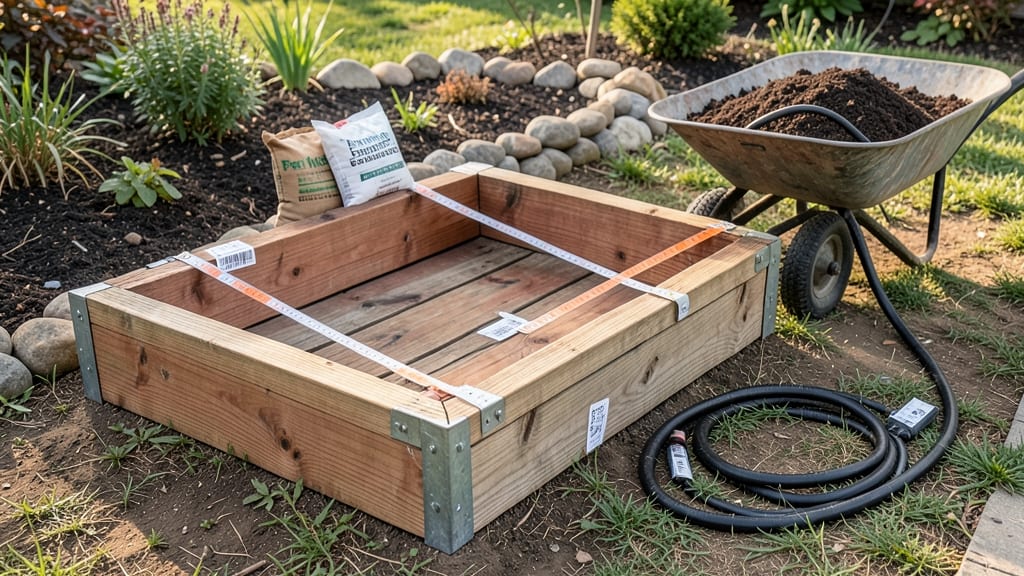
Planning a garden bed cost? Expect to spend between $50 and $500+ depending on size—basic lumber beds start at $50 for 4x8-foot setups, while premium cedar designs can reach $300+. Prebuilt kits range from $200–$1,000+, and custom stone or brick installations exceed $1,500. DIY projects with recycled materials like pallets or cinder blocks can slash costs by 30–60%.
A garden bed cost varies dramatically based on your project's scope and materials. For example, a simple 4x8-foot bed using basic lumber and soil costs around $50–$150, while a raised cedar bed with premium soil and hardware jumps to $300+.
The real savings come from DIY approaches—using cinder blocks or bricks instead of lumber can cut material costs by nearly half. 🌱 I've seen gardeners save up to $200 by sourcing secondhand wood or repurposing old fencing, though labor time becomes the new variable to factor in.
Don't overlook the hidden costs either: soil quality and quantity often add $50–$200 to the total, and professional installation can push premium beds into the $1,500+ range. Regional lumber prices and local labor rates also play a big role—urban areas typically charge 20–30% more than rural zones.
The key is balancing upfront costs with long-term benefits like extended bed life or better drainage systems.
💡 In This Article
- Factors That Influence Garden Bed Pricing
- DIY Garden Bed Cost-Saving Strategies
Factors that influence garden bed pricing
Material selection is the single biggest cost driver in garden bed pricing. Cedar, for instance, resists rot and insects naturally, which is why a 4x8-foot cedar bed costs $250–$350—about 3x more than pressure-treated pine ($100–$150).
The difference comes from cedar's 5–10 year lifespan versus 2–5 years for treated pine, where the chemicals break down over time. Stone or brick beds add another layer: a 12-inch-high brick border can cost $500–$1,500+ for materials alone, since each brick requires mortar and skilled labor for leveling.
Bed dimensions directly impact material quantities and soil volume. A 4x8-foot bed with 12-inch-high sides needs roughly 1.5 cubic yards of soil (costing $100–$200 for quality topsoil), while an 8x12-foot bed jumps to 3+ cubic yards ($200–$400).
The deeper the bed, the more fill material you need—18-inch-high beds require 50% more soil than standard 12-inch designs. Labor also scales with size: a professional installing a 10x12-foot cedar bed might charge $500–$1,000, while DIY saves $300–$600 but adds 4–6 hours of physical work.
Regional pricing creates surprising variations. In urban areas, lumber costs 15–25% more due to transportation fees, while rural zones often have access to bulk discounts at local sawmills. For example, a 4x8-foot cedar bed kit might cost $280 in Portland but only $220 in rural Texas.
Soil prices also vary: compost-rich mixes in agricultural regions can be $50 per yard, while city suppliers charge $80–$120. Even climate plays a role—northern climates require extra insulation (like $50–$100 worth of straw mulch) to protect roots in winter.
Hidden costs often catch gardeners off guard. Drainage layers (gravel or landscape fabric) add $20–$50, while hardware like corner brackets or screws can total $30–$80 for a large bed. Permits may apply in HOAs or city lots, running $50–$200.
The most overlooked expense? Bed longevity: a $150 pine bed might need replacement in 3 years, while a $300 cedar bed lasts 10+ years. Over time, the cedar's higher upfront cost becomes the smarter investment.
Consider this real-world example: A 6x10-foot cedar bed in Chicago might cost $450 for materials ($350 cedar + $100 soil) plus $400 labor, totaling $850. The same bed in Dallas could drop to $650 ($300 cedar + $80 soil) with DIY labor.
The 20% savings comes from lower regional material costs and skipping professional installation. 💰
For maximum cost control, prioritize material durability and soil quality—they directly impact long-term yields. A $100 bed with poor drainage or rot-prone wood may cost $300+ to replace in 2 years, while a $400 cedar bed could last a decade with minimal maintenance.
The sweet spot? Mid-range cedar or composite lumber beds that balance upfront cost with 8–12 year lifespans.