
Light Requirements
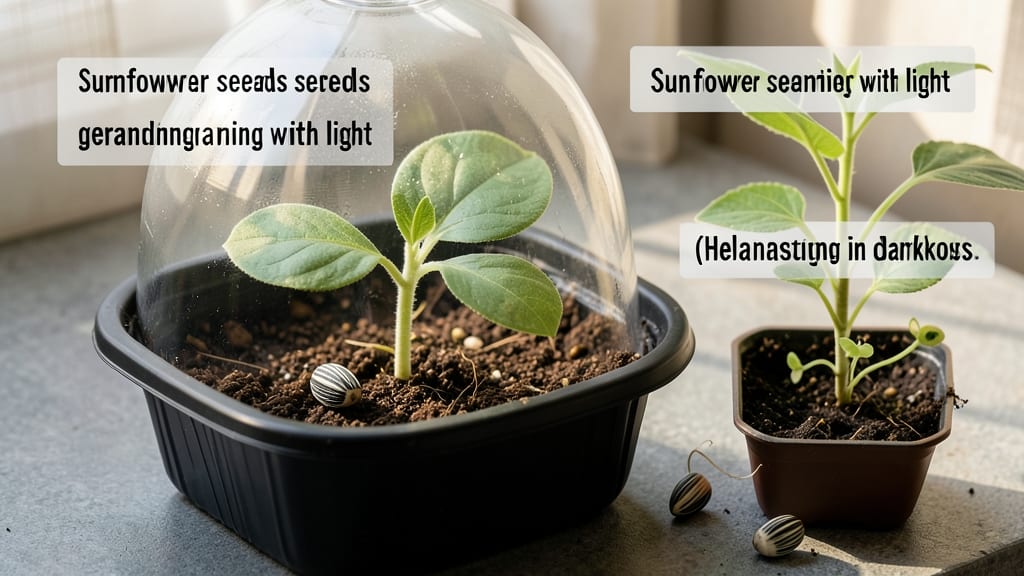
Sunflower seeds don’t need light to germinate—actually, they sprout faster in darkness! This surprising fact could be the missing piece to your seed-starting struggles, especially when planting those 🌻 giants in early spring.
Most gardeners assume seeds need sunlight to break through the soil, but sunflowers thrive in the dark during germination. Their seeds produce more energy when shielded from light, leading to stronger, quicker sprouts. The key is keeping them moist and warm in a low-light environment until those first leaves appear.
Once you understand this game-changer, you’ll avoid common mistakes like planting too shallow or exposing seeds to light too soon.
Whether you’re starting sunflowers indoors or outdoors in Zone 6a, I’ll show you exactly how to create the perfect dark conditions for germination—and when to transition seedlings to bright light for healthy growth.
Ready to transform your sprouting success rate? Let’s dive into the science and step-by-step tips that will have your sunflowers popping up in record time—no guesswork required.


Sunflower seed germination: why darkness (not light) speeds up sprouting
Sunflower seeds are famous for their towering 🌻 blooms, but their germination secrets often go unnoticed. Most gardeners assume seeds need light to sprout, yet sunflowers actually thrive in complete darkness during their earliest growth stages.
This counterintuitive truth stems from their unique biological adaptations, which prioritize energy production over photosynthesis before the first leaves emerge.
The key lies in the seed’s hypocotyl—the embryonic stem that pushes upward through the soil. In darkness, sunflowers produce more ethylene gas, a natural plant hormone that stimulates rapid cell elongation.
This hormonal boost allows the seedling to break through the soil faster than if exposed to light prematurely, where it would waste energy trying to photosynthesize before it’s ready.
Think of it like a race to the surface: seeds in dark, moist soil focus all their energy on growing upward, while those exposed to light may slow down or even fail to emerge.
This is why professional growers often plant sunflower seeds 1 inch deep—deep enough to block light but shallow enough for easy sprouting.
Here’s the science behind it: Sunflower seeds contain stored energy in their cotyledons (seed leaves). When kept in darkness, this energy is directed entirely toward root and stem growth, rather than being diverted to chlorophyll production.
Once the seedling reaches the surface and unfurls its first true leaves, it can finally begin photosynthesis and thrive in sunlight.
| Germination Stage | Light Requirement | Key Process | Optimal Conditions |
|---|---|---|---|
| Initial Sprouting | Darkness (0% light) | Ethylene production | Moist, 70-80°F soil |
| Hypocotyl Elongation | Darkness (0% light) | Rapid stem growth | 1 inch soil depth |
| Cotyledon Emergence | Indirect light (20%) | Photosynthesis begins | Bright but diffused |
| First True Leaves | Full sunlight (6+ hrs) | Active growth phase | 60-75°F air temp |
Many gardeners mistakenly believe sunflowers need light to germinate, leading to common mistakes like planting too shallow or using clear containers. This misconception often results in slower sprouting or weak seedlings. The truth is, sunflowers are photoblastic—they require darkness to trigger germination, unlike light-dependent seeds like lettuce or basil.
To maximize your success, maintain consistent moisture and warmth (70-80°F) while keeping seeds in darkness. Once the cotyledons (first leaves) emerge, you can gradually introduce indirect light. This two-stage approach ensures your sunflowers develop strong roots and stems before facing the sun’s intensity.
Professional growers often use black plastic mulch or deep planting to block light during germination. Even in home gardens, a simple layer of 1-2 inches of soil over seeds creates the ideal dark environment. This method isn’t just for sunflowers—many large-seeded plants, like beans and peas, follow similar germination patterns.
Understanding this process can double your germination rates. For example, seeds planted in Zone 6a during April’s cooler temperatures will sprout faster in darkness than in light. The same principle applies to indoor starts—use a seedling tray with a lid or cover to block light until sprouts appear.
Once your sunflowers break through the soil, they’ll need full sunlight to thrive, but the initial darkness is what gives them the competitive edge. This two-phase approach—darkness for germination, light for growth—is nature’s way of ensuring sunflowers have the energy to reach their impressive heights.
Step-by-step guide: how to create the perfect dark germination environment
Creating the ideal dark environment for sunflower seeds is simpler than you think. The key is blocking light while maintaining the right moisture and temperature.
Start by choosing a location that stays consistently warm—indoors near a heat source or outdoors in Zone 6a after the last frost (around April 15). This ensures your seeds stay in their optimal 70-80°F range for germination.
For outdoor planting, prepare your soil by loosening it to a depth of 1 inch, which is perfect for sunflower seeds. Add a layer of compost to improve drainage and fertility.
If you're planting in containers, use a well-draining mix like 50% potting soil and 50% perlite to prevent waterlogging, which can lead to rot.
Now, let’s create your dark germination environment with these practical steps:
- Step 1: Plant seeds 1 inch deep in moist soil. Use your finger or a small stick to create holes slightly larger than the seeds to avoid damaging them.
- Step 2: Cover seeds with 1-2 inches of soil to block all light. This layer should be firm enough to hold its shape but not compacted, as sunflowers need good air circulation around their roots.
- Step 3: Keep soil consistently moist (not soggy) by watering gently with a spray bottle or watering can. Aim for a damp-but-not-wet feel—like a wrung-out sponge. Overwatering can suffocate seeds, while underwatering halts germination.
- Step 4: Maintain a warm environment (70-80°F). Use a seedling heat mat if starting indoors, or plant outdoors when soil temperature reaches at least 50°F. A simple thermometer buried near seeds helps monitor conditions.
- Step 5: Wait for cotyledons (first leaves) to emerge before introducing light. This typically takes 7-14 days, depending on temperature. Avoid peeking too soon—disturbing the soil can dislodge seeds.
- Step 6: Once sprouts appear, thin seedlings to 12 inches apart (for dwarf varieties) or 24 inches apart (for standard sunflowers). This prevents overcrowding and ensures each plant gets enough light and nutrients.
Troubleshooting common germination failures is easier with these tips. If your seeds aren’t sprouting after 2 weeks, check for dry soil or cold temperatures. Use a spray bottle to re-moisten soil and move containers to a warmer spot.
For outdoor plantings, consider using black plastic mulch to maintain warmth and block light until sprouts emerge.
Another common issue is mold or damping-off, caused by excessive moisture. If you notice fuzzy growth on soil or seedlings, improve air circulation by spacing plants further apart or using a small fan on low speed. This mimics natural wind conditions and helps prevent fungal growth.
Once your sunflowers break through the soil, they’ll need full sunlight to grow strong and tall. But the initial dark phase is what gives them the energy to compete for light in your garden.
By following these steps, you’ll create the perfect conditions for fast, healthy germination—setting your sunflowers up for success from day one.