
How To
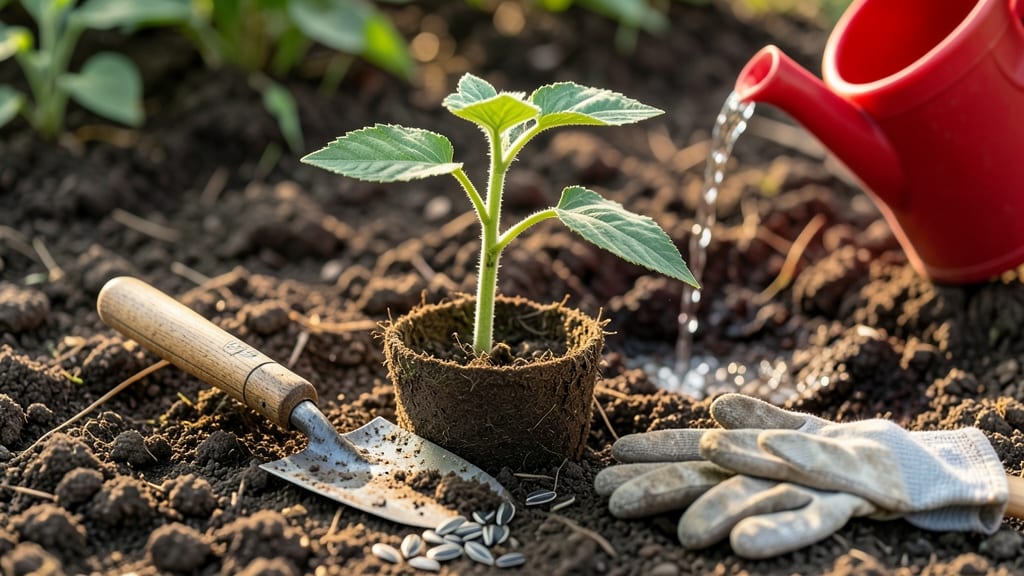
To plant sunflower seeds and watch them sprout into towering 🌻 giants in just a few weeks, you need to get one thing right: the planting depth. Too shallow, and they’ll dry out; too deep, and they’ll struggle to break through.
But with the right technique, you’ll see those first green shoots in 7-10 days, setting the stage for sunflowers that reach up to 16 feet tall.
Sunflowers are one of the easiest plants to grow, especially in Zone 6a, where the spring planting window (April–May) gives them plenty of time to mature before the first frost.
The secret lies in their love for full sun and well-drained soil—conditions that reward patience with fast growth and stunning blooms. Whether you’re a beginner or a seasoned gardener, mastering these basics will give you sunflowers that thrive from seed to harvest.
I’ll walk you through the exact steps for planting sunflower seeds at the perfect depth, spacing, and soil prep to avoid common pitfalls like rot or weak seedlings. You’ll also discover how to pair them with companion plants and design ideas that make your garden stand out.
Let’s get those seeds in the ground the right way—so you can enjoy sunflowers that grow quickly and beautifully.
From choosing the best varieties for your climate to troubleshooting early-stage issues, this guide covers everything you need to know. By the end, you’ll have sunflowers that not only sprout fast but also grow into the showstopping centerpieces you’ve always wanted. Ready to turn your garden into a sunflower paradise?
Optimal sunflower seed planting depth for fast germination
Sunflower seeds thrive when planted at the right depth—too shallow, and they dry out; too deep, and they suffocate. The ideal planting depth for sunflower seeds is ½ to 1 inch deep, a range that balances moisture retention and easy emergence.
This depth works best in well-drained soil with temperatures above 50°F (10°C), ensuring consistent germination in 7-10 days.
In Zone 6a, where spring planting (April–May) aligns with warm soil, this depth becomes even more critical. Cooler soils slow germination, so adjusting depth slightly deeper (1 inch) in early spring can help.
Conversely, in hot, dry climates, shallow planting (½ inch) reduces moisture loss and prevents rot.
Soil type also plays a role. In sandy soil, which drains quickly, plant seeds ½ inch deep to avoid drying out. In clay soil, which holds moisture longer, 1 inch deep prevents waterlogging.
For loamy soil—the gold standard—stick to the ½ to 1 inch range for best results.
🌱
Sunflower Seed Planting Depth Guide
| Soil Type | Climate Zone | Optimal Depth | Germination Time | Pro Tip |
|---|---|---|---|---|
| Sandy | Hot/Dry (Zones 7-10) | ½ inch | 5-7 days | Water lightly after planting |
| Clay | Cool (Zones 3-5) | 1 inch | 10-14 days | Avoid waterlogging |
| Loamy | Temperate (Zones 6-8) | ½ to 1 inch | 7-10 days | Ideal for beginners |
| Peat-Based | Container Gardens | ¾ inch | 7-10 days | Use well-draining mix |
| Rocky | Arid (Zones 9-11) | ½ inch (cover with mulch) | 7-12 days | Add compost for nutrients |
If your sunflower seeds aren’t sprouting within 14 days, check for common issues like overwatering (which causes rot) or underwatering (which dries out seeds). In Zone 6a, early spring planting may require a mini greenhouse or row cover to retain heat and moisture, speeding up germination.
For dwarf varieties like 'Teddy Bear' or 'Moulin Rouge,' stick to the ½ inch depth—they germinate quickly and benefit from shallower placement. Giant varieties like 'Russian Giant' or 'Mammoth' can handle the 1 inch depth, as their larger seeds store more energy for breaking through soil.
🌿
To troubleshoot failed sprouting, first verify seed viability by soaking a few in water—if they sink, they’re good. If seeds rot or mold appears, your soil may be too wet. Amend with compost or perlite to improve drainage. For slow germination, try pre-soaking seeds overnight before planting to jumpstart growth.
Once sprouts appear, thin seedlings to 6-12 inches apart, depending on the variety. This spacing ensures strong stems and prevents competition for nutrients. In full sun (6+ hours daily), your sunflowers will grow 3-16 feet tall, rewarding your precise planting depth with stunning blooms by summer.
☀️
Step-by-step sunflower seed planting process with pro tips
Start by selecting a sunny spot in your garden that receives at least 6-8 hours of direct sunlight daily—this is non-negotiable for sunflowers. Test your soil’s drainage by digging a small hole and filling it with water; if it drains within an hour, your soil is ready.
Amend heavy clay or sandy soil with compost to improve fertility and moisture retention, creating the perfect foundation for your seeds.
Choose your sunflower variety based on your garden size and goals: dwarf varieties (1-3 feet) work well for containers, while tall varieties (6-16 feet) thrive in open spaces. Plant seeds 1 inch deep and 6 inches apart in rows spaced 18-24 inches apart to allow room for growth.
This spacing prevents overcrowding and ensures each plant gets adequate sunlight and nutrients.
Before planting, soak your sunflower seeds in warm water for 4-6 hours to speed up germination. This simple step can shave off 2-3 days from your sprouting timeline, giving you a head start on those towering stems.
Use a hand trowel to create small holes in the soil, place 1-2 seeds per hole, and gently cover them with soil—avoid pressing down too firmly, as this can hinder germination.
⚠️ Common Mistakes That Kill Sunflower Seedlings
- Planting too deep (deeper than 1 inch) causes seeds to rot or fail to sprout.
- Overwatering after planting leads to seed rot or fungal diseases.
- Skipping soil prep (no compost or drainage check) results in weak, leggy seedlings.
- Planting in shade slows growth and reduces flower production.
Pro tip: Use a moisture meter to check soil dampness—aim for consistency, not sogginess.
After planting, water the area gently but thoroughly to settle the soil around the seeds. Use a watering can with a fine rose or a gentle spray nozzle to avoid displacing the seeds.
Keep the soil moist but not waterlogged until germination, which typically occurs in 7-10 days under ideal conditions. Once sprouts appear, reduce watering slightly to prevent fungal issues, but keep the soil moist during dry spells.
Sunflowers thrive in well-draining soil with a pH between 6.0 and 7.5. If your soil is too acidic, add lime to adjust the pH, while alkaline soil can be amended with sulfur or peat moss.
Mulch around the base of your plants with straw or shredded leaves to retain moisture, suppress weeds, and regulate soil temperature—this is especially important during hot summer months when evaporation rates skyrocket.
Monitor your seedlings for signs of pests or diseases, such as aphids or powdery mildew, which can stunt growth. If you notice yellowing leaves or stunted stems, act quickly by spraying with neem oil or introducing beneficial insects like ladybugs.
Sunflowers are generally low-maintenance, but staying vigilant in their early stages ensures they grow into strong, healthy plants ready to bloom in as little as 8-10 weeks.