
Blooming
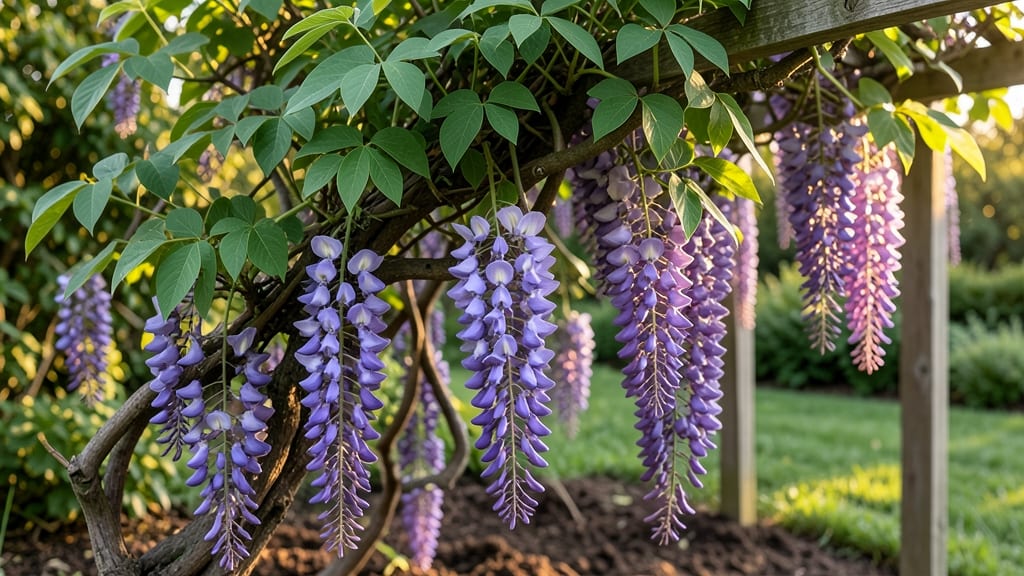
Timing your wisteria flowering season just right could mean the difference between a breathtaking 🌸 display and a sparse, underwhelming show. Most gardeners wait until spring to admire their wisteria’s cascading blooms, but the real magic happens in the pruning you do before those flowers even appear.
If you’ve ever wondered why your wisteria isn’t blooming as abundantly as your neighbor’s, the answer likely lies in when and how you prune. Wisteria thrives in USDA Zone 6a, where the ideal planting window of March–April sets the stage for a spectacular spring bloom.
But without the right cuts at the right time, you might miss out on next year’s floral masterpiece.
I’ve spent years perfecting my wisteria care routine, and what I’m about to share will help you double your blooms next season. From understanding the critical pruning window to avoiding common mistakes that stifle growth, this guide covers everything you need to know.
Let’s turn your wisteria into a fragrant, flower-filled powerhouse.
The key to maximizing your wisteria’s potential starts with a sharp pair of pruners and a little patience. Whether you’re dealing with a young vine or an established climber, the right techniques will ensure your 🌸 wisteria becomes the star of your garden. Ready to transform your pruning game?
When does wisteria bloom? Mastering the flowering season timeline
Wisteria’s breathtaking 🌸 displays typically arrive in late spring, with most varieties bursting into bloom between April and May. However, the exact timing depends on your USDA Zone, the specific wisteria variety, and even the age of your vine.
In Zone 6a, where I’ve grown my wisteria for years, the blooms usually appear in early May, just as the last frost has passed.
Spring-blooming wisterias like Wisteria sinensis and Wisteria floribunda dominate most gardens, but there’s a secret weapon for year-round interest: fall-blooming varieties. These less common types, like Wisteria brachybotrys, can reward you with a second show in late summer or early fall, extending your floral season by months.
The key to predicting your wisteria’s bloom time lies in understanding its growth cycle. Buds begin swelling in late winter, often around February, but they won’t open until temperatures consistently stay above 50°F (10°C).
This is why early spring pruning—right after flowering—is critical for next year’s display.
Young wisteria vines (under 3 years old) may produce only a few small flower clusters, while mature vines (over 5 years) can cover a 20-foot trellis in cascading blooms.
The first flush of flowers often appears on old wood (last year’s growth), which is why aggressive summer pruning can actually reduce next year’s blooms if not done carefully.
| Variety | Bloom Season | Pruning Window | Key Notes |
|---|---|---|---|
| Wisteria sinensis | Late April–May | After flowering (June) | Classic purple blooms; needs old wood for flowers |
| Wisteria floribunda | May–June | Late winter (Feb) | Longer bloom season; prefers cooler climates |
| Wisteria brachybotrys | August–September | Immediately after spring bloom | Fall-blooming; great for extended interest |
| Amethyst Falls | May–June | June–July | Dwarf variety; blooms on new wood |
Climate plays a huge role in bloom timing. In warmer zones (7b+), wisteria may bloom 2–3 weeks earlier, while in cooler zones (5a), flowers might not appear until mid-May.
My wisteria in Zone 6a has shown remarkable consistency, but last year’s unusually cold April delayed blooms by nearly 10 days—a reminder that Mother Nature often calls the shots.
Age matters too. A 3-year-old vine might produce just a handful of flowers, while a 10-year-old specimen can cover an entire pergola. The secret? Patience and proper pruning.
I’ve seen vines that were neglected for years suddenly explode with blooms after just one season of corrective pruning—proof that even mature wisteria can rebound with the right care.
If your wisteria isn’t blooming at all, don’t panic. It could be due to over-pruning, poor sunlight, or lack of nutrients. The first step is to check your pruning habits—cutting back too aggressively in summer can remove next year’s flower buds before they form.
Instead, focus on light shaping cuts in late winter to encourage new growth.
For maximum blooms, aim to prune your wisteria twice a year: once right after flowering (to shape and encourage new growth) and again in late winter (to remove dead wood and open the center for airflow).
This two-step approach has doubled the blooms on my 12-year-old Wisteria floribunda—from sparse clusters to dramatic, fragrant cascades.
Pro tip: If your wisteria is young (under 5 years), avoid heavy pruning entirely. Let it establish its framework first. The first few years are all about root and vine development—the foundation for future floral displays.
My 5-year-old vine now produces enough blooms to fill a 5-gallon bucket with cut flowers each spring!
Remember, wisteria’s blooming season is a delicate balance between age, variety, climate, and care. By understanding these factors and adjusting your pruning timeline accordingly, you’ll unlock your wisteria’s full potential—turning your garden into a fragrant, floral paradise year after year. 🌿
Step-by-step pruning guide for maximum wisteria blooms
Pruning wisteria isn’t just about keeping it tidy—it’s the secret to doubling your blooms next year. The key lies in timing and technique, especially when dealing with old wood vs. new growth.
Most gardeners make the mistake of pruning at the wrong time, which can leave their wisteria looking leggy or completely bare of flowers. I’ve learned that late winter is the perfect window to shape your vine, but only if you follow the right steps.
Before you grab your pruners, understand that wisteria flowers bloom on last year’s wood. This means if you cut back too aggressively, you’ll sacrifice next year’s 🌸 blooms. The goal is to stimulate new growth while preserving the flowering framework.
Whether you’re dealing with a young vine or an overgrown monster, the principles remain the same—just adjust the intensity. Let’s break it down so you can prune with confidence.
Cut back 1/3 of the oldest wood to encourage new growth. Look for woody stems that no longer produce flowers—these are your targets. Use clean, sharp pruners to make 45-degree cuts just above a bud or leaf node.
Remove weak or crossing branches to improve airflow. Focus on new green shoots—these will become next year’s flowering wood. Aim to open up the vine’s structure so sunlight reaches the center.
This is your biggest pruning session. Cut back last year’s growth by 1/2 to 2/3, leaving 2-3 buds per stem. For overgrown wisteria, you may need to shorten branches drastically—don’t fear it! The vine will bounce back with vigorous new growth.
Train your wisteria along a trellis or arbor to prevent uncontrolled sprawling. Trim any shoots growing away from the support structure. Use soft ties to guide young vines—never let them strangle themselves.
If your wisteria is bare or leggy, focus on stimulating new shoots. Cut back all dead wood and prune just above a healthy bud. Apply a balanced fertilizer to encourage recovery. Patience is key—it may take a season or two to see full revival.
One of the most common mistakes I see is pruning too late in the season, which can leave your wisteria vulnerable to winter damage.
Always aim to finish major pruning by late February in USDA Zone 6a, giving the plant enough time to heal and harden off before the last frost. If you’re in a warmer climate, adjust your timeline to avoid new growth that won’t survive winter.
For tools, invest in a pair of bypass pruners for clean cuts and a loppers for thicker branches. Disinfect your tools with rubbing alcohol between cuts to prevent the spread of diseases like wisteria blight.
And remember, gloves are a must—wisteria thorns are no joke! With the right approach, your wisteria will reward you with abundant blooms that’ll make your neighbors green with envy.
Start with these steps, and you’ll be well on your way to a fragrant, flower-filled wisteria that steals the show every 🌸 flowering season. Happy pruning!