
Planting
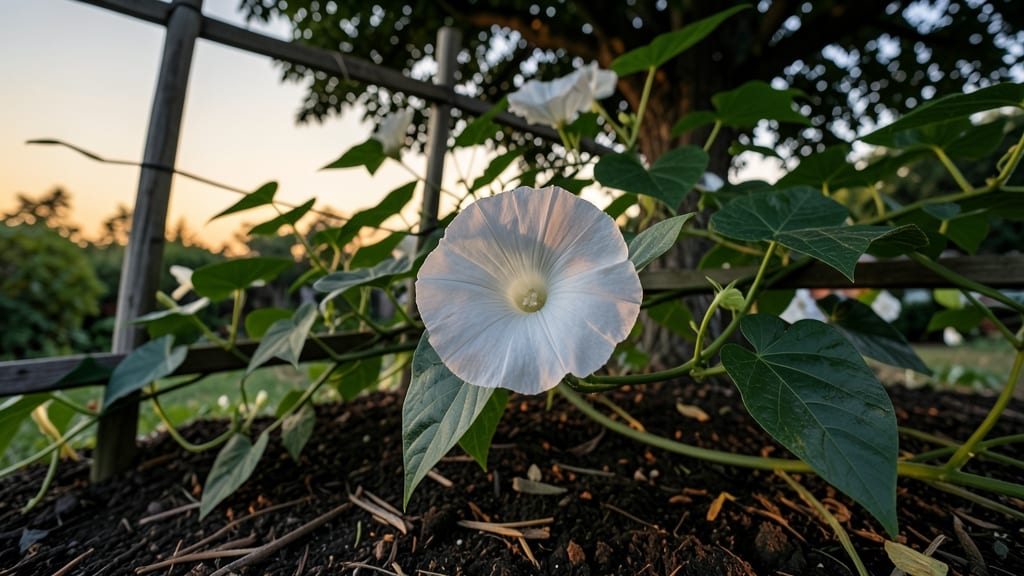
If you’ve ever wondered, what does a moonflower plant look like when it unfurls under the moonlight—only to vanish by dawn—you’ve likely encountered this nocturnal beauty. This giant white flower isn’t just striking; it’s a gardener’s secret for adding drama after sunset.
Unlike most flowers that bask in daylight, moonflowers stay dormant until nightfall, revealing their velvety petals and intoxicating scent when the world quiets down.
So what sets a moonflower apart? Picture a fast-growing vine with heart-shaped leaves that climb trellises or sprawl across garden beds, reaching heights of 1 to 1.5 feet in a single season. The real showstopper?
Its 6-inch-wide blooms, pure white with a faint purple throat, which open just as the sun sets and close by mid-morning. This cycle repeats night after night, making it a rare spectacle for evening gardeners.
What makes moonflowers truly special isn’t just their timing—it’s their unexpected resilience. Thriving in USDA Zone 6a and beyond, they’re easy to grow from seeds planted in May or June, after the last frost.
Whether you’re a seasoned gardener or a beginner, this plant offers a low-maintenance way to transform your space into a twilight haven. Ready to discover how to spot one (and grow your own)? Let’s dive into the details.
The magic of moonflowers lies in their duality: by day, they’re unassuming vines; by night, they’re luminous stars. Their fragrant, silvery-white blooms stand out against similar night-bloomers like jasmine or evening primrose, thanks to their larger size and distinct purple centers.
Once you know what to look for, you’ll never miss them—just don’t blink, or you might just catch them closing up shop at sunrise.
Distinctive features of moonflower plant appearance: leaves, vines, and flowers
The moonflower plant (Ipomoea alba) is a night-blooming beauty that transforms your garden after dark. Its most striking feature is its massive, velvety white flowers that unfurl only when the sun sets, revealing delicate purple throats that glow under moonlight.
Unlike daytime bloomers, these flowers close by morning, making them a magical but fleeting sight. The plant's rapid vine growth and heart-shaped leaves create a lush, trailing display that's equally captivating during the day.
What truly sets moonflowers apart is their nocturnal blooming habit, combined with their tropical appearance. The vines can reach lengths of 10-15 feet in a single season, climbing trellises or sprawling across garden beds.
Each leaf is 3-6 inches wide, with a glossy finish that reflects light beautifully. This plant isn't just visually stunning—it's an experience that engages all your senses, especially at night when its mild, sweet fragrance fills the air.
| Feature | Description | Size Comparison |
|---|---|---|
| Leaves | Large, heart-shaped, glossy dark green leaves | 3-6 inches wide (similar to hosta leaves) |
| Vines | Rapid-growing, woody stems that twine clockwise | 10-15 feet long (like morning glory vines) |
| Flowers | White with purple throats, 5-6 inch diameter, velvety texture | Size of a large dinner plate |
| Bloom Time | Opens at dusk, closes by mid-morning | Lasts 1 night only |
| Fragrance | Sweet, mild evening scent | Detectable up to 10 feet away |
The moonflower's leaves are one of its most underrated features. Each leaf has a distinctive heart shape with pointed tips and a slightly wavy edge. The surface is smooth and shiny, almost like polished jade, which helps reflect sunlight during the day.
These leaves grow alternately along the vine, creating a lush, cascading effect that's perfect for covering trellises or arbors. In optimal conditions, a single vine can produce hundreds of leaves over a growing season, making it a fast-growing ground cover option.
When it comes to the vines themselves, moonflowers are true powerhouses of growth. In just one growing season, a vine can stretch 10-15 feet, twining clockwise around any support you provide.
The stems are woody and flexible, capable of climbing trellises, fences, or even tree branches. Unlike some vines that require constant guidance, moonflowers will naturally attach themselves to structures, creating a dense, green curtain by midsummer.
This rapid growth makes them ideal for quickly transforming bare garden spaces into lush, living tapestries.
The flowers are the star of the show, and their appearance is nothing short of spectacular. Each bloom reaches 5-6 inches in diameter, making them some of the largest night-blooming flowers you'll find.
The petals are pure white with a slightly velvety texture, giving them a soft, almost ethereal look. What makes them truly unique is the deep purple center, which creates a striking contrast against the white.
These flowers don't just look beautiful—they're also highly fragrant, releasing a sweet, mild scent that perfumes the evening air.
One fascinating aspect of moonflower blooms is their nocturnal lifecycle. Buds begin forming in late summer and remain closed until dusk, when they suddenly unfurl to reveal their full glory.
The flowers stay open all night, attracting moths and other night pollinators, before closing by mid-morning the next day. This brief window of beauty means you'll need to be patient and observant to catch them at their peak.
The best time to view them is between 9 PM and midnight, when the flowers are fully open and the moonlight enhances their appearance.
If you're growing moonflowers in your garden, you'll notice they bloom sequentially rather than all at once. This means you'll get a continuous display of flowers throughout their blooming season, which typically runs from July to September in most climates.
Each vine can produce dozens of flowers over time, creating a breathtaking nighttime spectacle. To encourage more blooms, make sure your moonflowers get full sun exposure and well-draining soil.
With proper care, a single plant can become the centerpiece of your evening garden, drawing visitors out after dark to experience its magical beauty.
For those who want to preserve the beauty of moonflowers beyond their single night of bloom, you can pick the flowers in the evening and place them in a vase.
They'll last 1-2 days indoors, continuing to release their fragrance. This makes them a unique and romantic cut flower option for special occasions. Just be sure to harvest
How moonflower flowers look up close: petal structure, scent, and lifespan
When a moonflower finally unfurls its 6-inch-wide blooms after sunset, it’s a sight to behold. Each flower features five velvety petals that radiate from a central purple throat, creating a striking contrast against the silvery-white petals.
The petals themselves are slightly ruffled at the edges, giving them a delicate, almost lace-like appearance that catches the moonlight beautifully.
The texture of the petals is what truly sets moonflowers apart. Unlike many flowers that feel smooth to the touch, moonflower petals have a soft, suede-like surface that’s almost tactilely irresistible.
This velvety texture isn’t just visually appealing—it also helps the flowers absorb and reflect moonlight, making them glow faintly in the dark. If you’ve ever brushed against one, you’ll notice how lightweight yet sturdy the petals are, designed to withstand gentle evening breezes.
But the real magic happens when you get close enough to smell a moonflower at night. Their fragrance is subtle yet intoxicating, often described as a mix of sweet jasmine and honey, with a hint of tropical warmth.
The scent isn’t overpowering like some night-blooming flowers; instead, it’s delicate and inviting, drawing pollinators like moths and sphinx moths to the garden after dark. For gardeners, this fragrance is a nighttime reward—a reason to step outside after dinner and let the garden’s secrets unfold.
🌙 Moonflower Flower Anatomy at a Glance
5 velvety, ruffled petals
Silvery-white with purple throat
6 inches wide
Suede-like, soft to touch
Sweet jasmine-honey blend
Open 1 night, close by dawn
The lifespan of a single moonflower bloom is one of its most fascinating traits. Each flower opens fully at dusk, stays in bloom throughout the night, and begins to close by dawn, often wilting completely by mid-morning.
This 24-hour cycle repeats night after night, with new buds opening sequentially along the vine. If you’re lucky, you might see three to five blooms on a single vine in a season, each one a fleeting but spectacular event.
For photographers, capturing moonflowers at their peak requires patience and timing. The best time to photograph them is within the first two hours after sunset, when the petals are fully unfurled but the background is still dim.
Use a tripod and slow shutter speed to capture the ethereal glow of the petals against the night sky. A macro lens will highlight the ruffled edges and velvety texture, while a wide-angle shot can emphasize the vine’s dramatic climb.
Just remember—these flowers are delicate, so avoid touching them if you can.
If you’ve ever wondered why moonflowers close by dawn, the answer lies in their natural survival strategy. By shutting down in the morning, they conserve energy and water, preparing for the next night’s bloom.
This behavior also helps protect the reproductive parts of the flower from daytime heat and predators. For gardeners, it’s a reminder that patience is key—the real magic of moonflowers happens when the world is quiet, and you’re the only one who gets to witness it.