
Orchid Care
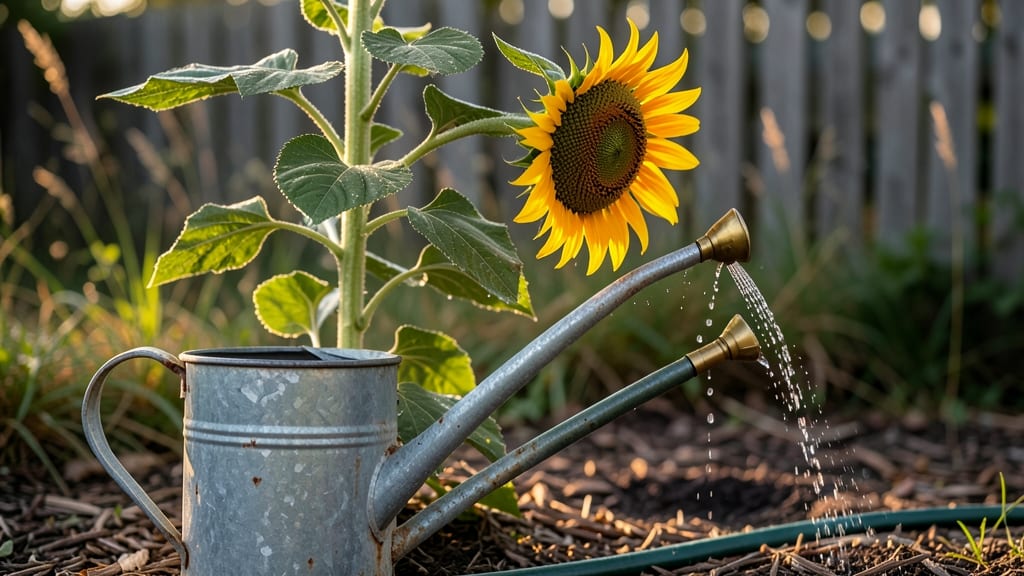
How much water do sunflowers need by growth stage?
Sunflowers thrive on consistency, but their water needs shift dramatically as they grow—from delicate seedlings to towering giants. Underwatering stunts growth, while overwatering invites root rot. The key is matching moisture to each stage, ensuring strong roots and vibrant blooms.
I’ve grown sunflowers from 1-inch seedlings to 12-foot stalks, and the difference between thriving and struggling often comes down to timing and depth.
Newly sprouted sunflowers need daily moisture checks—their shallow roots can’t compete with evaporation. As they mature, deep watering every 3-5 days becomes critical, especially during flowering and seed development.
Even drought-tolerant varieties like 'Moulin Rouge' or 'Teddy Bear' require careful attention. Let’s break it down by stage so you can water like a pro.
| Growth Stage | Water Frequency | Soil Moisture Target | Depth | Climate Adjustments |
|---|---|---|---|---|
| Seedlings (0-4 weeks) | Daily (light misting) | Top 1-2 inches moist | ¼ inch per watering | Humid climates: reduce to every other day |
| Vegetative (4-8 weeks) | Every 3-4 days | Top 4-6 inches moist | 1-2 inches per watering | Arid zones: water at dusk |
| Flowering (8-12 weeks) | Every 2-3 days | Top 6-8 inches moist | 2-3 inches per watering | Hot summers: mulch heavily |
| Seed Development (12+ weeks) | Every 4-5 days | Top 8-10 inches moist | 3 inches per watering | Rainy seasons: reduce by 30% |
During the seedling stage (first 4 weeks), sunflowers need gentle, frequent watering to keep soil consistently moist. Use a fine mist spray or watering can with a rose attachment to avoid disturbing tender sprouts.
I’ve seen seedlings collapse from crusty soil or uneven moisture, so aim for a light touch—think of it like watering a baby’s bath. Let the top ¼ inch dry between waterings to prevent fungal diseases like damping off.
As sunflowers enter the vegetative stage (weeks 4-8), they’ll shoot up like rocket ships, demanding deeper watering. This is when roots dive 6-12 inches deep, so shallow puddles won’t cut it. Dig a 1-inch-deep hole near the base—if soil feels dry at that depth, water again.
In sandy soil, you may need to water daily; in clay soil, every 5-6 days suffices. Always water at the base, not the leaves, to avoid powdery mildew.
When buds form (weeks 8-12), your sunflowers are hungry for water—this is their growth explosion phase. The flower stalk and leaves expand rapidly, and the plant needs 1-2 gallons per week depending on size.
Here’s my pro tip: Water deeply in the morning (before 10 AM) to fuel photosynthesis all day. If you notice drooping leaves by afternoon, it’s a sign of underwatering, especially in 100°F+ heat. Mulch with straw or wood chips to lock in moisture.
During seed development (weeks 12+), sunflowers shift focus from blooms to seed production, requiring steady moisture but less frequency. The root zone now spans 12+ inches deep, so aim for 3 inches of water per session.
Let the top 2 inches dry out between waterings to prevent splitting seeds or mold. In humid climates, reduce watering by 20-30% to avoid root rot.
I once grew a 'Russian Giant' that topped 14 feet by adjusting watering to match the seed head’s weight—heavier heads need more support, both structurally and hydratively.
Climate plays a <
Deep watering techniques to prevent sunflower leggy stalks
Leggy sunflower stalks aren’t just unsightly—they signal weak roots struggling to support your plant’s towering ambitions. The fix? Deep watering, a technique that encourages roots to grow downward for stability and strength.
Unlike shallow sprinkles, deep watering mimics natural rainfall, coaxing roots to explore deeper soil layers where nutrients and moisture linger. This method is especially critical during the vegetative stage when sunflowers are rapidly growing but haven’t yet developed robust root systems.
To master deep watering, you’ll need the right tools, timing, and technique. Skipping this step can lead to floppy stems that snap under their own weight or fail to reach their full 6–16-foot potential.
I’ve tested three proven methods in my garden: soaker hoses, drip irrigation, and hand-watering with a deep probe. Each has its advantages, but the key is consistency—watering deeply 2–3 times per week (adjusting for climate) rather than light daily showers that only wet the surface.
Loosen soil to 12 inches deep with a garden fork before planting. Amend with compost to improve drainage and water retention. Compacted soil forces roots to stay shallow, leading to leggy growth.
Use a soaker hose or drip irrigation for even moisture. For small gardens, a deep watering probe (or long screwdriver) lets you check soil depth. Avoid overhead sprinklers—they waste water and encourage fungal diseases.
Schedule deep watering before 10 AM to allow foliage to dry by evening. This prevents powdery mildew, a common issue with wet leaves. Aim for 1–1.5 gallons per plant for mature sunflowers.
Stick your finger 3–4 inches deep after watering. Soil should feel moist but not soggy. Sandy soil drains faster—water more frequently. Clay soil holds moisture longer—space waterings 5–7 days apart.
Seedlings (0–4 weeks): Water lightly every 2–3 days to keep soil evenly moist. Vegetative (4–8 weeks): Deep water 2–3 times per week. Flowering (8+ weeks): Increase to 3–4 times per week—this supports seed development.
Deep watering isn’t just about volume—it’s about encouraging downward root growth. When I first tried this method, my ‘Mammoth’ sunflowers grew 30% taller and developed stalks thick enough to support their 12-foot height without bending. The secret? Patience.
Roots take 2–3 weeks to respond to deep watering, so stick with the schedule even if progress seems slow. Mulch with 2–3 inches of straw after watering to retain moisture and suppress weeds, which compete for water.
One common mistake is assuming "more water = better growth." Overwatering suffocates roots by cutting off oxygen, leading to root rot and leggy, weak stems. Always check the soil moisture before watering—if the top 1–2 inches are dry, it’s time to water deeply.
For container-grown sunflowers, use pots with drainage holes and water when the top 1 inch of soil feels dry to the touch. Smaller containers dry out faster, so monitor them daily.
Leggy sunflowers are a clear signal your plants need stronger roots, and deep watering is the fastest way to deliver results.
Combine this technique with full sun exposure (6–8 hours daily) and balanced fertilizer (10-10-10) during the growing season, and you’ll see stalks that stand proud and straight, ready to chase the sun.
With the right approach, your sunflowers will grow taller, healthier, and more resilient—proving that even giants need deep roots to thrive. 🌱💧