
Planting
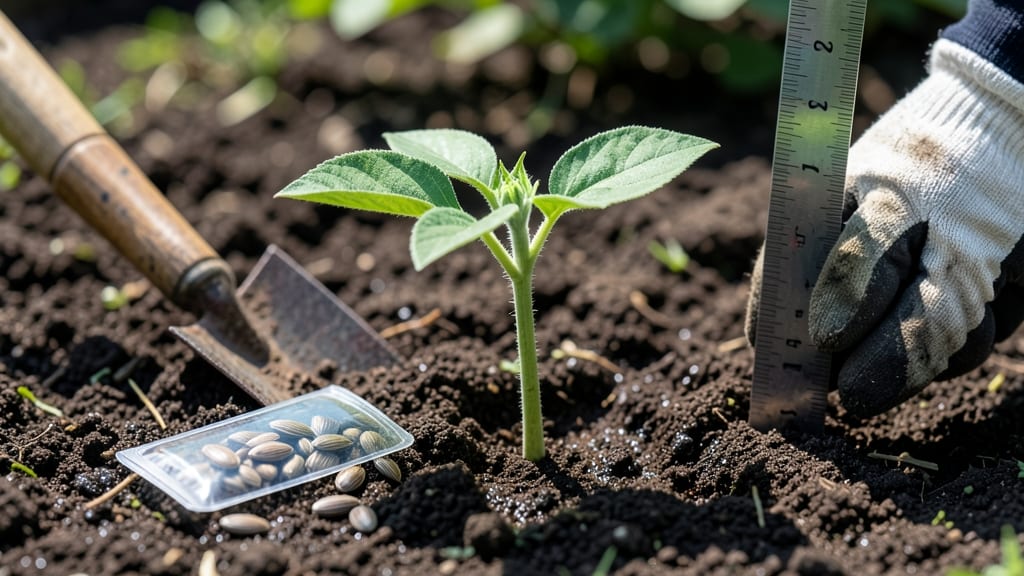
Planting your sunflowers 🌻 at the wrong depth could mean the difference between a thriving garden and weeks of waiting for sprouts that never come. Too shallow, and your seeds dry out before germinating; too deep, and they’ll struggle to break through the soil, wasting your time and effort.
I’ve learned the hard way that getting this one step right is the key to strong, healthy sunflower starts. Whether you’re a first-time gardener or a seasoned pro, knowing exactly how deep to plant your seeds will save you frustration and give you better germination rates every time.
Most sunflower seeds need to be buried just ½ to 1 inch deep—simple, but critical. This depth keeps them moist enough to sprout while still allowing the delicate shoot to push through the soil without resistance. Let’s break down the exact method for your sunflower variety and soil type.
From giant varieties that need extra space to dwarf types that thrive in tighter clusters, I’ll walk you through everything you need to know.
You’ll discover how to adjust for your 6a zone, avoid common mistakes, and set your sunflowers up for a season of success—starting with the perfect planting depth.
Optimal sunflower planting depth by seed type and soil conditions
Getting your sunflower seeds to sprout consistently starts with one critical step: planting them at the correct depth. While the general rule is ½ to 1 inch deep, the ideal depth varies based on your seed type and soil conditions.
Too shallow, and seeds dry out; too deep, and they risk rotting before sprouting. Let’s break down the science behind sunflower planting depth to maximize your germination success.
Sunflower seeds contain food reserves that fuel early growth. When planted too shallow, these reserves dry out before the seedling can access them. Conversely, planting too deep forces the seedling to work harder to reach the surface, often resulting in weak, leggy stems.
The ½ to 1-inch range strikes the perfect balance for most varieties, but adjustments are needed for giant sunflowers or heavy clay soils.
Dwarf varieties (like 'Teddy Bear' or 'Moulin Rouge') thrive with seeds planted at the shallower end (½ inch). Their smaller root systems benefit from easier access to moisture near the surface. Meanwhile, tall varieties (such as 'Mammoth' or 'Russian Giant') can handle the deeper end (1 inch) to support their larger seedling energy demands.
Soil type plays a surprising role in planting depth. In sandy soils, which drain quickly, plant seeds at the deeper end (1 inch) to retain moisture longer. In clay soils, which hold moisture well, a shallower depth (½ inch) reduces the risk of rot.
Loamy soils—ideal for sunflowers—allow flexibility within the ½ to 1-inch range.
| Seed Type | Planting Depth | Soil Type Adjustment | Germination Time |
|---|---|---|---|
| Dwarf Varieties | ½ inch | Add ¼ inch in clay | 7-10 days |
| Standard Varieties | ¾ inch | Standard depth | 8-12 days |
| Giant Varieties | 1 inch | Reduce to ¾ inch in clay | 10-14 days |
| All Types (Sandy Soil) | 1 inch | Critical for moisture retention | 7-10 days |
| All Types (Clay Soil) | ½ inch | Prevents waterlogging | 10-14 days |
Temperature also influences planting depth. In cooler climates, planting seeds slightly deeper (¾ inch) helps them stay warmer near the soil’s core. Conversely, in hot, dry regions, shallower planting (½ inch) reduces heat stress on the seed.
Always wait until soil temperatures reach at least 50°F (10°C) for optimal germination.
Proper planting depth isn’t just about the seed—it’s about creating the right environment for the seedling’s first push toward sunlight. When seeds are planted correctly, they germinate faster and develop stronger roots.
This translates to healthier plants that resist disease and produce larger blooms. For example, giant sunflowers planted at 1 inch often reach maturity 2-3 weeks earlier than those planted too shallow.
To achieve consistent results, use a seed depth marker (like a ruler or stick) to ensure precision. Press the soil gently around the seed to maintain contact without compacting it.
Avoid burying seeds under mulch immediately after planting, as this can suffocate them. Instead, apply mulch once seedlings have 2-3 true leaves to protect them from temperature swings.
One common misconception is that larger seeds require deeper planting. While giant sunflower seeds are bigger, their energy reserves are designed to fuel growth from a 1-inch depth.
Over-planting them deeper doesn’t improve germination—it only increases the risk of fungal rot. Always measure from the seed’s widest point to the soil surface for accuracy.
For container gardening, adjust depth slightly shallower (½ inch) due to the limited root space. Use a well-draining potting mix to prevent waterlogging, which can occur more easily in pots.
If growing sunflowers in raised beds, follow the same depth guidelines as in-ground planting but ensure the bed’s soil is loose and aerated to 6 inches deep.
Remember, the goal is to create a stable, moist environment where seeds can germinate without stress. By tailoring planting depth to your seed type and soil conditions, you’ll set your sunflowers up for a strong start—and a season of vibrant blooms.
Start with these guidelines, and soon you’ll be harvesting sunflowers that rival the tallest varieties in your region.
Common mistakes that kill sunflower germination (and how to fix them)
Even with the best sunflower seeds, poor planting depth can sabotage your garden before it starts. I’ve seen gardeners spend weeks waiting for sprouts that never appear—only to realize they planted too deep or too shallow.
The ½ to 1-inch rule is your golden ticket, but small mistakes can turn your seeds into a lost cause.
Let’s tackle the most common errors that prevent sunflower germination, including overwatering, planting in cold soil, and ignoring soil moisture. Each of these mistakes can leave your seeds struggling or worse—rotting before they even sprout. Fixing them is easier than you think.
Sunflower seeds planted deeper than 1 inch suffocate, leading to seed rot and wasted seeds. The ideal depth is ½ to 1 inch—any deeper, and they’ll struggle to break through the soil.
💡 Fix: Use your finger to create a hole ½ inch deep for dwarf varieties or 1 inch deep for standard/giant types. Press the seed gently into place—don’t bury it too firmly.
Another silent killer is overwatering right after planting. While sunflower seeds need moisture to germinate, too much water can drown them or wash seeds out of their shallow graves. I’ve seen entire rows of seeds fail because gardeners treated them like thirsty houseplants instead of delicate sprouts.
Cold soil is another sneaky problem, especially in early spring or cooler climates. Sunflower seeds need soil temperatures of at least 50°F to germinate properly. If your soil is still chilly, your seeds may sit dormant for weeks—or never sprout at all.
Always check soil temperature with a soil thermometer before planting.
To fix these issues, start by pre-warming your soil. Use black plastic mulch or a cold frame for a few weeks before planting. This raises soil temperature naturally and speeds up germination. For watering, stick to a light mist after planting—just enough to keep the soil damp, not soggy.
Finally, uneven soil moisture can create pockets where seeds dry out or rot. After planting, use a spray bottle or gentle watering can to keep the soil consistently moist. Mulching with straw or grass clippings helps retain moisture and regulates soil temperature—two critical factors for successful germination.
With these fixes, you’ll see those first sunflower sprouts in as little as 7-14 days, depending on your climate. The key is patience and precision—don’t let small mistakes derail your garden before it even begins! 🌱