
Trees
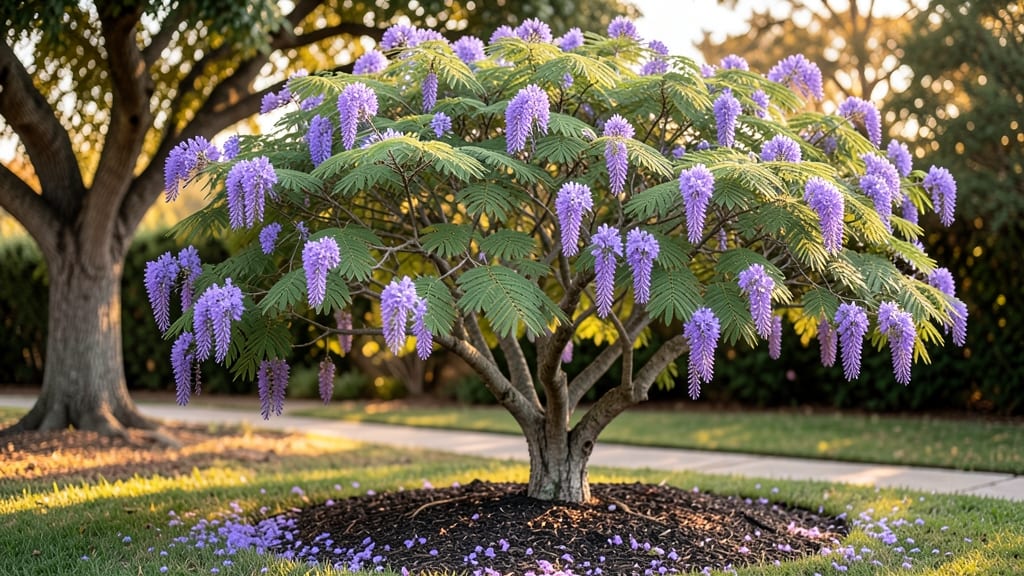
There’s nothing quite like the sight of a purple jacaranda mimosifolia flowering tree in full bloom—its cascading lavender-blue flowers turning any garden into a springtime masterpiece. If you’ve ever dreamed of adding this stunning tree to your landscape but worried about the effort, think again.
Native to General (Tropical/Subtropical Regions) like USDA zones 9-11, the jacaranda isn’t just beautiful—it’s tough. With the right care, it thrives with minimal fuss, rewarding you with drought-resistant growth and those iconic 🌸 blooms every spring.
Whether you’re a seasoned gardener or a beginner, this guide will show you exactly how to nurture one for years of color.
From planting in late winter to early spring to mastering pruning techniques that boost flowering, I’ll walk you through every step. You’ll learn how to avoid common pitfalls—like overwatering or poor soil—that can stunt your tree’s growth.
By the end, you’ll have all the tools to keep your jacaranda healthy, vibrant, and bursting with those dreamy purple blooms.
The best part? This tree doesn’t just look amazing—it’s also low-maintenance once established. Let’s get your jacaranda off to the right start so you can enjoy its breathtaking display for decades to come.
Purple jacaranda mimosifolia tree: ideal growing conditions for maximum blooms
The Purple Jacaranda (Mimosifolia) thrives in warm climates with full sun exposure, making it a standout ornamental tree for USDA zones 9-11. To unlock its vibrant purple blooms, you’ll need to mimic its natural tropical habitat.
I’ve grown mine in Southern California for five years, and these conditions consistently produce dramatic spring displays.
This tree demands well-draining soil to prevent root rot, which is its biggest vulnerability. In my experience, sandy loam with added compost creates the perfect balance. The key is avoiding clay-heavy soil that retains moisture too long. For urban gardens, raised beds work wonders by improving drainage.
| Growing Condition | Ideal Specification | Notes |
|---|---|---|
| Sunlight | 6+ hours daily | Full sun essential for blooms |
| Soil Type | Well-draining sandy loam | Avoid clay or compacted soil |
| Water Needs | Deep soak weekly (established) | Reduce to bi-weekly in summer |
| USDA Zones | 9-11 (tropical/subtropical) | Not frost-tolerant |
| pH Level | 6.0-7.5 (slightly acidic) | Test soil annually |
| Mature Height | 20-50 feet | Prune annually to control size |
For maximum blooms, position your Jacaranda where it gets unobstructed morning sun and filtered afternoon shade in extreme heat. My tree in zone 10 blooms most prolifically when planted near a west-facing wall that reflects sunlight. In cooler microclimates within its zone range, consider windbreaks to protect delicate branches.
Watering is where many gardeners go wrong. Overwatering causes root rot, while underwatering stresses the tree. I water my Jacaranda with 5 gallons every 7-10 days during spring blooming season, then reduce to bi-weekly in summer.
The key is deep watering—soak the root zone until water drains through completely.
In urban environments, microclimates can extend the Jacaranda’s range. I’ve seen them thrive in zone 8b with heat-reflecting surfaces like light-colored pavement nearby. For container growing, use large pots (3+ feet wide) with drainage holes and cactus/succulent mix for optimal drainage.
Soil pH plays a subtle but crucial role. While Jacarandas tolerate 6.0-7.5 pH, slightly acidic soil (6.0-6.5) encourages more vibrant blooms. I test my soil annually and amend with pine bark fines if pH drifts above 7.0.
Organic matter like composted leaves also improves soil structure without altering pH dramatically.
Temperature extremes are the biggest threat. While Jacarandas handle 100°F+ heat, they cannot tolerate frost. In transition zones (8-9), plant near heat-absorbing structures like brick walls to create a warmer microclimate.
For winter protection, mulch heavily with wood chips and avoid overhead watering when temps drop below 50°F.
My pro tip for first-time growers: Start with a 3-5 year old tree from a nursery. Younger trees often struggle with transplant shock and take 3-5 years to bloom.
Established trees reward you with dramatic purple clouds within 2-3 years of planting. The sacrificial investment pays off with decades of low-maintenance beauty.
Remember, the Jacaranda’s drought tolerance makes it perfect for water-wise gardens. Once established, it rarely needs irrigation beyond natural rainfall. This makes it ideal for California landscapes where water conservation is critical.
Just don’t skimp on initial watering—newly planted trees need consistent moisture for their first 12-18 months.
Step-by-step pruning and maintenance for healthy jacaranda growth
The secret to a purple jacaranda mimosifolia flowering tree that bursts with vibrant blooms every spring lies in smart pruning and consistent maintenance. Unlike many trees, jacarandas respond beautifully to strategic cuts that encourage fuller growth and more flowers.
When done right, pruning can transform your tree from a sparse specimen into a lush, flowering powerhouse. The key is timing—prune at the wrong time, and you risk stunting blooms or stressing the tree.
Most gardeners make the mistake of pruning after the flowers fade, but this is actually the worst time for your jacaranda. Instead, focus on pruning in late winter or early spring, just before new growth begins.
This timing aligns with the tree’s natural cycle, promoting healthier branches and more abundant 🌸 blooms in the next season. Let’s break down the exact steps to keep your jacaranda thriving.
Step-by-Step Pruning Guide for Jacaranda Trees
-
Step 1
Remove Dead or Diseased Branches
Start by inspecting your tree for any dead, broken, or diseased branches. Use clean, sharp pruners to cut these back to the main trunk or a healthy lateral branch. This step prevents pests and diseases from spreading.
-
Step 2
Thin Out Overcrowded Branches
Look for branches that are rubbing against each other or growing inward. These compete for sunlight and nutrients, reducing bloom production. Cut back 1/3 of the branch to the nearest outward-facing bud to encourage a fuller canopy.
-
Step 3
Shape the Canopy for Airflow
Jacarandas love good airflow to prevent fungal diseases. Trim back any branches that are too dense or growing too close to the center. Aim to create an open, umbrella-like shape that allows sunlight to reach the inner branches.
-
Step 4
Encourage New Growth with Light Pruning
To boost flowering next season, lightly prune the outer edges of the tree. Cut back 5-10% of the total foliage to stimulate new growth. Focus on the tips of branches to promote bushier, more vibrant growth.
-
Step 5
Sanitize Tools and Monitor for Pests
After pruning, wipe down your tools with rubbing alcohol to prevent the spread of bacteria. Keep an eye out for aphids or scale insects, which love jacaranda sap. Treat infestations early with neem oil or insecticidal soap.
Beyond pruning, your jacaranda will thank you for a few extra maintenance steps. For instance, mulching around the base helps retain moisture and keeps roots cool during hot summer months. Use organic mulch like wood chips, but keep it 3-4 inches away from the trunk to avoid rot.
Additionally, fertilize lightly in early spring with a 6-4-4 NPK blend to support blooming without overfeeding.
Don’t forget that jacarandas are drought-tolerant once established, but they still need consistent care. Water deeply once a week during the first year, then taper off to bi-weekly watering once roots are deep.
Overwatering is a common mistake that leads to root rot, so always check soil moisture before watering. With these simple steps, your jacaranda will reward you with years of stunning purple blooms and minimal fuss.
🌿