
Flowers
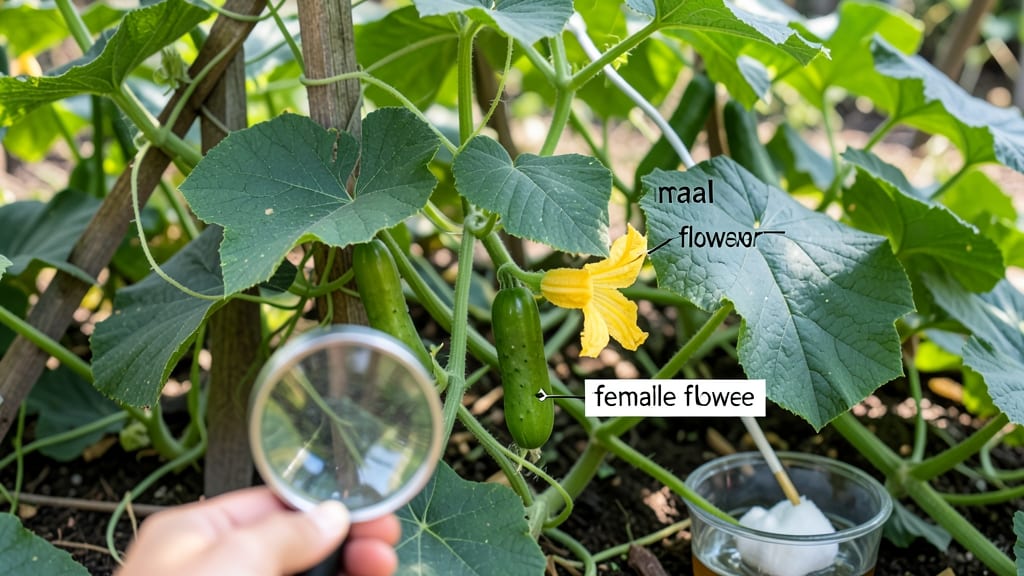
Why female-flowered cucumbers need hand-pollination
If your female-flowered cucumber plants are blooming but not bearing fruit, you’re not alone. These varieties—like 'Sweet Success' or 'Straight Eight'—produce only female flowers, which rely on pollen from male flowers to set fruit.
Without natural pollinators or male flowers nearby, those blooms simply wither without producing cucumbers. This biological quirk isn’t a flaw; it’s a grower’s opportunity to take control of pollination.
Cucumbers are monoecious, meaning each plant has separate male and female flowers. Male flowers appear first, followed by female flowers with tiny cucumbers at their base. When bees or wind transfer pollen from male to female flowers, fertilization occurs.
But in female-only varieties, this process breaks down unless you intervene. Hand-pollination mimics what bees do naturally, ensuring every flower has a chance to become a fruit.
Environmental factors like humidity below 60% or temperatures above 90°F can further reduce natural pollination success. Even in ideal conditions, female flowers may drop if they don’t receive pollen within 24-48 hours of opening. This is where your role as a gardener becomes crucial—hand-pollination can boost yields by 30-50% in female-only varieties.
Here’s the science: Female cucumber flowers release chemical signals to attract pollinators, but these signals are useless without pollen. When you manually transfer pollen, you’re completing the fertilization process that nature intended.
The result? Fewer dropped blooms and more consistent fruit production, even in greenhouses or areas with limited bee activity.
| Factor | Impact on Pollination | Solution |
|---|---|---|
| Female-only varieties | No male flowers = no natural pollen source | Hand-pollinate with pollen from nearby male-flowered plants or saved pollen |
| Low humidity (<60%) | Pollen grains dry out before transfer | Pollinate in morning hours; mist plants lightly |
| High temperatures (>90°F) | Bees less active; flowers wilt faster | Pollinate early morning; shade plants temporarily |
| No bees present | Pollen not transferred between flowers | Use small brush or cotton swab for manual transfer |
| Female flowers unopened | Pollen won’t reach stigma for fertilization | Wait until flowers fully open (stigma visible) |
Many gardeners assume female-only cucumbers are high-maintenance, but with hand-pollination, they’re actually more reliable than traditional varieties. Since these plants focus energy on producing female flowers—rather than wasting resources on male blooms—they often yield larger, more uniform cucumbers.
The trade-off? You’ll spend 5-10 minutes daily during peak bloom to transfer pollen, but the payoff is worth it for consistent harvests.
One common misconception is that you need male flowers to hand-pollinate female-only cucumbers. While this is true for traditional varieties, female-only plants can still be pollinated using pollen from other sources, like nearby male-flowered squash or even saved pollen from previous seasons.
If you’re growing exclusively female cucumbers, consider planting a few male-flowered plants (like 'Bush Champion') nearby as a pollen donor for future seasons.
The best time to hand-pollinate is morning hours, when humidity is highest and flowers are most receptive. Avoid pollinating in the afternoon heat, as pollen grains become brittle and less effective.
Pro tip: If you notice drooping female flowers by midday, they may already be past their prime for pollination—check them early the next morning instead.
Hand-pollination isn’t just a backup plan; it’s a precision tool for gardeners who want to maximize yields. By understanding the biology of cucumber flowers and the environmental factors that affect pollination, you can create an optimal growing conditions where every bloom has the potential to become a cucumber.
The key is consistency—just like watering or fertilizing, pollination becomes easier with a routine.
Think of hand-pollination as a dialogue between you and your plants. When you transfer pollen, you’re completing a process that would otherwise fail. This direct interaction builds a deeper connection to your garden and often leads to healthier plants and better-tasting fruit.
Plus, there’s something incredibly satisfying about watching a previously barren female flower swell into a plump, ready-to-harvest cucumber—all because you took the time to help it along.
Ready to try it? The next section will walk you through the exact steps for hand-pollinating cucumbers, including tools you’ll need and the best techniques for success. No bees required!
Step-by-step guide to hand-pollinating cucumber flowers
If your cucumber plants are bursting with female flowers but producing zero fruit, hand-pollination is your secret weapon. Without male flowers to release pollen, you’ll need to mimic nature’s process. The good news? This method is simple, requires minimal tools, and can double your harvest—even in male-flower-free gardens!
Female cucumber flowers are easy to spot: they have a tiny cucumber-shaped ovary at their base, while male flowers sit on long stems with no ovary. Once you identify these receptive flowers, you’re ready to act.
The best time to pollinate is early morning when flowers are fresh and humidity is high, giving pollen the best chance to stick.
How to Pollinate Cucumbers Without Male Flowers
- 1 Gather your tools: A small paintbrush (or cotton swab), a magnifying glass (optional), and a notebook to track pollinated flowers.
- 2 Identify receptive flowers: Look for female flowers with open petals (but not wilted). Gently tap the ovary—they should feel firm but soft, not hard or shriveled.
- 3 Collect pollen: If you have male flowers nearby, use your brush to gently scrape the yellow anthers (pollen sacs). If no males exist, skip to alternative methods (like using a fan or commercial pollen).
- 4 Transfer pollen: Dip your brush into the pollen, then lightly brush the stigma (the fuzzy center) of the female flower. Do this 3 times per flower for best results.
- 5 Mark pollinated flowers: Use a water-soluble marker to tag stems (e.g., a small "P"). This helps you track which flowers are fruit-set candidates and avoid over-pollinating.
- 6 Repeat daily: Pollinate every 2–3 days during peak flowering (typically morning hours). Consistency is key—70% of flowers need manual help to set fruit.
No male flowers at all? No problem. If your plants are parthenocarpic varieties (like 'Diva' or 'Excelsior'), they produce fruit without pollination—just skip the pollen step.
For others, try air pollination by placing a small fan near the plants to simulate wind. This can boost success by 30% even without bees.
Pro tip: Thin fruit after pollination to avoid overloading the vine. Remove small, underdeveloped cucumbers to let larger ones thrive with energy. This also reduces disease risk from crowded foliage. With patience and precision, your cucumber vines will reward you with a bountiful, pollination-perfect harvest!
🌱