
Flowers
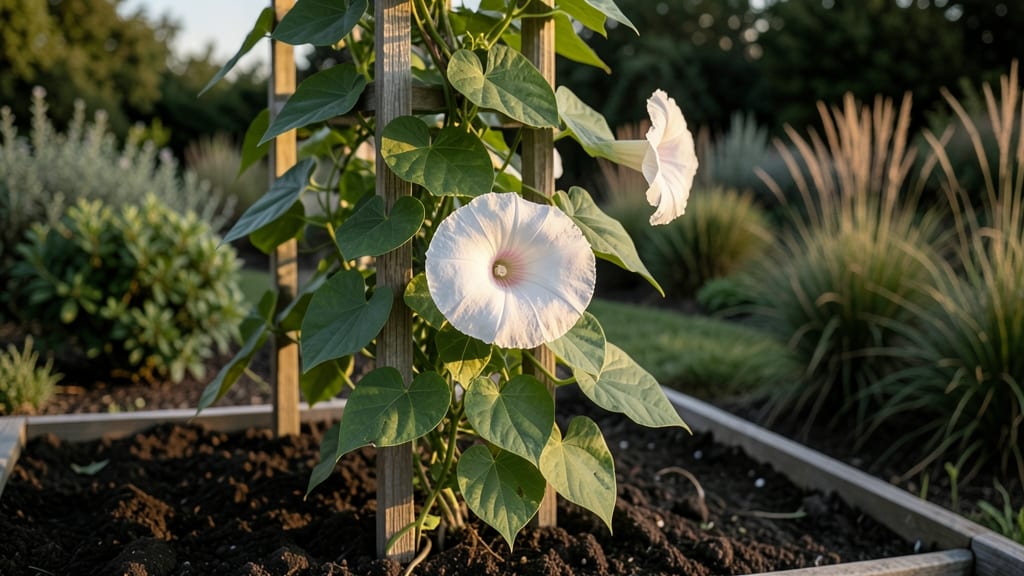
If you’ve ever wondered how tall moonflowers can grow—or why they seem to disappear overnight—you’re not alone. These night-blooming beauties are annuals that pack a surprising growth punch, often reaching heights of 10 to 15 feet when given the right support.
But here’s the catch: without proper trellises or stakes, their vines sprawl along the ground, leaving you scratching your head about their true potential.
Whether you’re planning a vertical garden or just curious about their climbing habits, understanding their growth patterns is the key to unlocking their full magic in your space.
From their rapid ascent in warm climates to their delicate balance in cooler zones like 6a, moonflowers thrive when you meet their needs—especially sunlight and support. I’ll break down exactly how to encourage their growth, whether you’re working with a small balcony or a sprawling backyard.
Ready to transform your garden into a moonlit canopy? Let’s dive into the secrets of moonflower height, from planting tips to the best trellis tricks for healthy, towering vines that’ll leave your neighbors in awe.


Moonflower height range: how fast and tall they climb
Moonflowers (Ipomoea alba) are fast-growing annual vines that can reach stunning heights—but their growth depends on several key factors. Without proper support, they’ll sprawl along the ground, but with a trellis or fence, they’ll climb 3 to 15 feet in just one growing season.
That’s right: these night-blooming beauties grow up to 2 feet per week under ideal conditions!
If you’re wondering how tall moonflowers grow in your garden, the answer varies based on variety, sunlight exposure, and soil quality. Some dwarf varieties max out at 3–5 feet, while vigorous climbers can scale 10–15 feet on sturdy trellises.
Their rapid growth makes them perfect for quick privacy screens or dramatic vertical displays.
🌱 Key Insight: Moonflowers are annuals, so their height is determined by the growing season’s length. In warmer climates (USDA Zones 8–11), they may continue climbing until the first frost, while cooler regions see slower growth.
| Factor | Height Range | Growth Rate | Notes |
|---|---|---|---|
| Standard Variety | 8–12 feet | 1–2 ft/week | Requires strong trellis |
| Dwarf Variety | 3–5 feet | 6–12 inches/week | Ideal for containers |
| Full Sun Exposure | 10–15 feet | Up to 3 ft/week | Maximizes flowering |
| Partial Shade | 5–8 feet | 8–12 inches/week | Slower growth, fewer blooms |
| Poor Soil | 3–6 feet | 4–8 inches/week | Amend with compost |
Compared to similar vines like morning glories (Ipomoea purpurea), moonflowers grow taller and faster. While morning glories typically reach 6–10 feet, moonflowers can surpass them by 30–50% with proper care. Their larger leaves and thicker stems also give them a more robust climbing structure.
Seasonal growth patterns play a huge role. In spring and early summer, moonflowers focus on vine elongation, while late summer shifts energy to flower production. If you plant seeds in late May or June, expect slower initial growth but still impressive height gains by frost.
To maximize height, provide well-draining soil rich in organic matter and consistent moisture. Overwatering or compacted soil can stunt growth, while balanced fertilizer (5-10-10) applied every 4–6 weeks encourages vigorous climbing. Avoid heavy pruning, as it reduces their natural height potential.
One common mistake is assuming moonflowers will climb anything. Weak supports like flimsy trellises or wire fences can’t handle their weight. Opt for wooden lattice, metal cages, or sturdy bamboo poles to prevent collapse as they reach 10+ feet. 🌿
For container growers, dwarf varieties are your best bet, topping out at 3–5 feet. Use 5-gallon pots with drainage holes and train vines along a small trellis or obelisk. Even in containers, they’ll still climb twice as fast as morning glories under the same conditions.
If you’re growing moonflowers for privacy or shade, aim for 10–12 feet by planting seeds in early spring and providing full sun. With their rapid growth and dramatic nighttime blooms, they’ll outshine slower-growing vines like hops or passionflowers in no time. ✨
Best trellis and support options for moonflower vines
Moonflowers (Ipomoea alba) can climb 10–15 feet with proper support, but most gardeners aim for 6–10 feet to showcase their night-blooming beauty without overwhelming small spaces.
The key to maximizing height lies in choosing the right trellis—one that’s sturdy enough to handle their rapid growth but also flexible enough to guide their twining habit. Without support, these vines sprawl unpredictably, risking damage to nearby plants or even your fence.
Commercial supports like obelisks or A-frame trellises are my go-to for moonflowers because they offer vertical space while keeping vines off the ground. These structures are pre-built with galvanized metal or powder-coated steel, which resists rust and lasts multiple seasons.
However, they can be pricey, especially for larger gardens. If budget is a concern, DIY options like bamboo stakes or wooden lattice panels work beautifully and let you customize the height to your space.
Here’s a quick comparison to help you decide:
Commercial Supports
Pros
- ✅ Durable (lasts 5+ years)
- ✅ Rust-resistant (galvanized metal)
- ✅ Easy assembly (no tools needed)
Cons
- ❌ Expensive ($20–$50 per unit)
- ❌ Limited height options (fixed sizes)
DIY Supports
Pros
- ✅ Budget-friendly ($5–$15 per unit)
- ✅ Customizable height (adjust as needed)
- ✅ Eco-friendly (uses reclaimed wood/bamboo)
Cons
- ❌ Requires assembly (tools needed)
- ❌ Less durable (may need replacement yearly)
For small gardens or containers, I recommend 5–6 foot obelisks—they’re tall enough to showcase the flowers without taking up too much space.
If you’re growing moonflowers along a fence or pergola, a horizontal lattice trellis (like a wooden slat panel) works wonders, allowing vines to climb vertically or trail horizontally. Just avoid overcrowding the support, as too many vines can weaken the structure and lead to breakage.
One common mistake I see is using flimsy materials like plastic stakes or failing to secure the trellis deeply into the ground. Moonflowers can get heavy with moisture, especially after rain, so always bury supports at least 12 inches deep or use stakes with wide bases for stability.
Another tip: Train the vines early by gently guiding the tendrils onto the trellis within the first 2–3 weeks of growth—this encourages them to climb upward instead of sprawling.
If you’re feeling creative, try a DIY teepee trellis made from 4 bamboo poles tied at the top. This creates a natural, open structure that moonflowers love, and it’s perfect for adding height to vertical garden beds.
Just space the poles 18–24 inches apart at the base to give the vines room to twine. For a more dramatic look, pair your moonflower trellis with morning glories or sweet peas—their complementary colors and growth habits make for a stunning vertical display.
Remember, moonflowers are annuals, so their supports don’t need to be permanent. If you’re in a mild winter climate, you can reuse DIY trellises year after year, but always inspect them for wear before replanting.
With the right support, your moonflowers will reach their full 10–15 foot potential, turning your garden into a nocturnal paradise. 🌙