
Flowers
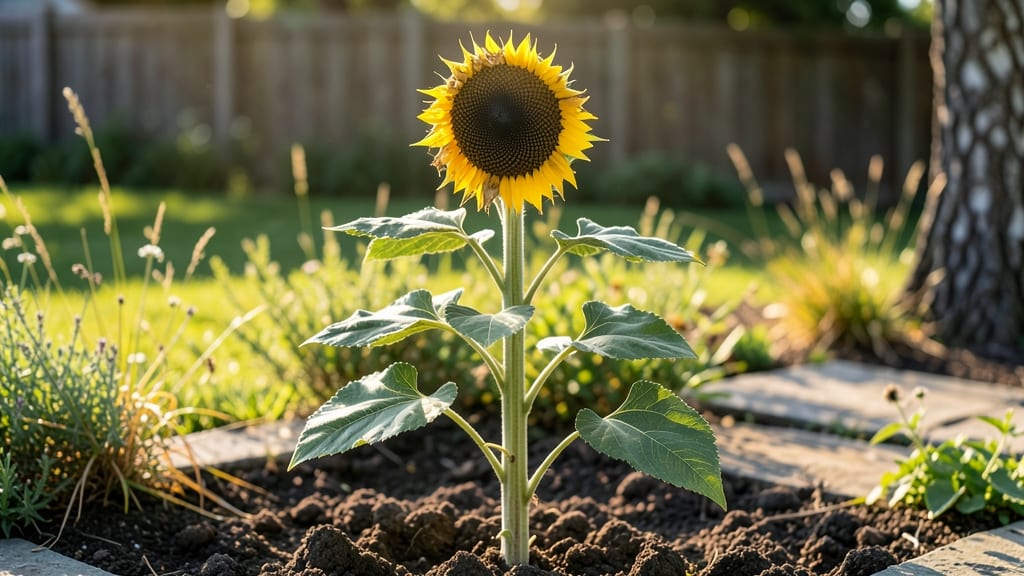
If you've ever planted a Black Oil Sunflower 🌻 and marveled at how quickly it shoots toward the sky, you might wonder just how tall these giants can grow.
These towering beauties typically reach heights between 6 and 12 feet, making them one of the fastest-growing plants in your garden.
The key to unlocking their full height potential lies in understanding their growth habits and the conditions they thrive in. With the right care—like proper spacing, sunlight, and soil—you can help your sunflowers grow strong enough to stand tall even in windy conditions.
But here's the catch: without the right support, those 10-foot stalks can become top-heavy and prone to bending. That's why learning how to nurture them is just as important as knowing how tall they'll grow in the first place.
In this guide, I'll break down everything you need to know about maximizing their height, from planting tips to wind-resistant strategies. Let's get your sunflowers reaching for the sky the right way!


Black oil sunflower height range: what to expect from seed to sky
Black oil sunflowers are nature's skyscrapers, capable of reaching 6 to 12 feet at maturity.
Their towering stature makes them a favorite for pollinator gardens and bird feeders, but their height depends on more than just genetics. Sunlight exposure, soil quality, and proper spacing all play critical roles in determining whether your plants will stretch toward the sky or struggle to stand upright.
The average growth rate for black oil sunflowers is 2 to 3 inches per day during peak summer months. This rapid growth means they can go from a tiny seedling to a 10-foot giant in just 60 to 75 days.
However, without the right conditions, their stalks may weaken, leading to bending or breaking under wind or rain.
Genetic variations also influence height. Varieties like 'Mammoth' and 'Russian Giant' often reach the upper end of the spectrum (10–12 feet), while others may stay closer to 6 feet. Understanding these differences helps you choose the right variety for your space and climate.
Sunlight is non-negotiable for these sun-loving plants. Full sun exposure (6+ hours daily) fuels their vertical growth, while partial shade can stunt their development. Even a few hours less sunlight can reduce their mature height by 20–30%, leaving you with shorter, less sturdy stalks.
Soil quality matters just as much as sunlight. Black oil sunflowers thrive in well-draining, nutrient-rich soil with a pH between 6.0 and 7.5. Compacted or waterlogged soil restricts root growth, which directly impacts stalk strength.
Amending your soil with compost before planting can make a noticeable difference in their height and stability.
Spacing is another critical factor. Crowded plants compete for nutrients and sunlight, leading to weaker stalks and reduced height. The general rule is to plant seeds 12 to 18 inches apart in rows spaced 2 to 3 feet apart.
This gives their roots room to establish and their stalks room to grow upright.
Wind exposure can dramatically affect height and structure. In windy areas, stalks may grow shorter but thicker as a natural defense mechanism. If you're growing black oil sunflowers in an open field, consider planting them near a windbreak (like a fence or hedge) to protect their delicate stalks during their rapid growth phase.
Here’s a quick reference for what to expect from different varieties and conditions:
| Variety | Mature Height (ft) | Growth Rate (in/day) | Sunlight Needs | Spacing (in) |
|---|---|---|---|---|
| Mammoth | 10–12 | 2.5–3.5 | Full sun | 18 |
| Russian Giant | 10–12 | 2–3 | Full sun | 18 |
| Autumn Beauty | 6–9 | 1.5–2.5 | Full sun | 12 |
| Russian Mammoth | 12–14 | 3–4 | Full sun | 24 |
| Standard (Average) | 6–10 | 2–3 | Full sun | 12–18 |
If you're growing black oil sunflowers in containers or small spaces, choose dwarf varieties or prune them early to control height. Even standard varieties can be trained to grow vertically with the right support, like bamboo stakes or trellises, which also protects them from wind damage.
Remember, the stronger the stalk, the taller and more productive your sunflowers will be. By paying attention to sunlight, soil, and spacing, you’ll help them reach their full potential—turning your garden into a sea of golden giants that attract birds and bees alike.
🌻
5 Proven techniques to maximize stalk strength and height
Want your Black Oil Sunflowers to reach their full 10-12 foot potential without bending? The secret starts with how you plant them. These sunflowers develop deep taproots that anchor them, but you can give them a head start by planting seeds 2 inches deep instead of the usual 1 inch.
This encourages a stronger root system early on, which translates to a taller, sturdier stalk later.
Another game-changer is spacing. Crowding your sunflowers by planting them too close together forces them to compete for nutrients, which weakens their stalks. Aim for 18-24 inches between plants to give each one room to grow strong.
I’ve seen sunflowers in tight spaces grow lanky and prone to snapping in windy conditions.
Here’s where many gardeners go wrong: they focus only on the top of the plant. But the base of the stalk is where real strength comes from. Mixing compost into the soil before planting adds organic matter that improves drainage and nutrient uptake.
For extra support, I like to add a handful of bone meal at planting time—it’s packed with phosphorus, which boosts root and stalk development.
- 🌱 Deep Planting: Bury seeds 2 inches deep for stronger taproots and 6-12 foot stalks.
- 🌿 Wide Spacing: Plant 18-24 inches apart to prevent stalk competition and wind damage.
- 🪴 Nutrient-Rich Soil: Mix compost + bone meal before planting for phosphorus-rich growth.
- 🌬️ Windbreaks: Use bamboo stakes or trellises in windy areas to support 10+ foot stalks.
- ✂️ Prune Side Shoots: Remove lower buds to redirect energy to the main stalk.
If you live in a windy climate, don’t wait until your sunflowers are already leaning to add support. Install bamboo stakes or trellises at planting time and gently tie the main stalk to them as it grows.
I’ve used soft plant ties to avoid damaging the stalk, and the difference in height and stability is noticeable. For extra protection, plant sunflowers near a hedge or fence to act as a natural windbreak.
One of my favorite tricks to maximize height is pruning side shoots. Sunflowers naturally produce smaller buds along their stalks, but these divert energy away from the main growth.
Pinch off the lower buds when they’re about 2 inches long, and watch your sunflower channel all its energy into reaching for the sky. Just be sure to leave the top bud intact—this is where the seed head will form.
Finally, remember that consistent watering is key to maintaining stalk strength. Deep watering 2-3 times per week during dry spells keeps the soil moist without encouraging weak, spindly growth. I’ve seen sunflowers wilt in extreme heat, only to recover and grow even taller once their water needs are met.
The goal is to keep them hydrated without overwatering, which can lead to root rot and weaken the stalk.