
Planting
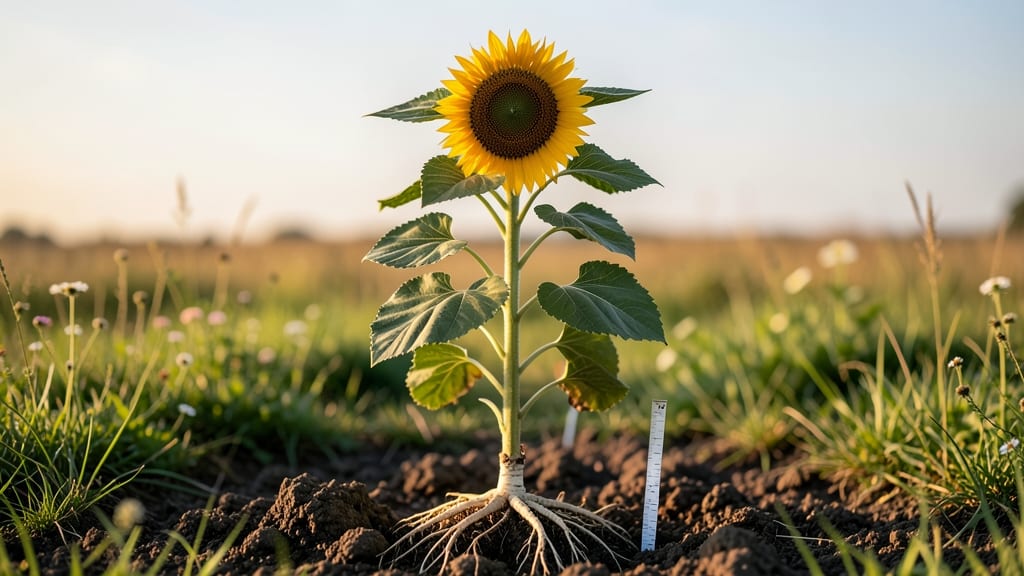
When your 🌻 sunflower towers over your garden like a cheerful skyscraper, you might not think about how deep sunflower roots grow to hold it up—literally.
Those towering stems need roots that plunge deep enough to anchor them against wind and storms, yet many gardeners accidentally plant them too shallow, setting their sunflowers up for a dramatic (and unwanted) fall.
Did you know that sunflower roots can stretch 3 to 6 feet deep into the soil? That’s deeper than most gardeners dig when preparing their beds, and it’s the key to stable, thriving plants.
Without enough root space, your sunflowers won’t just wobble—they’ll struggle to access water and nutrients, leaving them weak and prone to toppling.
In this guide, I’ll break down exactly how deep sunflower roots grow, what factors influence their depth, and how you can give your plants the strong foundation they need.
Whether you’re growing dwarf varieties or towering giants, these insights will help you avoid common mistakes and grow sunflowers that stand tall all season long.
From soil prep to planting tips, you’ll discover practical strategies to encourage deeper roots and stronger stalks. Let’s dig in—literally—and get your sunflowers growing with confidence.


Sunflower root depth explained: how deep do they actually grow?
Sunflowers are nature’s towering giants, but their impressive height depends on one often-overlooked factor: root depth. While the sunflower stalk can reach 10-14 feet tall, the roots supporting it grow just as impressively below ground.
Understanding this root system is key to growing stable, healthy sunflowers that don’t topple in wind or storms.
The primary taproot of a sunflower can extend 3-5 feet deep into the soil, while lateral roots spread outward 2-3 feet from the base. This deep-reaching system allows sunflowers to access water and nutrients efficiently, especially in drought-prone conditions.
However, the exact depth varies by sunflower variety, soil type, and growing conditions.
Here’s a quick breakdown of how sunflower roots develop through different growth stages:
| Growth Stage | Root Depth (Primary Taproot) | Lateral Spread | Key Development |
|---|---|---|---|
| Germination (0-7 days) | 0.5-1 inch | 0.25 inch | Taproot emerges; fine lateral roots begin forming. |
| Seedling (7-21 days) | 4-8 inches | 1-2 inches | Rapid root elongation; lateral roots expand outward. |
| Vegetative (21-45 days) | 12-24 inches | 6-12 inches | Deep root penetration begins; soil depth becomes critical. |
| Flowering (45-70 days) | 2-4 feet | 12-24 inches | Maximum root depth reached; stability depends on deep roots. |
| Maturity (70-120 days) | 3-5 feet | 2-3 feet | Roots fully developed; dwarf varieties may have shallower roots. |
Note: Giant varieties (e.g., 'Russian Giant') develop deeper roots than dwarf varieties (e.g., 'Teddy Bear').
The taproot of a sunflower is its anchor, but the lateral roots play a crucial role in nutrient absorption and stability. In compacted or shallow soils, sunflowers may struggle to reach their full potential, leading to top-heavy stalks that bend or break under wind stress.
This is why loose, well-draining soil is essential for healthy root development.
For giant sunflower varieties, like 'Mammoth' or 'Russian Giant', the root depth can exceed 4 feet, while dwarf varieties, such as 'Sunspot' or 'Teddy Bear', typically have roots that max out around 2 feet deep.
Even though dwarf sunflowers are shorter, they still need adequate soil depth to support their flower heads and prevent them from flopping over.
One common misconception is that sunflowers can thrive in shallow containers or poorly amended soil. While they are drought-tolerant once established, their root systems require deep, loose soil to grow strong. In containers, ensure the pot is at least 18-24 inches deep to accommodate the taproot and lateral spread.
To encourage deeper root growth, focus on deep watering (1-2 inches per week) and organic matter like compost. Avoid over-fertilizing with nitrogen, as this can promote leafy growth at the expense of root development. Instead, use a balanced fertilizer (e.g., 10-10-10) to support both above-ground and below-ground growth.
If you’re growing sunflowers in heavy clay soil, consider amending the soil with sand or perlite to improve drainage and root penetration. In sandy soils, adding compost or peat moss can help retain moisture and nutrients, giving roots the support they need to grow deep.
Remember, the deeper the roots, the more stable and resilient your sunflowers will be. Whether you’re growing them for cut flowers,
Soil depth requirements for sunflowers: what your garden needs
Sunflowers need deep, loose soil to support their towering growth. While their roots don't penetrate as deeply as you might think, they spread widely to anchor the plant. Most varieties develop a taproot system reaching 3-5 feet deep, with lateral roots extending 2-3 feet outward.
Shallow soil can lead to weak stalks that topple under their own weight or in wind.
Before planting, check your soil depth by digging a hole 18-24 inches deep. If you hit hardpan or rocks, your sunflowers will struggle. Amend the soil with compost or aged manure to improve drainage and aeration.
Heavy clay soils should be mixed with sand or perlite to prevent waterlogging, which can rot roots.
⚠️ callout-warning ⚠️
⚠️ Critical Root Depth Warning
Sunflower roots need at least 18 inches of loose soil to grow properly. Planting in shallow containers (12 inches deep) or compacted garden beds can stunt root growth by up to 50%. Without proper depth, your sunflowers may grow tall but weak, leading to toppling stalks or poor nutrient uptake.
💡 Pro Tip: Test soil depth with a trowel or soil probe. If roots hit resistance before 18 inches, amend the soil or choose dwarf varieties (like 'Teddy Bear') for containers.
For container gardening, use pots at least 18 inches deep and wide. Standard 5-gallon buckets work for dwarf varieties, but giant sunflowers need 20+ gallons of soil.
Always include drainage holes to prevent root rot. In-ground planting requires loosening soil to 2 feet deep—use a broadfork or tilling tool to break up compacted layers.
Common mistakes include planting too shallow (1 inch deep is correct, but the surrounding soil must be deep) or ignoring soil texture. Sandy soils drain too quickly, while clay holds too much moisture.
Aim for a loamy texture—crumbly when moist but not sticky. A simple test: squeeze a handful—it should hold shape but not crumble into dust.
To encourage deeper roots, water deeply once a week rather than daily shallow watering. This trains roots to grow downward in search of moisture. Avoid over-fertilizing with nitrogen, which promotes leafy growth at the expense of root development. Instead, use a balanced 10-10-10 fertilizer sparingly during early growth stages.
Remember, sunflowers are resilient, but they won’t thrive in poor soil conditions. By giving them the depth and drainage they need, you’ll reward yourself with sturdy stalks and vibrant blooms that reach their full potential. Happy digging! 🌱