
Fertilization
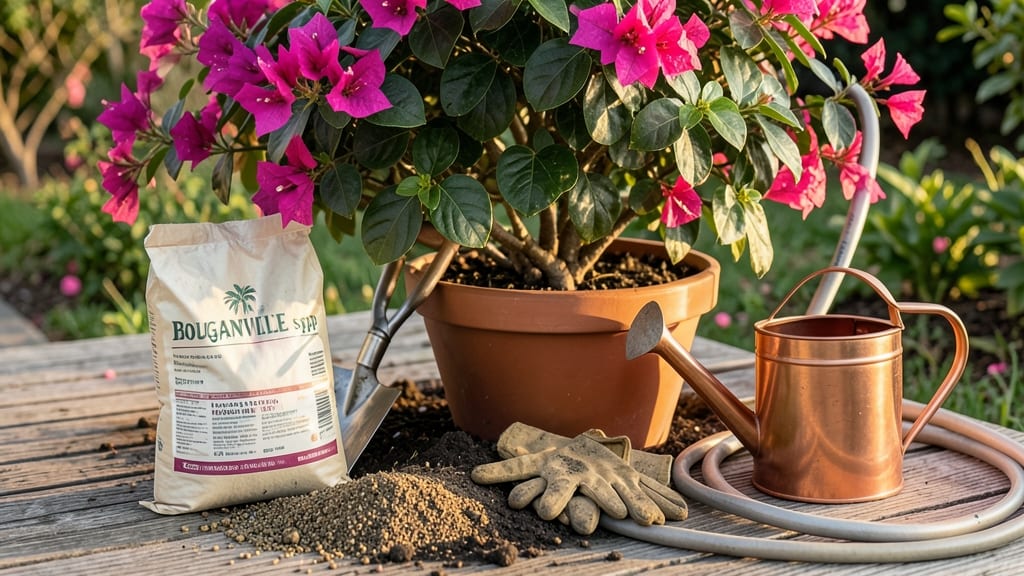
If your bougainvillea is throwing out lush green leaves but refusing to bloom, you’re not alone—most gardeners hit this wall without realizing it’s all about the right bougainvillea fertilizer for flowering.
The correct mix isn’t just any fertilizer; it’s a carefully balanced act between nitrogen, phosphorus, and potassium that coaxes those vibrant bracts into action.
Here’s the game-changer: bougainvillea thrives when phosphorus takes center stage, but too much nitrogen sends it into overdrive with foliage instead of flowers. I’ll break down the exact NPK ratios that trigger blooms—whether you’re using organic compost or a synthetic formula—and when to apply them for maximum impact.
You’ll also discover why timing matters (spring and summer are critical) and how to avoid common mistakes like over-fertilizing or skipping the post-bloom care that keeps your plant healthy year-round. Let’s turn that leafy mess into a flowering masterpiece.
Ready to see your bougainvillea burst into color? The secrets start with the right fertilizer—and trust me, it’s simpler than you think.

Optimal NPK ratios for bougainvillea flowering: science-backed ratios for maximum blooms
When it comes to bougainvillea flowering, the right NPK fertilizer ratio is your secret weapon. These tropical beauties thrive when phosphorus takes center stage—it’s the nutrient that directly triggers bloom production.
But not all NPK ratios are created equal, and choosing the wrong one can leave you with lush foliage and zero flowers. Let’s break down the science and practical applications to get those vibrant blooms you crave.
Bougainvillea responds best to a balanced NPK ratio with higher phosphorus. The ideal range typically falls between 7-7-7 and 10-10-10, but specialized flowering formulas like 5-10-5 or even 3-9-6 can work wonders.
The key is understanding how each number—nitrogen (N), phosphorus (P), and potassium (K)—plays a role in your plant’s growth cycle. Too much nitrogen, and you’ll end up with leafy vines but few blooms. Too little phosphorus, and your bougainvillea will struggle to produce those show-stopping flowers.
Here’s the science: Phosphorus is the flowering trigger in bougainvillea. It helps the plant develop strong root systems and energy reserves needed for bud formation. Potassium supports overall plant health and stress resistance, while nitrogen fuels leafy growth.
The trick is finding the right balance—especially during the active blooming season, which typically runs from spring through fall in warm climates.
Now, let’s talk about the organic vs. synthetic debate. Both can deliver great results, but they work differently. Synthetic fertilizers provide immediate, precise NPK ratios, making them ideal for quick adjustments. Organic options, like compost or bone meal, release nutrients slowly, promoting long-term soil health and gradual bloom development.
Each has its place, and the best choice often depends on your bougainvillea’s current needs and your gardening preferences.
🌸
| Ratio Type | NPK Breakdown | Best For | Application Timing | Bloom Impact |
|---|---|---|---|---|
| Balanced (7-7-7) | N: 7, P: 7, K: 7 | General growth & blooms | Spring to early summer | Moderate, steady blooms |
| Flowering (5-10-5) | N: 5, P: 10, K: 5 | Maximize blooms | Late spring to fall | High, vibrant blooms |
| High Phosphorus (3-9-6) | N: 3, P: 9, K: 6 | Intense flowering | Pre-bloom season | Very high, long-lasting |
| Slow-Release Organic (e.g., Bone Meal) | N: 3, P: 15, K: 0 | Long-term bloom support | Early spring, fall | Sustained, gradual blooms |
| Liquid Bloom Booster (e.g., 10-30-20) | N: 10, P: 30, K: 20 | Quick bloom boost | During blooming season | Rapid, intense blooms |
Seasonal adjustments are crucial for maintaining bougainvillea blooms year-round. In spring, when your plant is waking up from dormancy, a balanced ratio like 7-7-7 helps kickstart growth. As summer approaches and blooming season ramps up, switch to a high-phosphorus formula like 5-10-5 to encourage abundant flowers.
By late summer or early fall, you can taper off fertilization slightly, but avoid cutting it off completely if you want to extend the blooming season.
For organic gardeners, bone meal is a powerhouse for phosphorus, making it a fantastic choice for bougainvillea.
Mix it into the soil in early spring or use it as a top-dressing around the base of your plant. Composted manure or fish emulsion can also provide a balanced nutrient boost without the risk of burning your plant’s roots.
These organic options release nutrients slowly, which aligns perfectly with bougainvillea’s natural growth cycle.
If you’re using synthetic fertilizers, opt for time-release granules or
Step-by-step fertilizer application guide: when, how much, and what to avoid
Timing your bougainvillea fertilizer application is everything—think of it like a seasonal rhythm. In spring and summer, your plant is hungry for growth and blooms, while fall and winter demand a lighter touch.
I’ve learned the hard way that skipping this balance leads to either sparse flowers or leafy monsters. Let’s start with the golden rule: feed every 4-6 weeks during active growth, but cut back as temperatures drop.
For spring feeding, use a high-phosphorus fertilizer (like 7-9-5 NPK) to kickstart blooms. In summer, switch to a balanced formula (e.g., 10-10-10) diluted to half-strength to avoid scorching.
The key is consistency—never let your bougainvillea go thirsty for nutrients during its peak season. I’ve seen plants double their blooms just by sticking to this schedule.
🌸 Bougainvillea Fertilizer Checklist for Flowering
- 🌱 Spring: Apply 7-9-5 NPK every 4 weeks
- ☀️ Summer: Switch to 10-10-10 (diluted) every 6 weeks
- 🍂 Fall: Light feed with 5-10-10 (reduce frequency)
- ❄️ Winter: No fertilizer (dormant phase)
Now, let’s talk dosage. A common mistake is overdoing it—think of fertilizer like seasoning in a recipe: too much ruins the dish. For mature bougainvillea, use 1 tablespoon of granular fertilizer per plant every 6 weeks.
If using liquid, dilute it to half-strength to avoid shocking the roots. I once saw a neighbor’s bougainvillea turn yellow after using double the recommended dose—don’t make that mistake!
Watch your plant’s response closely. Too much nitrogen (first number in NPK) means lush leaves but no flowers. If this happens, switch to a low-nitrogen, high-phosphorus formula immediately.
Conversely, yellowing leaves could signal over-fertilizing—flush the soil with water to dilute excess salts. I’ve saved multiple plants this way by adjusting on the fly.
Seasonal adjustments are critical. In fall, reduce feeding to every 8-10 weeks as growth slows. In winter, skip fertilizer entirely unless you’re in a frost-free zone. My bougainvillea in Zone 10 gets a light feed in winter, but those in cooler climates need a break.
Always check your local USDA zone guidelines to tailor your approach.
Finally, avoid these three deadly sins: over-fertilizing, wrong NPK ratios, and applying fertilizer in heat. Bougainvillea hates soggy roots, so always water first.
And never fertilize after 4 PM—the sun can burn the leaves. With these steps, your bougainvillea will reward you with vibrant, long-lasting blooms all season long.