
How To
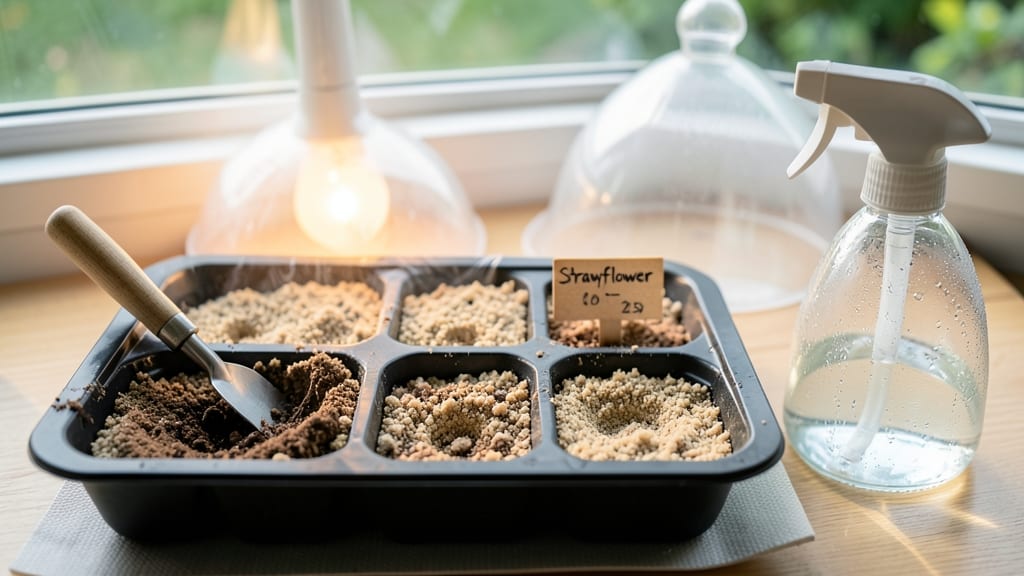
Starting strawflower seeds indoors at the wrong time can leave you with leggy seedlings or blooms that arrive too late for summer. The key to vibrant, long-lasting flowers is timing—specifically, planting 8–12 weeks before your last frost date to ensure healthy growth and a full season of color.
For those in USDA Zone 6a or similar climates, this means kicking off your strawflower 🌼 journey in early February. That way, seedlings will be ready to transplant just as the soil warms and threats of frost fade.
But don’t worry if you’re in a different zone—we’ll break down how to adjust for your specific frost dates.
Getting the timing right isn’t just about the calendar; it’s also about giving your strawflowers the 10-week head start they need to develop strong roots and sturdy stems before facing outdoor conditions. Skipping this step can lead to weak plants that struggle to thrive, cutting your blooming season short.
In this guide, I’ll walk you through the exact schedule, from seed to transplant, so you can enjoy a garden bursting with these cheerful, drought-tolerant flowers from late summer right through fall. Let’s get those seeds started the right way!
Optimal indoor starting dates for strawflower seeds by climate Zone
Strawflowers thrive when given a 10-week head start indoors, but the exact timing depends on your USDA climate zone and local frost patterns. In colder zones like Zone 3, you’ll need to start seeds by late January, while warmer Zone 10 gardeners can wait until early March.
The key is aligning your seed-starting schedule with your last frost date to ensure blooms arrive when you need them.
Most strawflower varieties take 90–120 days to mature from seed, but cooler temperatures slow growth. That’s why I recommend using your average last frost date as the anchor point, then counting backward.
For example, if your last frost is May 1, aim to transplant seedlings by April 15, meaning you should start seeds by February 1.
Regional variations matter too. Gardeners in the Pacific Northwest often face later frosts than those in the Southeast, so adjust your timeline accordingly. Even within the same zone, microclimates can shift your start date by 2–4 weeks.
Always check your local Almanac’s frost predictions for the most accurate guidance.
Here’s a quick reference for your zone, but we’ll dive deeper into the 10-week pre-frost timeline below:
| USDA Zone | Last Frost Date | Start Seeds Indoors | Transplant Ready | Bloom Time |
|---|---|---|---|---|
| Zone 3 | May 10–20 | Late January | April 15–30 | Late July–Sept |
| Zone 4 | May 1–15 | Early February | April 1–15 | Late June–Aug |
| Zone 5 | April 20–May 5 | Mid-February | March 20–April 5 | Early June–Sept |
| Zone 6 | April 15 | Early February | March 15–April 1 | Late May–Oct |
| Zone 7 | March 20–April 10 | Late February | March 1–15 | May–Sept |
| Zone 8 | March 1–15 | Late January–Feb | February 15–March 1 | April–Oct |
| Zone 9 | January 15–February 1 | Early January | January 15–Feb 15 | March–Nov |
| Zone 10 | December 15–January 1 | Early March | March 15–April 1 | April–Dec |
If you’re in a high-elevation area or near large bodies of water, your frost dates may shift 1–2 weeks later than the average for your zone.
For instance, Denver (Zone 5) often sees its last frost around May 15, while Seattle (also Zone 8) can experience frosts into June. Always err on the side of caution—better to start seeds 2 weeks early than risk late blooms.
For gardeners in Zone 6a or similar climates, like much of the Midwest, starting seeds in early February ensures you’ll have robust seedlings ready by mid-April. This timing aligns with soil warming trends and gives your strawflowers enough time to establish before summer heat arrives.
If you’re in a warmer zone like Zone 9 or 10, you can push your start date to early March and still enjoy blooms by spring.
One common mistake is starting seeds too early, which can lead to overcrowded seedlings or leggy growth from insufficient light. Strawflowers germinate best at 70–75°F, so avoid heating mats unless your home stays consistently warm.
If your seedlings stretch toward the light, supplement with a grow light for 12–14 hours daily to keep them compact and strong.
Pro tip
Signs your strawflower seeds are ready for transplanting (and when to delay)
Knowing when to transplant your strawflower seedlings is crucial for their survival and blooming success. The ideal time arrives when seedlings have developed 4–6 true leaves and a sturdy stem diameter of at least 1/8 inch.
These milestones signal that your plants have strong enough roots and stems to handle outdoor conditions without stress.
Strawflowers typically reach transplant readiness within 6–8 weeks after sowing, assuming optimal indoor conditions. However, this timeline can shift if your seedlings experience slow germination or leggy growth due to insufficient light. Always prioritize healthy development over rigid schedules—weak seedlings will struggle once moved outside.
Transplanting too early can shock delicate seedlings, while waiting too long risks overcrowding in your seed trays. Look for vigorous root growth that fills the root ball—gently tug on a seedling to check. If roots resist, they’re ready. If they slide out easily, hold off for another week.
⚠️ Warning: Overcrowding & Leggy Seedlings
Crowded seedlings compete for nutrients, leading to weak stems and poor blooms. Thin to 2–3 inches between plants in trays. Leggy seedlings (long, thin stems) signal light deprivation—move them to a south-facing window or add grow lights immediately.
If seedlings are yellowing or wilting, they may be overwatered or diseased. Isolate affected plants and adjust your watering routine to deep but infrequent sessions.
Another key indicator is the seedling height-to-leaf ratio. Healthy strawflowers should have compact growth with leaves spaced evenly along the stem. If stems stretch excessively (over 6 inches tall), they’ll flop when transplanted. This is a clear sign to delay transplanting and improve light conditions.
Before transplanting, harden off seedlings by gradually exposing them to outdoor conditions over 7–10 days. Start with 1–2 hours of shade and increase daily. This acclimation process prevents transplant shock and helps seedlings adjust to temperature fluctuations and wind exposure.
Finally, avoid transplanting if nighttime temperatures are still below 50°F (10°C). Strawflowers thrive in warmth but can bolt or struggle if exposed to cold too soon. Use row covers or wait until soil temperatures reach 60°F (15°C) for best results.