
Flowers
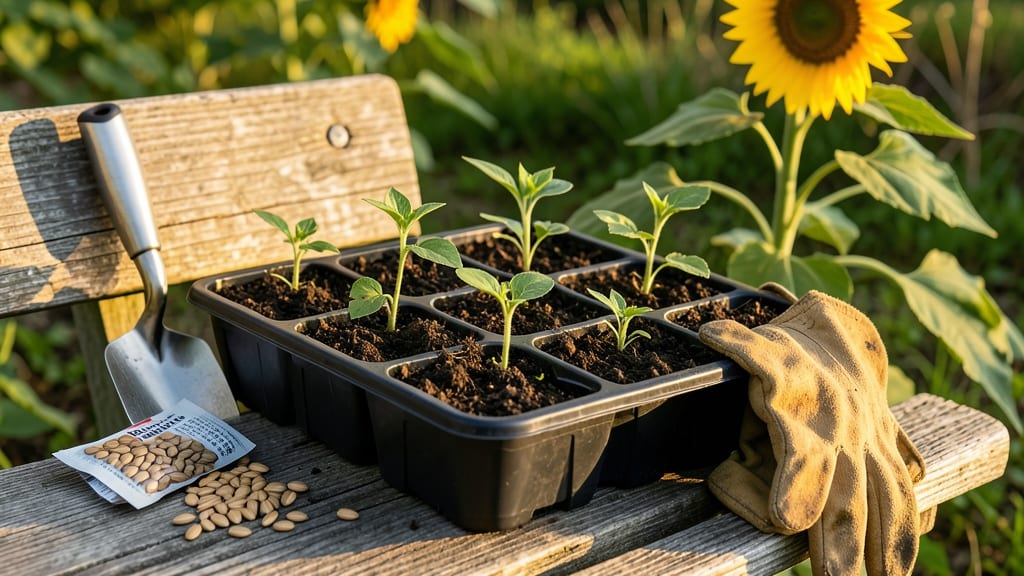
Planting sunflowers in Tennessee at the wrong time can mean the difference between a 10-foot-tall 🌻 giant and a sad, frost-nipped sapling. The key to zero-frost success lies in understanding your county's microclimate—West Tennessee's warmer springs allow earlier starts, while East Tennessee's cooler zones demand patience until late May.
I've learned the hard way that rushing sunflowers into the ground before the last frost (typically mid-April in most areas) risks stunted growth or worse. But timing isn't just about avoiding frost—it's also about matching your variety to Tennessee's 6a-7b zones.
Heat-tolerant types like 'Moulin Rouge' thrive when planted as late as early June, while standard varieties need that perfect late April to early May window.
What I'll show you are the exact planting deadlines for Tennessee's three main regions, plus proven strategies to extend your growing season. Whether you're in Nashville's urban heat islands or the Appalachian foothills, these tips will help you maximize your sunflower's potential from seed to towering bloom.
Ready to grow sunflowers that reach their full height? Let's dive into the county-specific deadlines and care tips that make all the difference in Tennessee's unpredictable spring climate.
Tennessee sunflower planting deadlines by county: avoid frost damage
Timing is everything when growing sunflowers in Tennessee. The wrong planting window can leave your plants vulnerable to late spring frosts or stunted growth. Tennessee spans USDA Zones 6–8, so your county’s last frost date determines the perfect window.
Whether you're in West Tennessee’s warmer microclimates or East Tennessee’s cooler highlands, knowing these deadlines ensures your sunflowers thrive from seed to towering bloom.
Sunflowers are annuals that love warmth, but they’re surprisingly resilient. With the right variety selection and planting timing, you can grow them from March in West Tennessee to June in East Tennessee.
The key is avoiding frost damage while maximizing the growing season. Below, I’ve broken down the county-specific deadlines you need to know, plus the best heat-tolerant varieties for late plantings.
Why timing matters: Sunflowers need soil temperatures above 60°F to germinate. Planting too early in cold soil means slow growth or no sprouts at all. Meanwhile, late plantings in East Tennessee’s Zone 6a risk first frost in October, cutting the season short. Use these deadlines to align your planting with your local climate.
Microclimates matter: Cities like Nashville (Zone 7a) and Chattanooga (Zone 7b) have slightly different frost patterns than rural areas. Urban heat islands can delay frost by 1–2 weeks, while higher elevations (like Great Smoky Mountains) may need 2–3 weeks later plantings. Always check your local weather station for the most accurate frost dates.
Heat-tolerant varieties are your best friend for late plantings. Varieties like 'Moulin Rouge' (red-petaled, 70-day maturity) or 'Autumn Beauty' (multi-colored, 90-day maturity) thrive in Tennessee’s summer heat. For West Tennessee’s longer season, consider 'Russian Giant' (up to 14 feet tall) or 'Teddy Bear' (dwarf, 3 feet tall) for smaller spaces.
| Region | Last Frost Date | Planting Deadline | Best Varieties | USDA Zone |
|---|---|---|---|---|
| West TN (Memphis, Jackson) | March 15–April 15 | April 1–May 1 | 'Russian Giant', 'ProCut Hybrid' | 7a–8a |
| Middle TN (Nashville, Clarksville) | April 1–May 1 | April 15–May 15 | 'Autumn Beauty', 'Moulin Rouge' | 7a–7b |
| East TN (Chattanooga, Knoxville) | May 1–June 1 | May 15–June 15 | 'Teddy Bear', 'Sunspot' | 6a–7a |
| High Elevations (Great Smoky Mtns) | May 15–June 10 | June 1–June 20 | 'Little Becka', 'Pacino' | 6a |
For West Tennessee, where last frosts can occur as late as April 15, aim to plant by April 1. This gives your sunflowers 165 frost-free days to mature.
In Middle Tennessee, like Nashville, last frosts typically arrive by April 15, so plant by April 30 to avoid risks. East Tennessee, including Chattanooga and Knoxville, has later frosts (May 1–June 1), so wait until mid-May to plant.
If you’re in a microclimate exception, like a valley or urban heat island, you can push your planting window 1–2 weeks later. For example, Memphis (Zone 8a) can safely plant sunflowers by April 15, while Bristol (Zone 6b) should wait until May 15.
Always monitor soil temperatures—use a soil thermometer to confirm it’s above 60°F before planting.
Pro tip: If you’re starting seeds indoors, begin 4–6 weeks before your county’s last frost date. Sunflowers germinate quickly (7–10 days), but they need full sun to thrive.
Transplant seedlings outdoors only after the last frost date has passed, and harden them off for 3–5 days to prevent shock.
For late plantings, choose heat-tolerant varieties like 'Moulin Rouge' or 'Autumn Beauty'. These varieties handle Tennessee’s summer heat better than standard types. If you’re in East Tennessee and planting after May 15,
How to extend sunflower growing season in Tennessee’s unpredictable spring
Tennessee’s spring weather can be as unpredictable as a sunflower chasing the sun. One day it’s 70°F, the next it drops back to 40°F—leaving new gardeners like me scrambling to protect tender seedlings. The key to success?
Extending your planting window with smart strategies that shield young plants from late frosts while capitalizing on warm spells. I’ve tested these methods in my own garden, and they’ve helped me push sunflower growth by 3-4 weeks in both early and late plantings.
Sunflowers need soil temperatures above 60°F to germinate properly, but Tennessee’s average last frost dates vary wildly—from March 15 in West TN to May 15 in East TN. That’s why I’ve developed a foolproof system to start seeds earlier and keep them thriving through unpredictable conditions.
Whether you’re dealing with chilly Appalachian mornings or Nashville’s sudden heatwaves, these techniques will give your sunflowers the best shot at reaching their full potential.
Don’t forget to harden off your seedlings before transplanting—gradually expose them to outdoor conditions over 7-10 days. Start with 1-2 hours per day in a sheltered spot, then increase to full sun.
This toughens up young plants so they can handle Tennessee’s sudden weather shifts without shock. I’ve lost count of how many seedlings I’ve saved this way!
For late plantings, focus on water efficiency. Sunflowers planted in June need deep watering 2-3 times per week to establish roots before summer heat sets in.
Use mulch to retain moisture—straw or wood chips work perfectly—and avoid overhead watering to prevent fungal diseases like powdery mildew, which thrives in Tennessee’s humid summers.
With these strategies, you can turn Tennessee’s unpredictable spring into your sunflower’s advantage. Whether you’re starting early or playing catch-up, the right techniques will help your plants reach their full 10-14 foot potential—no matter what Mother Nature throws your way. 🌻