
Flowers
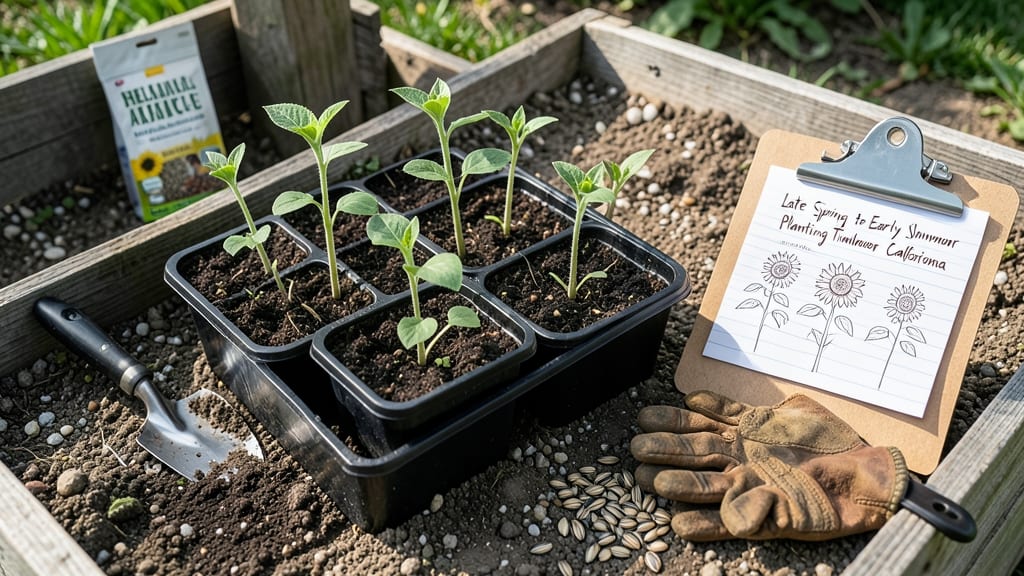
Planting sunflowers in California at the wrong time means watching your 🌻 dreams wither before they even bloom. Whether you're in frost-free coastal areas or the scorching Central Valley, getting the timing right is the key to those iconic towering stalks and vibrant faces you've been dreaming of.
Most gardeners assume March is the only month to plant, but the truth is far more flexible—and far more rewarding. Coastal regions like San Francisco can start as early as February, while inland deserts often wait until November to avoid heat stress.
The secret lies in understanding your microclimate's unique frost patterns and heat cycles.
I've seen firsthand how a 2-week difference in planting can mean the difference between sunflowers reaching their full 12-foot potential or struggling in the heat. Let me show you exactly when to plant in your specific corner of California, so you can enjoy those golden blooms from May through November.
From soil temperature checks to variety selection, we'll cover everything you need to know to time your planting perfectly. Ready to grow sunflowers that turn heads—and fill your garden with joy? Let's get started.
California sunflower planting calendar: coastal vs inland timing differences
California’s diverse climates create wildly different growing conditions for sunflowers. In coastal regions like San Francisco and Los Angeles, mild winters and cool summers allow for extended planting windows, while inland desert areas like Palm Springs and the Central Valley demand earlier starts to avoid extreme heat.
Understanding these regional differences ensures your sunflowers reach their full 8-16 foot potential with vibrant blooms.
Sunflowers are warm-season annuals that thrive when soil temperatures exceed 55°F. Coastal areas can plant almost year-round, while inland gardeners must work around last frost dates (Dec 15-Jan 15) and heat-wave risks after June.
The key difference? Coastal sunflowers enjoy 300+ frost-free days, while inland varieties face just 240 days before potential frost.
🌱 Comparison Table: Coastal vs Inland Planting Windows
For coastal gardeners, the February-March window is ideal for starting sunflowers indoors, with outdoor planting possible until October. The cool maritime climate prevents bolting, allowing you to enjoy year-round blooms if you succession plant every 2-3 weeks.
In San Francisco, I’ve seen 'Russian Giant' sunflowers reach 14 feet when planted in March!
Inland regions like the Central Valley and Palm Springs require earlier planting to avoid 100°F+ heat waves that can cause sunflowers to bolt prematurely. The November-January window is perfect for direct sowing in desert areas, where soil stays warm year-round.
For Palm Springs, I recommend 'Moulin Rouge'—its red blooms thrive in USDA Zone 10b and handle low water conditions better than standard varieties.
Extreme heat is the biggest threat for inland sunflowers. When daytime temps exceed 95°F, even drought-tolerant varieties struggle. My trick? Plant tall varieties (like 'Autumn Beauty') in spring and dwarf types (like 'Sunspot') in late summer for fall blooms.
Always use 3-4 inches of mulch to retain moisture and water deeply at dawn to prevent fungal issues.
Coastal gardeners have the luxury of multiple planting cycles, but even here, soil preparation matters. Amend your beds with compost and aged manure before planting to ensure 6+ hours of sunlight. In Los Angeles, I’ve had success with 'ProCut' sunflowers—they’re heat-tolerant and perfect for
How to adjust sunflower planting for California’s microclimates
Living in California’s transitional zones—like the Bay Area or Sacramento—means your sunflowers face unique challenges. Coastal areas stay cool longer, while inland zones hit 100°F+ heat by summer. The key is adjusting your planting strategy to match these extremes.
I’ve learned that soil temperature and variety choice can make or break your sunflower success in these tricky microclimates.
For example, in San Francisco’s foggy mornings, you can plant sunflowers as early as mid-February, but in Sacramento’s Central Valley, waiting until late March prevents heat stress.
The difference? Soil that stays below 55°F too long stunts growth, while sudden heat spikes cause bolting—where plants flower prematurely and produce tiny blooms instead of towering stalks.
🌱 5 Critical Adjustments for California’s Microclimates
- 1. Test soil temp: Use a soil thermometer—plant when soil hits 55°F+ (coastal: Feb-Mar; inland: Apr-May).
- 2. Choose heat-resistant varieties: Opt for 'Autumn Beauty' (coastal) or 'Moulin Rouge' (inland) to avoid bolting.
- 3. Succession plant: Sow seeds every 2 weeks from March to July for continuous blooms.
- 4. Mulch heavily: Apply 3 inches of mulch to retain moisture in inland zones where evaporation is high.
- 5. Extend coastal season: Use row covers in late fall to protect tender seedlings from unexpected chills.
One of my biggest mistakes was planting standard sunflower varieties in Sacramento’s heat without adjusting. The plants bolted in under 30 days, leaving me with sad, stunted blooms. Switching to heat-tolerant dwarf varieties like 'Little Becka' solved the problem—now I get full-size flowers even in the hottest months.
If you’re in a cooler microclimate (think Santa Cruz or Monterey), focus on soil prep. Amend your garden with compost and aged manure to warm the soil faster.
I’ve seen sunflowers in these areas grow 3 feet taller when planted in well-draining, nutrient-rich soil compared to average garden beds.
For inland gardeners, shade cloth is your best friend. Install 30-50% shade cloth over seedlings until they’re 4 inches tall. This gradual hardening-off prevents heat shock and gives roots time to establish.
I’ve had sunflowers in Bakersfield reach 10 feet using this method, where others in my neighborhood struggled with wilted plants.
Remember, succession planting is your secret weapon for year-round blooms. In coastal areas, you can plant two rounds (March and July), while inland zones benefit from three rounds (April, June, and August). This ensures you always have fresh sunflowers from May through November—no matter where you live in California.