
Planting
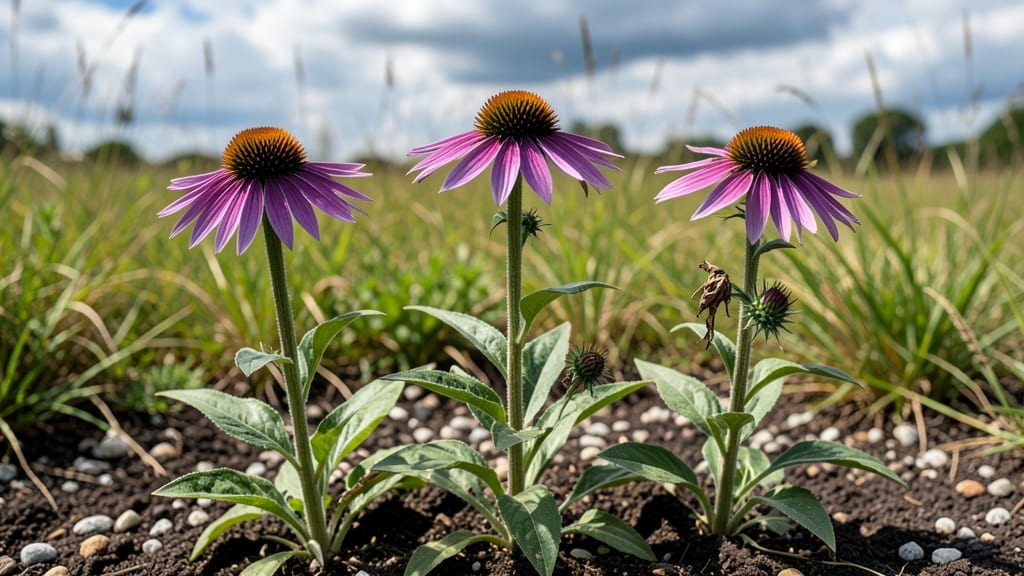
If your Purple Coneflower 🌼 garden looks more like a crowded jungle than a blooming paradise, you’re probably missing one key detail: proper spacing. These hardy perennials need room to breathe—or they’ll fight for sunlight, nutrients, and space, leaving you with leggy stems and fewer flowers.
Getting the spacing right isn’t just about aesthetics; it’s the difference between a garden that thrives and one that struggles. Too close, and your plants compete for resources, resulting in weak growth.
Too far apart, and you’ll waste space that could be filled with vibrant blooms. The ideal distance is what separates a good garden from a great one.
I’ve tested the best spacing techniques over the years, and what I’m about to share will help you maximize blooms while keeping your Purple Coneflower 🌼 healthy and happy. Whether you’re planting in a sunny border or a wildflower meadow, these proven distances will make all the difference.
Ready to transform your garden? Let’s dive into the exact spacing guidelines that will give your Purple Coneflower 🌼 the room it needs to shine—and keep your garden looking its best all season long.
Optimal Purple Coneflower spacing by planting method (in-ground vs containers)
Getting your purple coneflowers to thrive starts with proper spacing—this native perennial needs room to breathe, especially in full-sun gardens. Plant them too close, and you’ll end up with crowded stems competing for nutrients.
Too far apart, and your garden will look sparse. The right distance ensures abundant blooms and healthy foliage while preventing disease spread.
Purple coneflowers (Echinacea purpurea) typically reach 2-4 feet tall and spread 1-2 feet wide at maturity. Their root systems also expand, so spacing isn’t just about the plant above ground.
Whether you’re planting in in-ground beds or containers, the rules change slightly to accommodate airflow and root growth.
Here’s the science-backed breakdown: 18-24 inches apart is ideal for most in-ground plantings, but container spacing requires tighter quarters. Let’s dive into the exact distances and why they matter for your garden’s success.
⚠️ NON-NEGOTIABLE: The comparison-table below shows the key differences between in-ground and container spacing, including mature plant size, root competition, and airflow needs.
For in-ground plantings, the 18-24 inch spacing rule ensures each plant has enough room for its root system to expand without competing with neighbors. This distance also promotes better airflow, reducing the risk of powdery mildew and other fungal diseases that thrive in damp, crowded conditions.
If you’re planting in containers, the rules shift slightly. Purple coneflowers in 5-gallon pots or larger can handle 12-18 inches apart because their roots are naturally restricted.
However, you’ll need to repot every 2-3 years to refresh the soil and prevent root-bound stress. Smaller containers (under 3 gallons) may stunt growth entirely.
In mass plantings, like wildflower meadows, you can tighten the spacing to 12-18 inches to create a lush, natural look. Just be prepared to thin out seedlings as they grow to avoid overcrowding. This method works best in well-draining soil where plants won’t compete for moisture.
One common mistake is assuming smaller varieties need less space. Even dwarf types like 'White Swan' still require 12-18 inches apart to prevent leggy growth. Always check the mature plant size on the seed packet or plant tag—it’s your best guide.
For container gardens, choose pots with drainage holes and use a well-draining potting mix to mimic in-ground conditions. Add a layer of gravel at the bottom to prevent root rot, and fertilize lightly every 4-6 weeks during the growing season to compensate for the limited soil volume.
Pro tip: If your garden has poor soil drainage, increase spacing to 24 inches to give roots room to avoid waterlogged conditions. Amend the soil with compost or sand to improve drainage and reduce root competition.
Remember, proper spacing isn’t just about aesthetics—it’s about healthy plants that produce more blooms and last longer in your garden. Whether you’re planting a single specimen or a full meadow, follow these guidelines to ensure your purple coneflowers thrive for years to come. 🌼
How to adjust spacing for different Purple Coneflower varieties and soil types
Not all Purple Coneflower 🌼 varieties are created equal—and neither are their spacing needs. 'Magnus', with its towering 4-foot stems, needs more room than 'Cheyenne Spirit', which stays compact at just 2 feet tall.
Ignoring these differences can lead to overcrowding, stunted growth, or even disease from poor airflow.
Soil type also plays a critical role. In clay soil, roots struggle to spread, so you’ll need to space plants 20-25% farther apart than in loamy soil.
Meanwhile, sandy soil drains too quickly, meaning plants may need closer spacing to share moisture. Let’s break down the best spacing strategies for each scenario.
🌱 Pro Tip: Always measure spacing from the center of one plant to the center of the next. This ensures roots have room to grow without overlapping.
| Variety | Mature Height | Ideal Spacing (In-Ground) | Soil Adjustments |
|---|---|---|---|
| 'Magnus' | 4 ft | 24-30 inches | +6 inches for clay soil |
| 'Cheyenne Spirit' | 2 ft | 18-22 inches | -3 inches for sandy soil |
| 'White Swan' | 3 ft | 20-24 inches | Standard for loamy soil |
| 'Green Envy' | 2.5 ft | 18-22 inches | -2 inches for rocky soil |
If your garden is already crowded, don’t panic. Start by thinning out overgrown plants in late winter or early spring. Use clean, sharp pruning shears ✂️ to cut stems at the base, leaving room for new growth. For container gardens, reduce spacing by 30-40% since roots are confined.
For airflow improvement, prune back 1/3 of the foliage after blooming. This reduces competition for nutrients and helps prevent fungal diseases like powdery mildew. Just avoid cutting into old seed heads, as they provide winter interest and food for pollinators.
In wildflower meadows, space plants 12-18 inches apart to create a natural, low-maintenance look. This mimics their native prairie habitat, where they grow in dense clusters but still thrive. Mulch with straw or leaves to retain moisture and suppress weeds without smothering roots.