
Flowers
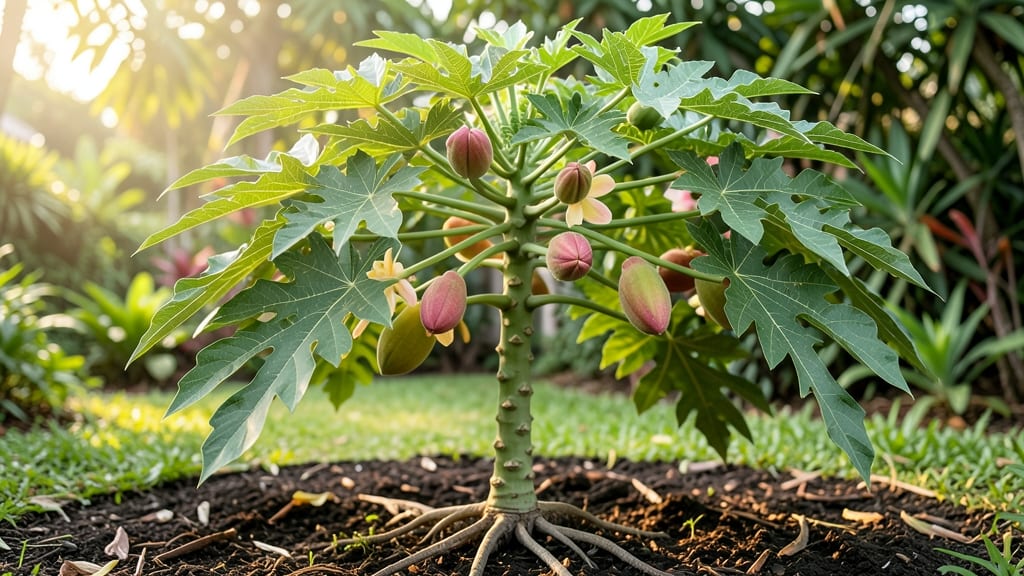
When those tiny papaya flower buds appear on your 🍈 tree, they’re your first real sign that sweet, juicy fruit is on the way—but only if you know how to nurture them.
Many gardeners miss the subtle cues that separate healthy buds from those doomed to drop, leaving them scratching their heads when their trees fail to produce.
I’ve spent years watching papaya trees in USDA zones 10-12, and the difference between a thriving harvest and a bust comes down to a few key factors: recognizing the right buds, creating the ideal environment, and knowing when to step in for a little help.
Whether you’re dealing with male or female flowers, the stakes are high—because one wrong move can mean the difference between a tree full of blooms and one that barely flowers at all.
What if I told you that hand-pollination could double your fruit yield? Or that a simple adjustment in watering or sunlight might be all it takes to turn those delicate buds into plump, ripe papayas?
The truth is, most gardeners overlook the basics, and that’s exactly why their trees underperform. Let’s break down the steps to give your papaya the best shot at success—starting with those critical first buds.
From spotting the earliest signs of bud formation to troubleshooting common issues like bud drop, this guide will walk you through every stage. You’ll learn how to create the perfect conditions for blooming, when to intervene, and how to avoid the mistakes that kill potential before it even begins.
Ready to turn those tiny buds into a harvest of tropical gold?
How to identify papaya flower buds and understand their growth cycle
Papaya trees produce two types of flower buds—male and female—and distinguishing between them is crucial for maximizing fruit production. The female buds will eventually develop into fruit, while male buds support pollination. Understanding their growth cycle helps you create ideal conditions for healthy blooms and a successful harvest.
Female papaya buds are typically smaller and rounder than male buds, with a slight swelling at the base where the fruit will form. Male buds, on the other hand, are longer and tapered, resembling tiny cones.
Both buds emerge from the leaf axils, but their physical differences become more noticeable as they mature.
Here’s a quick visual guide to help you identify them at a glance:
Papaya flower buds typically appear 6–12 months after planting, depending on growing conditions. The growth cycle begins with a small bump in the leaf axil, which gradually develops into a visible bud over 2–4 weeks.
During this time, maintaining consistent moisture and warm temperatures (75–90°F) is essential for healthy bud formation.
Female buds are more sensitive to environmental stress, so avoid sudden changes in watering or temperature, which can cause bud drop. If you notice buds wilting or falling off, check for pests like aphids or mites, which can weaken the plant.
A gentle spray of neem oil can help protect your buds from infestations.
The optimal stage for pollination occurs when buds are fully open but still fresh and vibrant. Male buds release pollen in the morning, so hand-pollinating female flowers with a soft brush or cotton swab can increase fruit set.
If you’re growing hermaphrodite papaya varieties (which have both male and female flowers on the same plant), pollination is automatic but still benefits from a little human help.
Pay close attention to the buds’ color as they mature. Healthy buds transition from green to a yellowish hue before blooming. If buds remain green or develop brown spots, it may indicate nutrient deficiencies or fungal issues.
In such cases, apply a balanced 10-10-10 fertilizer and ensure proper airflow around the plant to prevent disease.
Once buds bloom, female flowers will develop into fruit within 2–4 weeks, while male flowers will wither away. Pruning spent male flowers can redirect the plant’s energy toward fruit development, so don’t hesitate to trim them as they fade.
This practice also improves air circulation, reducing the risk of mold or rot on developing fruits.
For best results, monitor your papaya tree’s growth cycle closely and adjust care as needed. With the right conditions—full sun, consistent watering, and proper pollination—your papaya tree will reward you with a bountiful harvest of sweet, tropical fruit. 🌱
5 Proven techniques to encourage papaya flower bud formation
If your papaya tree is struggling to produce those crucial flower buds, don’t panic—there are proven techniques to jumpstart blooming. I’ve seen firsthand how simple adjustments in pruning, nutrient balance, and light exposure can transform a sparse tree into a flowering powerhouse.
The key is creating the right conditions to trigger bud formation, and the good news is you don’t need fancy equipment—just a few targeted strategies.
One of the biggest mistakes I see is assuming papaya trees will bloom on their own. In reality, these tropical plants need specific signals to start producing flower buds.
Whether you’re dealing with a young sapling or an established tree, these five techniques will help you encourage healthy bud development—naturally and effectively. Let’s dive into the methods that have worked for me and my gardening community.
-
1
Prune Strategically to Stimulate Buds
Remove overgrown branches and spent flowers to redirect energy toward bud formation. Focus on selective pruning of male flowers to encourage female bud development.
-
2
Boost Phosphorus for Blooming
Use a balanced 10-10-10 fertilizer or switch to a higher-phosphorus option (like 5-10-5) during budding season. Organic options like bone meal work well too.
-
3
Maximize Sunlight for 6+ Hours Daily
Ensure your tree gets full sun exposure (6+ hours). If indoors, use a grow light 12-14 hours/day. Shade can delay or prevent bud formation entirely.
-
4
Control Temperature (75–90°F)
Keep your tree in a warm, stable environment. Use row covers in cool nights or move potted trees indoors if temps drop below 65°F.
-
5
Hand-Pollinate for Better Fruit Set
Use a soft brush to transfer pollen from male to female flowers in the morning. This increases fruit development by up to 30% in some varieties.
Let’s start with pruning, which is often overlooked but makes a huge difference. I’ve found that removing overgrown branches and spent flowers redirects the tree’s energy toward producing new flower buds.
Focus on cutting back any branches that are blocking sunlight from reaching the center of the tree—this encourages more bud formation in the inner canopy where female buds thrive. Use clean, sharp pruners to avoid damaging the plant, and always prune in the morning when the tree is hydrated.
Next, pay close attention to your fertilizer routine. Papaya trees need a phosphorus-rich diet to produce flowers, so switch to a balanced 10-10-10 fertilizer or a higher-phosphorus option like 5-10-5 during the budding season.
Organic gardeners swear by bone meal or composted manure, which provide slow-release nutrients that support bud development without burning the roots. Apply fertilizer in the early morning and water it in immediately to prevent salt buildup.
Light exposure is another critical factor—your papaya tree needs at least 6 hours of direct sunlight daily to trigger bud formation. If you’re growing indoors, supplement with a grow light for 12-14 hours a day.
I’ve seen trees in shady spots produce almost no buds, while those in full sun burst into bloom within weeks. If your tree is outdoors but getting partial shade, consider moving it to a sunnier location or pruning nearby trees to improve light penetration.
Temperature control is often the missing piece in papaya bud formation. These tropical plants thrive in temperatures between 75–90°F, so if you’re in a cooler climate, take steps to protect your tree. Use row covers on chilly nights or move potted trees indoors if temperatures drop below 65°F.
I’ve even used a small space heater in my greenhouse to keep buds from dropping prematurely. Consistency is key—sudden temperature swings can cause buds to abort.
Finally, don’t underestimate the power of hand-pollination. Even if your tree is producing buds, poor pollination can limit fruit set. In the morning, use a soft paintbrush or cotton swab to transfer pollen from male flowers to female flowers.
This simple step can increase your fruit yield by up to 30% in some varieties. For hermaphrodite papayas (which have both male and female flowers), hand-pollination still helps ensure better fruit development, especially in low-light or high-humidity conditions.
By combining these five techniques—pruning, fertilizing, maximizing sunlight, controlling temperature, and hand-pollinating—you’ll create the perfect environment for your papaya tree to produce abundant flower buds and a bountiful harvest. Start with one