
How To
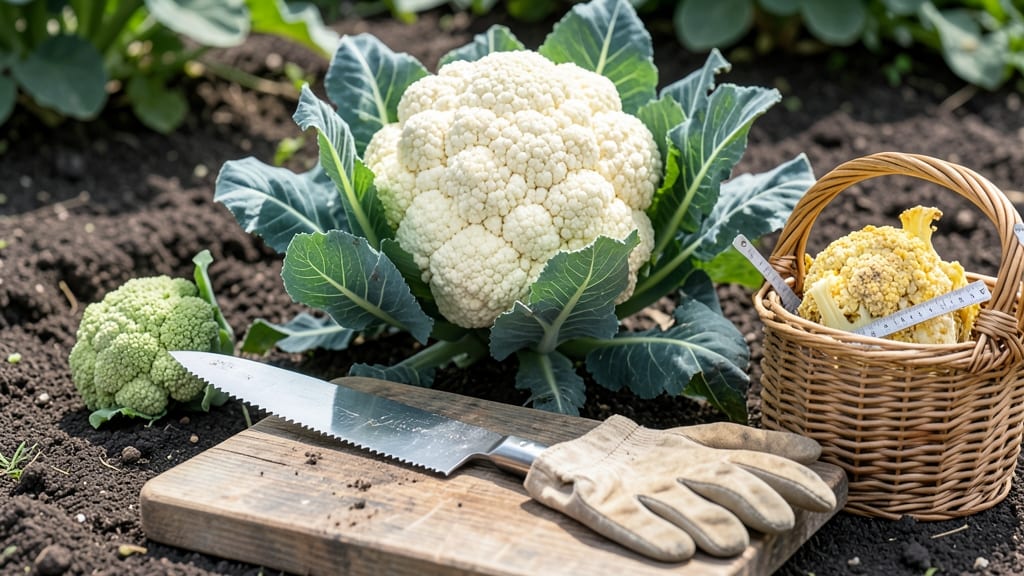
Knowing when to pick your 🥬 cauliflower can make or break your harvest—wait too long, and you'll end up with tough, bitter heads instead of the tender, flavorful curds you're after.
Most gardeners miss the perfect window because they focus on days to maturity rather than visual cues. The truth is, your cauliflower's readiness depends on three key factors: head firmness, color consistency, and leaf condition. I'll show you exactly what to look for so you never guess again.
In cooler weather like spring's ideal Zone 6a climate, timing is everything. A head that's firm to the touch and fully formed—with vibrant, unblemished color—is your green light to harvest. But here's the catch: those outer leaves are giving you subtle signals too.
Let's break down the exact visual and physical clues that tell you your cauliflower is ready to pick, plus how to avoid common mistakes that ruin your harvest before it even begins.

How to check cauliflower curd firmness for optimal harvest time
Knowing when to harvest your cauliflower is all about timing—especially the curd firmness. A head picked too early will be loose and underdeveloped, while waiting too long means a tough, bitter, and often woody texture.
The key lies in the thumb squeeze test and visual cues that tell you the curd is at its peak.
Start by examining the head size and color consistency. A fully mature cauliflower should measure between 6 to 8 inches in diameter, depending on the variety. If the head is smaller than 4 inches, it’s not ready yet.
Meanwhile, if it’s larger than 10 inches, it’s likely overripe and past its prime.
Next, focus on the outer leaves. When they begin to yellow and die back, it’s a clear sign that the plant is redirecting energy to the curd. However, if the leaves turn completely brown or the plant bolts (sends up a flower stalk), you’ve missed the window.
Here’s where the thumb squeeze test comes into play. Gently press your thumb into the curd—if it feels firm but slightly soft (like a ripe avocado), it’s ready. If it’s too hard, the curd is underdeveloped. If it gives way too easily, it’s overripe and starting to break down.
| Stage | Curd Firmness | Head Size | Color & Leaves | Action |
|---|---|---|---|---|
| Underripe | Very firm, hard | <4 inches | Bright green leaves, no yellowing | Wait 1-2 weeks |
| Perfectly Ripe | Firm but slightly soft (like avocado) | 6-8 inches | Consistent color, outer leaves yellowing | Harvest immediately |
| Overripe | Spongy, loose florets | >10 inches | Brown/yellow florets, brown leaves | Too late—discard or compost |
Another trick is to check the floret tightness. Run your fingers over the curd—if the florets are tightly packed and don’t pull apart easily, it’s ready. If they separate or look loose and uneven, the head has passed its prime.
Pay attention to the weather conditions too. Cauliflower grows best in cool temperatures (between 60-70°F). If your region is experiencing a heatwave, the plant may bolt prematurely, sending up a flower stalk.
In this case, harvest as soon as the head is half-formed to avoid losing the crop entirely.
When harvesting, use a sharp knife or pruning shears to cut the stem about 1 inch below the curd. This prevents damage to the plant and encourages any side shoots to form. If you’re growing multiple heads, leave the outer leaves intact to protect the curd from sun exposure.
After harvesting, store your cauliflower in the refrigerator for up to 5-7 days. For longer storage, wrap the head in a damp paper towel and place it in a plastic bag in the crisper drawer. This keeps it crisp and fresh for up to 2 weeks.
If you’re unsure whether your cauliflower is ready, err on the side of harvesting early. A slightly underripe head will firm up and improve in flavor after a few days in the fridge, while an overripe one will only get tougher and more bitter.
With practice, you’ll develop an eye for the perfect harvest window. Soon, you’ll be picking cauliflower at its peak—crisp, flavorful, and ready for the kitchen! 🥬
Cauliflower color & size guide: when white, purple, and green varieties are ready
Not all cauliflower looks the same—your white, purple, or green varieties each have distinct maturity cues that determine the perfect harvest time. While size and firmness are universal, the color intensity and leaf patterns change dramatically between types.
For example, a purple cauliflower might look ready when its florets deepen to a rich violet hue, while a green Romanesco needs crisp, lime-green ridges before picking.
Growing in Zone 6a's cooler spring months gives you a narrower window to spot these signals. Miss them, and you’ll end up with heads that either bolt prematurely (in heat) or develop woody centers (if left too long).
Let’s break down the exact visual benchmarks for each variety so you can harvest at peak flavor and texture.
| Variety | Color Cue | Size Ready | Leaf Condition |
|---|---|---|---|
| White (e.g., Snowball Y Improved) | Creamy white, no yellowing or browning | 6–8 inches diameter | Outer leaves yellowing at base |
| Purple (e.g., Graffiti) | Deep violet, no green streaks | 5–7 inches diameter | Leaves curling inward slightly |
| Green (e.g., Romanesco) | Bright lime-green, no dulling | 4–6 inches diameter | Tight, compact florets |
For white varieties, pay close attention to the curd’s uniformity. A ready head will have tight florets with no gaps—if you see spaces between them, it’s past its prime.
Meanwhile, purple cauliflower often matures slightly earlier than white types, so check for deep color penetration (not just surface hue). Pro tip: Run your thumb over the florets—if they resist slightly but don’t feel hard, that’s your cue to harvest.
Green varieties like Romanesco are trickier because their fractal patterns can make them look ready when they’re not. Wait until the ridges are crisp and lime-green, not yellowing or browning at the tips.
These types also tend to bolt faster in heat, so harvest them within 70–75 days of planting—earlier than white or purple varieties.
One universal rule applies to all types: Never harvest after the outer leaves turn fully brown. This signals the head has overmatured, leading to bitter, fibrous tissue. Instead, aim to pick when 10–20% of leaves are yellowing—this sweet spot ensures maximum tenderness.
In Zone 6a’s July–September harvest window, morning picks are ideal to avoid wilting in afternoon heat.
If you’re growing multiple varieties, monitor them separately. Purple types often mature 5–7 days earlier than white, while green Romanesco can lag behind. Use a small garden notebook to track planting dates and color changes