
Planting
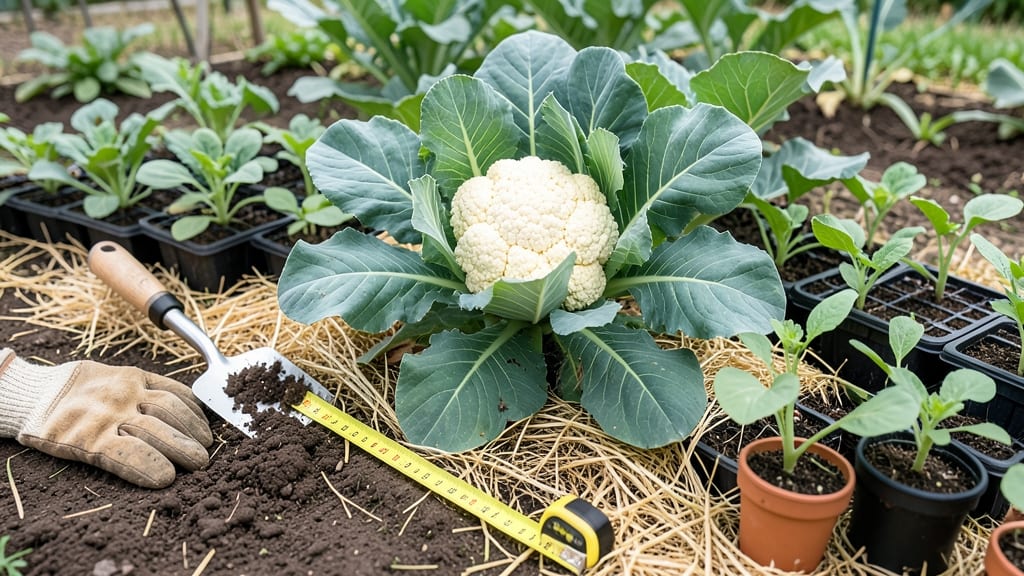
Planting cauliflower 🥬 too close together is one of the fastest ways to turn your spring harvest into a disappointing pile of stunted heads—but how far apart should cauliflower be planted to avoid that?
The right spacing isn’t just about fitting more plants in; it’s about giving each one room to thrive, so you end up with bigger, healthier heads and fewer pests or diseases ruining your garden.
I’ve learned the hard way that cramming cauliflower plants too tightly leads to competition for nutrients, poor airflow, and heads that struggle to form properly. But getting the spacing wrong the other way—planting them too far apart—wastes precious garden space.
The sweet spot balances yield, health, and efficiency, and it’s easier than you think to nail it.
Whether you’re working with a small backyard plot, raised beds, or even containers, proper spacing makes all the difference. I’ll break down the exact distances you need, how to adjust for different varieties, and why airflow matters more than you realize for keeping your cauliflower 🥬 happy and productive.
Ready to maximize your harvest? Let’s dive into the spacing secrets that’ll transform your garden from mediocre to outstanding—without any guesswork.
Optimal cauliflower spacing by planting method: in-ground vs containers vs raised beds
Getting cauliflower spacing right is the difference between bountiful heads and stunted, disease-prone plants. I’ve learned through trial and error that crowding stress shrinks your harvest by up to 40%—and attracts pests like cabbage moths.
The key? Matching your planting method to the right distance for airflow, sunlight, and root development.
In in-ground gardens, most gardeners space cauliflower plants 18-24 inches apart in rows 24-36 inches apart. But this changes dramatically when you switch to containers or raised beds. Let’s break down the science behind each method to maximize your yield while preventing fungal diseases like clubroot.
Why spacing matters: Too close = smaller heads and poor air circulation. Too far = wasted garden space. Heirloom varieties like Romanesco need more room than compact hybrids like Snowball Y Improved. I’ll show you how to adjust for both in every growing system.
| Planting Method | Spacing (inches) | Row Spacing (inches) | Best For | Notes |
|---|---|---|---|---|
| In-Ground | 18-24 | 24-36 | Large varieties (Romanesco, Purple of Sicily) | Use 24" spacing for heirlooms; 18" for hybrids. |
| Raised Beds | 12-18 | 18-24 | Compact varieties (Snowball, Early White) | Reduce to 12" for dwarf varieties; add mulch to retain moisture. |
| Containers (5+ gallon) | 1-2 plants per container | N/A | Balcony gardens, patios | Use well-draining mix; avoid overwatering. |
| Square Foot Gardening | 4 plants per sq ft | N/A | High-density gardens | Only for compact hybrids; thin seedlings early. |
For in-ground planting, I recommend starting with 24-inch spacing for heirloom varieties like Romanesco, which develop large, dense heads. These need room to spread and access sunlight. Hybrid varieties like Snowball Y Improved can handle 18-inch spacing because their heads are smaller and more compact.
In raised beds, you can reduce spacing by 25% because the soil stays warmer and dries faster. I’ve found 12-inch spacing works well for dwarf varieties, but always monitor for yellowing leaves—a sign of overcrowding.
Add compost to the bed’s top layer to improve drainage and prevent root rot.
Container growing is trickier because root competition is inevitable. Stick to one plant per 5-gallon container or two per 7-gallon. Use a lightweight potting mix with perlite to prevent compaction.
If you’re growing miniature varieties, you might fit two in a 5-gallon pot, but expect smaller heads—think golf-ball sized rather than dinner-plate.
Pro tip: Always thin seedlings to your target spacing when they’re 3-4 inches tall. This prevents transplant shock later. I once left seedlings too close, and by the time I thinned them, the remaining plants were already stunted. Now I mark spacing with toothpicks at planting time.
One mistake I see often? Ignoring row spacing. Even if you space plants perfectly, tight rows (less than 24 inches) block airflow and invite disease.
In humid climates, increase row spacing to 36 inches to improve air circulation. Pair this with drip irrigation to keep foliage dry.
Finally, adjust for your climate zone. In hot, dry areas (like Zone 9), space plants 24 inches apart to reduce water competition. In cool, wet zones (like Zone 5), widen to 30 inches to prevent fungal spread. Always prioritize airflow over density
How to adjust spacing for different cauliflower varieties and climate zones
Not all cauliflower 🥬 varieties are created equal—and neither are their spacing needs. Compact miniature varieties like 'Purple of Sicily' can thrive just 12 inches apart, while massive Romanesco types need 24+ inches to develop their signature fractal heads.
The key is matching your plant’s mature size to its growing conditions, because a crowded garden bed in Zone 5 will stress plants differently than one in humid Zone 9.
Climate plays a surprising role too. In dry, hot zones like Arizona (Zone 9-10), plants need slightly more elbow room—18-24 inches—to avoid heat stress, while cool, rainy climates (like Pacific Northwest Zone 8) can handle closer 12-18 inches spacing because excess moisture forces better airflow.
Even humidity levels matter: sticky air in the South encourages fungal diseases, so I always space plants wider there.
Here’s how to adjust spacing based on your cauliflower variety and climate zone, with practical tips to maximize your harvest:
- 1
- 2
- 3
- 4
- 5
Pro tip: Always check your seed packet for variety-specific spacing, but use your local climate as the final judge. I once planted 'Romanesco' at 24 inches in Zone 7, only to watch the heads split because the humidity was higher than expected.
After widening to 30 inches, my harvest doubled—proof that adjusting for conditions pays off.
For raised beds, stagger rows every 18 inches to create a checkerboard pattern. This maximizes space while ensuring every plant gets 6+ hours of sunlight and proper airflow—critical for preventing black rot and downy mildew.
In containers, prioritize depth over width: 12" pots work for dwarfs, but 18" pots are non-negotiable for standard types.
Remember, spacing isn’t set in stone. If your plants start looking stressed—yellow leaves, stunted growth—thin them out immediately. A little extra room now means bigger, disease-free heads later, and that’s a trade-off every gardener should make.