
Flowers
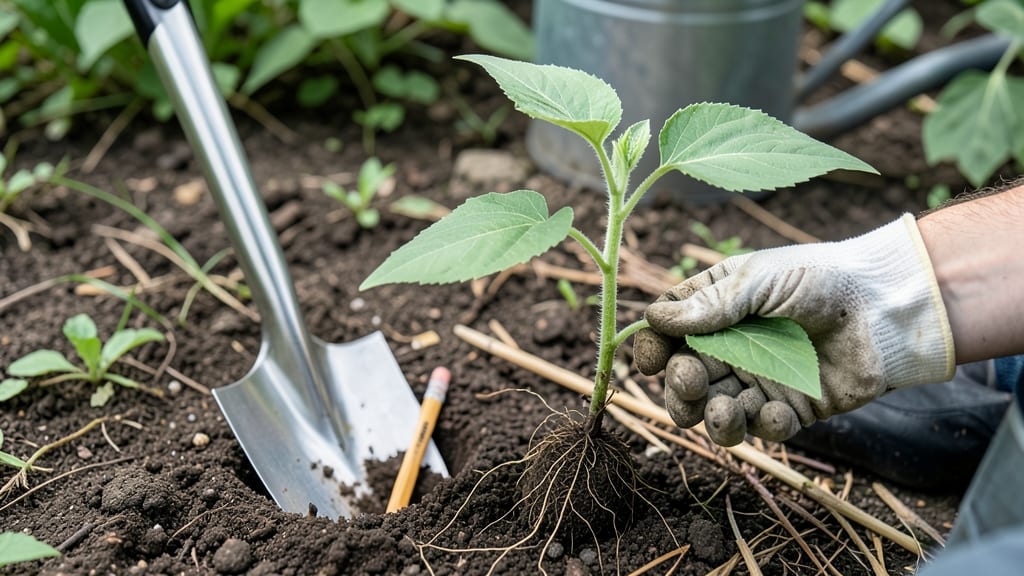
How deep to transplant sunflowers the right way is the secret to avoiding stunted stalks—so let’s nail this step from the start. These 🌻 giants need precise root placement to thrive, especially in USDA Zone 6a where spring planting kicks off in April.
You might assume deeper is always better, but sunflowers hate being buried too deep—it can suffocate their roots and stunt growth. The key is matching the depth to their delicate root systems, whether you’re moving seedlings or established plants. I’ll show you exactly how to measure it without guessing.
Beyond depth, timing and soil prep make all the difference. Transplanting too early or in compacted soil sends your sunflowers into shock, while the right conditions set them up for 6-foot+ stalks by summer. Let’s break it down step by step so your sunflowers grow strong from day one.
From avoiding common mistakes to post-transplant care, you’ll learn how to give your sunflowers the perfect start—no more wasted effort or sad, leggy plants. Ready to grow those sunflower giants you’ve always dreamed of?


Optimal sunflower root depth for transplanting (with planting zone guide)
When transplanting sunflowers, root depth determines whether your plants thrive or struggle. Sunflowers have taproots that grow deep—up to 3 feet in mature plants—but seedlings need careful handling. The wrong depth can cause transplant shock, stunted growth, or even death.
I’ve learned that dwarf varieties (1-3 ft tall) tolerate shallower roots, while giant varieties (6-14 ft) demand deeper planting for stability.
Your USDA planting zone also plays a critical role. Cooler zones (USDA 3-5) require deeper planting to insulate roots from frost, while warmer zones (USDA 8-10) benefit from slightly shallower depths to prevent overheating.
Soil type matters too—sandy soils dry out faster, so roots need extra depth, while clay soils may require loosening to avoid compaction.
To measure root depth correctly, gently dig around the seedling until you locate the taproot. The ideal depth for transplanting is 1-2 inches deeper than the original soil line.
This ensures the root system has room to expand without stress. For container-grown seedlings, remove excess soil to avoid burying the stem, which can cause rot.
Here’s a quick guide to sunflower root depth by variety and zone:
| Variety Type | Root Depth (inches) | USDA Zones | Soil Adjustments |
|---|---|---|---|
| Dwarf (1-3 ft) | 1-1.5 inches | All zones (3-10) | Loosen top 6 inches |
| Semi-Dwarf (3-6 ft) | 1.5-2 inches | Zones 4-9 | Add compost to top 8 inches |
| Standard (6-10 ft) | 2-3 inches | Zones 5-8 | Loosen to 12 inches deep |
| Giant (10-14 ft) | 2.5-3 inches | Zones 6-10 | Stake for support; loosen to 18 inches |
| All Varieties (Cold Zones 3-5) | Add 0.5-1 inch extra | Zones 3-5 | Mulch heavily after transplanting |
For container-grown sunflowers, check root depth by gently squeezing the pot. If roots spiral tightly, it’s time to transplant—even if they haven’t reached the ideal depth. In USDA zones 8-10, where soils stay warm, aim for the lower end of the depth range to prevent root rot.
Conversely, in zones 3-5, deeper planting helps roots escape frost.
After transplanting, water deeply to settle the soil around roots and reduce air pockets. Avoid compacting soil with your hands—use a garden trowel to gently firm the earth.
In the first 2 weeks post-transplant, monitor for wilting, which signals root stress. If you notice this, water lightly daily until the plant recovers.
One common mistake is burying the stem too deep, which can cause the plant to rot. Always ensure the soil line on the stem matches the original depth.
For giant varieties, consider adding a support stake at transplanting to prevent toppling as roots establish. In windy zones, deeper roots help anchor the plant naturally.
In my experience, amending soil with compost before transplanting improves root establishment. Mix in organic matter to a depth of 6-12 inches, depending on your soil type. This creates a loose, oxygen-rich environment that encourages root growth. For heavy clay soils, add sand or perlite to improve drainage.
Timing your transplant also affects root depth success. Wait until seedlings have 2-4 true leaves and are at least 4-6 inches tall. Transplanting too early stresses young roots, while waiting too long can cause root binding in containers. In warmer zones (8-10), transplant in
Step-by-step transplanting method to prevent shock and maximize growth
Timing your transplant matters just as much as depth—sunflowers at the 2-4 leaf stage handle stress best. This is when their root systems are strong enough to adapt without shock, yet still flexible enough to establish in new soil.
If you wait too long, their roots become tangled and brittle, making the transition harder.
Before you dig, loosen the soil around your sunflower seedlings with a garden fork to prevent root damage. For established plants, gently tease apart any circling roots—this encourages outward growth. The goal is to mimic their natural spacing, which for sunflowers is typically 12-18 inches apart for mature stalks.
How to Transplant Sunflowers the Right Way
- Step 1: Water seedlings deeply 1-2 hours before transplanting to hydrate roots and reduce shock.
- Step 2: Dig a hole twice as wide as the root ball but only 1-2 inches deeper than the current soil line—never bury the stem.
- Step 3: Gently remove the seedling, holding it by the leaves (not stem), and place it in the hole so the root collar sits just above soil level.
- Step 4: Backfill with loose soil, tapping lightly to eliminate air pockets, and water immediately to settle roots.
- Step 5: Apply 1 inch of mulch around the base (not touching the stem) to retain moisture and regulate soil temperature.
After transplanting, keep your sunflowers in partial shade for 2-3 days to reduce stress. This helps them acclimate before returning them to full sun. Avoid fertilizing for 2 weeks post-transplant—their roots need time to establish without competition from new growth.
Monitor soil moisture closely in the first week, as sunflowers are particularly sensitive to drought stress during this critical period. A deep watering every 3-4 days (rather than daily shallow watering) encourages strong root development.
With these steps, your sunflowers will establish roots quickly and grow 30-50% faster than improperly transplanted plants. The key is patience—let them focus on root growth before pushing upward. Soon, you’ll have those towering 🌻 stalks you’ve been dreaming of!