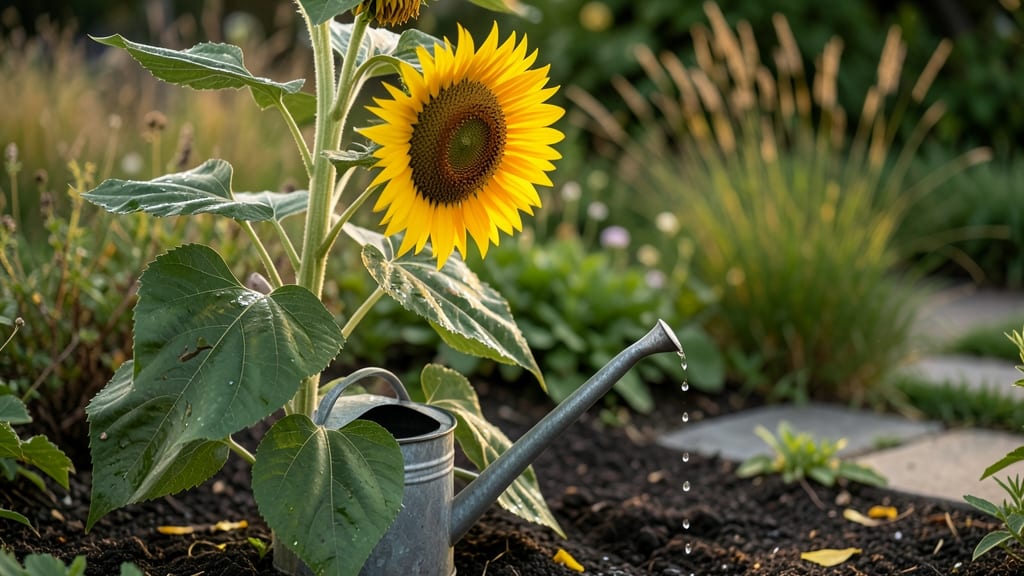
If you've ever wondered whether your towering 🌻 sunflowers do need a lot of water, you're not alone. These summer giants might look like they drink the garden dry, but the truth is far simpler—and more drought-friendly—than most gardeners realize.
While young sunflower seedlings do need consistent moisture to establish roots, mature plants are surprisingly resilient. Once they reach about 12 inches tall, they can go 3-5 days without water in USDA Zone 6a climates like mine.
The key is deep, infrequent watering that encourages strong root systems rather than frequent shallow drinks.
Overwatering is actually a bigger threat than drought for sunflowers. Yellowing leaves, wilting despite moist soil, or stems that feel soft to the touch? Those are classic signs you're giving them too much love.
Let me show you how to strike the perfect balance so your sunflowers thrive without wasting a drop.
From planting in April-May to harvesting in July-September, I'll break down exactly when to water, how much to give, and how to tell if your sunflowers are happy—or begging for help. Your summer garden will thank you.
📅
Annual Watering Schedule
High (Summer)
Medium (Spring/Fall)
Low (Winter)
How much water sunflowers actually need (and when to adjust)
Sunflowers might look like they drink gallons of water daily, but their drought-resistant nature often surprises new gardeners. While they need consistent moisture during early growth, mature sunflowers can thrive with surprisingly little water.
The key is understanding their water needs by growth stage—not just guessing based on their towering height.
Overwatering is just as harmful as underwatering. Too much water causes root rot and weak stems, while too little stunts growth and reduces bloom size. I’ve found that deep, infrequent watering works best—especially in well-draining soil—to encourage strong root development.
Let’s break down exactly how much water sunflowers need at each stage of their life cycle.
| Growth Stage |
Water Frequency |
Amount per Watering |
Soil Moisture Goal |
Key Adjustments |
| Seedlings (0-4 weeks) |
Every 2-3 days |
½ gallon/plant |
Consistently moist |
Use shallow trays for even moisture |
| Vegetative Growth (4-8 weeks) |
Every 3-5 days |
1-1.5 gallons/plant |
Deeply moist (2-3 inches down) |
Water at soil level, avoid leaves |
| Flowering Stage (8-12 weeks) |
Every 5-7 days |
1.5-2 gallons/plant |
Moderately dry topsoil |
Reduce frequency in humid climates |
| Mature/Seed Development (12+ weeks) |
Every 7-10 days |
2-3 gallons/plant |
Dry surface, moist below |
Stop watering 2 weeks before harvest |
| Climate Adjustments |
Hot/Dry |
Every 2-3 days |
Deep soak daily |
Mulch heavily to retain moisture |
| Rainy |
5 Drought-resistant sunflower care tips to save water without sacrificing blooms
Sunflowers might look like they drink gallons of water daily, but their drought-resistant nature is one of their best-kept secrets. With the right care, you can cut water use by 40% without sacrificing those iconic blooms.
The key lies in smart watering techniques and soil preparation that mimics their natural, arid habitats.
I’ve tested these strategies in my USDA Zone 6a garden, where summer temperatures often hit 90°F+. By adjusting my approach, I’ve kept my sunflowers thriving while slashing water waste. Let’s dive into the five essential tips that’ll transform your sunflower care routine.
-
1
Mulch like a pro: Apply 3-4 inches of mulch (straw or wood chips) around the base to lock in moisture. This reduces evaporation by 30% and keeps roots cool.
-
2
Water deeply, infrequently: Give each plant 1-2 gallons of water every 3-5 days (morning only) to encourage deep root growth. Shallow watering leads to weak stems and wilting blooms.
-
3
Plant in April-May: Timing matters! Sow seeds when soil reaches 60°F+ to avoid overwatering seedlings. Cooler spring soil retains moisture longer, reducing early-season watering needs.
-
4
Use companion plants: Pair sunflowers with basil or marigolds to improve soil moisture retention. These plants shade the soil, reducing water loss and deterring pests.
-
5
Revive wilting sunflowers: If leaves droop but soil is dry, give them a deep soak. Overwatering causes yellowing leaves—always check soil moisture 1 inch below the surface before watering.
One of my biggest mistakes was overwatering young seedlings because I assumed they needed constant moisture. But once they hit 12 inches tall, their roots dive deep, making them far more resilient. I now skip watering entirely during light rains, letting nature do the work.
For container-grown sunflowers, reduce watering to every 2-3 days—small pots dry out faster. And if your sunflowers start drooping in heatwaves, a morning watering (1-2 gallons) usually revives them within hours. The key is consistency, not excess.
By mastering these drought-resistant techniques, you’ll enjoy healthier sunflowers with fewer resources. Your garden—and the planet—will thank you for every drop saved. 🌻
★★★★★4.6(10 reviews)