
Flowers
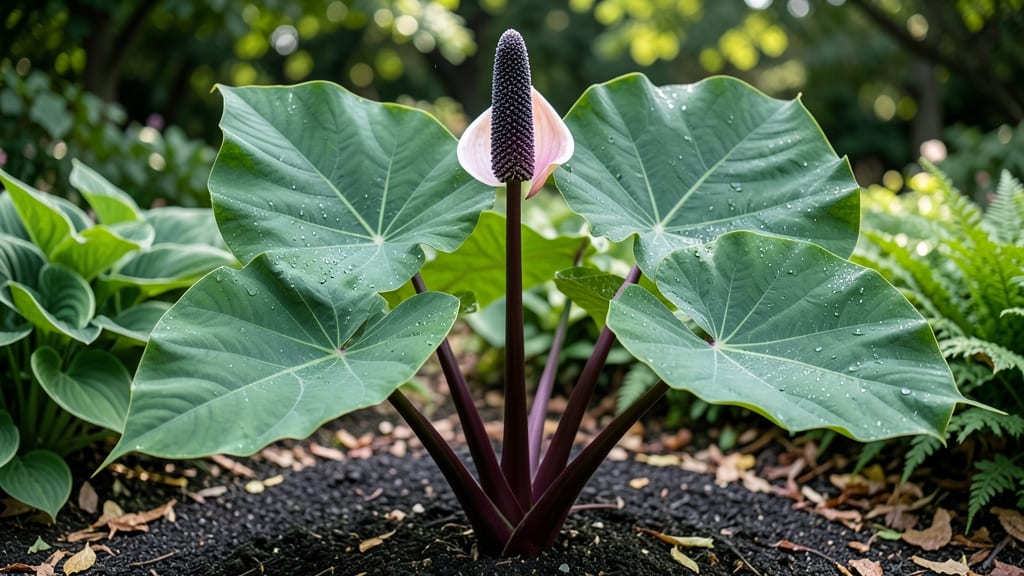
If your Elephant Ear 🌿 plants do grow flowers, you might be missing their secret: some varieties actually produce stunning blooms!
While many gardeners grow these plants for their bold foliage, certain types—like Colocasia ‘Black Star’—can surprise you with tall, spiky flowers that add unexpected drama to your garden.
These flowers typically appear in mid-to-late summer, shooting up from the center of the plant like a tropical exclamation point. They’re not just pretty—they’re also a sign your plant is thriving! However, not all Elephant Ears flower, and the ones that do need just the right conditions to encourage blooming.
In this guide, I’ll break down which varieties are most likely to flower, how to create the perfect environment for blooms, and what to do if your plants seem determined to stay leaf-only.
Whether you’re a beginner or a seasoned gardener, you’ll learn how to coax those hidden flowers into view.
Ready to unlock the full potential of your Elephant Ear 🌿? Let’s dive into the secrets behind their surprising blooms—and how you can make them happen in your garden.


Do elephant ears (Colocasia) actually produce flowers? Variety-specific bloom truths
Elephant ears (Colocasia spp.) are famous for their dramatic foliage, but their flowering habits are far less predictable. While some varieties produce stunning spike-like blooms in late summer, others—like the beloved Colocasia ‘Pink China’—rarely flower at all.
The key lies in understanding your specific variety’s genetics and growing conditions, as these factors determine whether you’ll see those tall, arrowhead-shaped flowers or just lush leaves.
Not all elephant ears bloom, and even those that do may need perfect conditions to produce flowers. For example, Colocasia ‘Black Magic’ occasionally surprises gardeners with deep purple blooms, while Alocasia varieties like Alocasia ‘Polly’ focus entirely on foliage.
If you’re planting with flowers in mind, choosing the right variety and providing the right care can make all the difference.
| Variety | Flowering Habit | Bloom Description | Notes |
|---|---|---|---|
| Colocasia ‘Black Magic’ | Occasional bloomer | Deep purple spikes | Needs warm climate |
| Colocasia ‘Pink China’ | Rarely flowers | Pinkish-white spikes (if at all) | Foliage-focused variety |
| Colocasia ‘Illustris’ | Frequent bloomer | White to pale green spikes | Classic variety |
| Alocasia ‘Polly’ | Non-flowering | N/A | Pure foliage plant |
| Xanthosoma ‘Caribbean Queen’ | Occasional bloomer | Yellow-green spikes | Heat-loving variety |
The genetics of your elephant ear plant play the biggest role in whether it will flower. Some varieties, like Colocasia ‘Illustris’, are reliable bloomers when given the right conditions, while others—such as Alocasia species—are sterile and focus solely on producing stunning leaves.
Even within the Colocasia genus, foliage-focused hybrids (like Colocasia ‘Pink China’) prioritize leaf growth over flowers.
If you’re hoping to see elephant ear flowers, focus on varieties known for blooming, such as Colocasia ‘Illustris’ or Colocasia ‘Fontanesii’. These plants produce tall, arrowhead-shaped spikes that rise above the foliage in mid-to-late summer, adding a unique vertical element to your garden.
However, even these varieties may skip flowering if they don’t receive enough sunlight, nutrients, or consistent moisture.
One common misconception is that all elephant ears flower. In reality, many popular varieties—especially those bred for ornamental foliage—have been selectively grown to suppress flowering in favor of larger, more vibrant leaves.
If you’re planting for flowers, always check the variety’s description before purchasing, as this will give you the best chance of seeing those striking blooms in your garden.
For those who do manage to coax flowers from their elephant ears, the blooms themselves are short-lived but dramatic. The flowers typically appear as spikes of small, tubular blooms in shades of white, green, or purple, depending on the variety.
While they’re not particularly fragrant, their unique shape and color contrast make them a fun addition to shaded garden beds or containers.
If you’re growing elephant ears in containers, your chances of seeing flowers decrease significantly. These plants often prioritize foliage growth when space is limited, and the stress of container life can further discourage blooming.
For the best results, plant in well-draining, nutrient-rich soil with partial shade and consistent moisture, as these conditions encourage both leaf and flower production.
Even if your elephant ears don’t flower, don’t be discouraged! Many gardeners grow these plants solely for their foliage, which comes in a dazzling array of colors, from deep purples to vibrant greens and even black.
With the right variety selection and care, you can still enjoy a stunning display—whether through flowers or foliage.
To maximize your chances of seeing elephant ear flowers, start by choosing a known bloomer and providing ideal growing conditions. With patience and the right approach, you might just be rewarded with those unexpected spikes of color rising above your lush leaves. 🌿
When and how elephant ears bloom: seasonal timing and flower care tips
If your elephant ears are mature and healthy, you might spot flower stalks emerging in mid-to-late summer—typically between July and September in most climates. These tall, arrowhead-shaped spikes can reach 3 to 6 feet tall, towering above the foliage.
In tropical climates, blooming may occur year-round, while temperate zones see a more defined seasonal window.
The first sign your elephant ears are preparing to bloom is a new central shoot that grows taller than the surrounding leaves. This flower stalk will develop small, tubular blooms in clusters, often in white, green, or purple hues, depending on the variety.
For example, Colocasia ‘Illustris’ produces pale green spikes, while Colocasia ‘Black Magic’ may surprise you with deep purple blooms.
⚠️ WARNING: Common Misconception Not all elephant ear varieties bloom, and even those that do may skip flowering if conditions aren’t ideal.
Many gardeners assume their plants will flower, only to be disappointed when they don’t. Alocasia varieties (like Alocasia ‘Polly’) are sterile and non-flowering, while Colocasia ‘Pink China’ rarely produces blooms. Always check your variety’s description before expecting flowers!
To encourage blooming, provide your elephant ears with bright, indirect light (like morning sun) and consistent moisture. These plants thrive in humid environments, so mulch around the base to retain moisture and reduce stress.
In containers, blooming is less likely due to limited root space, but well-established plants in ground beds with nutrient-rich soil are far more likely to produce flowers.
Once you see those flower stalks emerge, avoid pruning them off unless they’re damaged or diseased. These stalks don’t steal energy from the foliage, and removing them too early can reduce next year’s blooming potential.
Instead, let them mature naturally. If pests like aphids or spider mites appear, treat them with neem oil or a gentle insecticidal soap to protect both leaves and flowers.
After blooming, the flower stalks will die back naturally, but don’t prune them until they’ve turned brown and crispy. This process allows the plant to redirect energy to its tubers, ensuring a stronger start next season.
In fall, you can cut back dead foliage to 3 inches above ground level, but leave any remaining stalks until they’re fully dormant.
For gardeners in cooler climates, blooming may be delayed or reduced if nighttime temperatures drop below 60°F. If you live in USDA Zone 6 or colder, consider growing elephant ears in containers and bringing them indoors before the first frost.
This protects the tubers and increases the chances of next year’s blooms, as the plant won’t waste energy trying to survive harsh winters.